


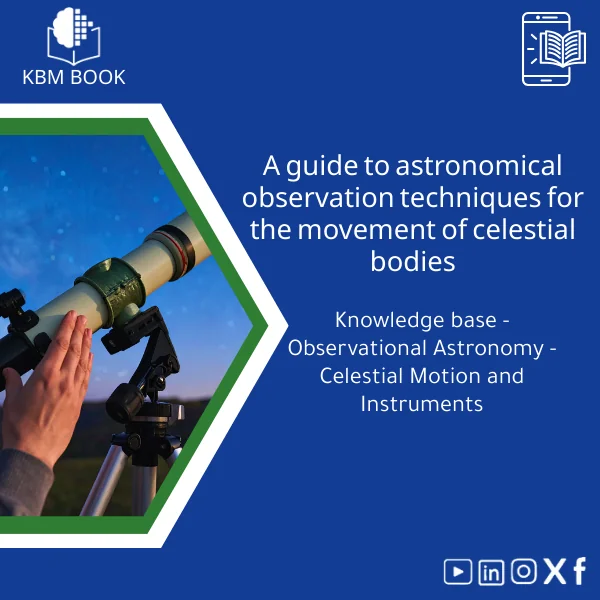
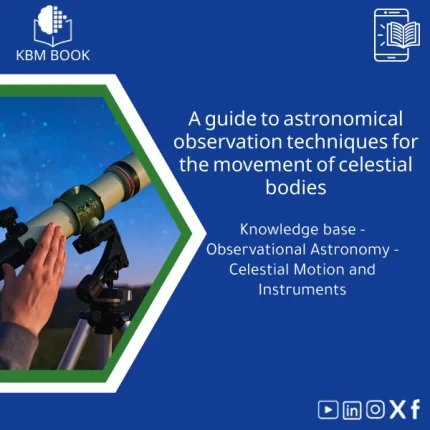
Astronomy Observational Techniques Guide for Celestial Motion
Original price was: 179.00 $.139.00 $Current price is: 139.00 $.
A hierarchically organized Knowledge Base Module (KBM) that converts observational theory into a searchable, practical reference: master astronomy observational techniques, track and predict celestial motion, and operate common instruments with step-by-step procedures and data-ready templates.
Key benefits & value for the buyer
This KBM transforms scattered notes and disparate guides into a single, structured resource tailored to observational work. It is designed to reduce preparation time, increase observational yield, and standardize data collection so results are reproducible and ready for analysis.
Direct outcomes
- Save time: preformatted observation logs and planning checklists cut pre-night prep by up to 50%.
- Improve accuracy: instrument calibration procedures and error-check lists reduce measurement drift and systematics.
- Faster learning curve: stepwise learning paths from basic sidereal mechanics to complex tracking algorithms.
- Interoperable data: CSV templates and metadata standards make integration with analysis tools straightforward.
Use cases & real-life scenarios
Undergraduate lab and coursework
Students use the astronomy textbook PDF chapter on celestial motion as a guided curriculum. Assignments link directly to observation templates so lab reports are structured, comparable, and graded consistently.
Field researchers and observatories
Observing teams deploy KBM checklists for instrument setup (telescopes, mounts, CCDs), nightly calibration sequences, and data quality checks. The KBM’s quick reference accelerates handover between shifts and documents procedures for audit and publication.
Amateur astronomers transitioning to research-grade practice
Enthusiasts use the celestial motion study guide to move from casual observation to reliable, publishable measurements — including drift-scan methods and time-series photometry templates.
Who is this product for?
The KBM is specifically crafted for:
- Students needing a concise yet rigorous astronomy textbook PDF and laboratory-ready resources.
- Researchers who require standardized observational procedures and instrument references.
- Professionals managing small observatories or teaching observational methods.
- Trainers and course developers building syllabi around observational astronomy book materials.
How to choose the right KBM for your needs
When evaluating an observational knowledge base, consider scope (fundamentals vs. specialized techniques), format (downloadable PDF vs. database), and licensing (single-user vs. institutional). This module balances scope and depth: it includes core theory, instrument-specific protocols, and exportable data templates.
Checklist for selection
- Need rapid lookup? Choose a KBM with an interactive index and short-form checklists.
- Need reproducible data? Ensure CSV templates and metadata are included.
- Teaching multiple cohorts? Opt for institutional licensing and batch downloads.
Quick comparison with typical alternatives
Unlike traditional textbooks or scattered PDFs, a KBM is structured for repeatable workflows:
- Textbook: deep theory but limited operational templates. KBM: balanced theory + practice.
- Articles/manuals: fragmented; require synthesis. KBM: consolidated, indexed, and searchable.
- Online forums: practical tips but inconsistent and unverified. KBM: curated and referenced.
Best practices & tips to get maximum value
- Start with the “Observation Planning” module before fieldwork — it contains preflight checks and twilight timing calculators.
- Use the provided CSV templates for nightly logs to avoid transcription errors and simplify reduction.
- Reference the instrument-specific pages during maintenance to keep calibration consistent across observers.
- Integrate KBM citations in your methods section for transparency when publishing observations.
Common mistakes when buying/using similar products and how to avoid them
- Buying a general textbook and expecting operational checklists — avoid by choosing a KBM built for practice.
- Assuming one format fits all — check that the astronomy textbook PDF and data templates match your analysis tools.
- Skipping version notes — always review update logs to apply improved calibration sequences.
Product specifications
- Format: Downloadable KBM package — astronomy textbook PDF (searchable), CSV templates, interactive index (HTML), and printable checklists.
- Language: English (technical Arabic notes available in separate annex on request).
- Pages (PDF): ~220 pages of structured content spanning fundamentals to advanced observational methods.
- Modules: Celestial mechanics, instrument setups, calibration & error budgets, observing modes, data templates, publication-ready methods.
- Compatibility: CSV/UTF-8 for import into Excel, Python, R; PDF compatible with any reader.
- License: Single-user download; institutional licensing available.
- Updates: 12 months of free content updates included; changelog provided with each release.
- Usage notes: Intended for academic, research, and professional observational workflows.
Frequently asked questions
Is this KBM a complete astronomy textbook or a practical supplement?
It is both: the package includes a concise astronomy textbook PDF covering essential theory of celestial motion and a practical set of templates and checklists focused on observational astronomy. The emphasis is on actionable procedures rather than long-form didactic text alone.
What file formats do I receive and can I import data into analysis tools?
You receive a searchable PDF, downloadable CSV templates for logs and catalogs, and an interactive HTML index. CSV files are UTF-8 and ready for Excel, Python (pandas), R, or other analysis tools.
How does this KBM stay current with instrument updates and techniques?
KBMBook provides updates for 12 months after purchase. Updates include improved calibrations, newly referenced instruments, and corrections. Institutional subscribers can request bespoke updates and integration guidance.
I’m on a tight budget — is the price justified?
Consider the ROI: reduced prep time, standardized data suitable for publication, and fewer wasted nights due to avoidable setup errors. The KBM is priced to be affordable for students yet robust enough for professional use; institutional discounts are available.
Ready to standardize your observations?
Download a structured, field-tested KBM that puts astronomy observational techniques and celestial motion reference material at your fingertips. Whether you need an astronomy textbook PDF for coursework or an observational astronomy book of procedures and templates, this KBM delivers usable, citable material.
Instant download. 12 months free updates. Institutional licensing available — contact KBMBook for volume pricing.
Related products
Analytical Chemistry Book: Qualitative and Quantitative Methods Guide
Biochemistry Book: Understanding Chemical Processes in Living Systems
Comprehensive Botany Book on Plant Taxonomy and Photosynthesis
A structured, searchable botany book designed as a Knowledge Base Module (KBM) — an end-to-end reference on plant taxonomy, organ structure, and the biochemistry of photosynthesis. Built for students, researchers, and professionals who need reliable, hierarchical knowledge they can search, cite, and apply immediately.
General Physics Book: Fundamentals of Force, Motion, Energy

Inorganic Chemistry Guide: Bonding and Crystal Solids
A structured, searchable Knowledge Base Module (KBM) that converts inorganic chemistry fundamentals and advanced topics—bonding models, lattice structures, defects, and solid-state properties—into a practical digital reference for students, researchers, and professionals who need fast, reliable answers without wading through textbooks.

Introductory General Chemistry Book on Matter and Reactions
A structured, searchable Knowledge Base Module (KBM) that converts core general chemistry concepts — matter, elements, reactions, stoichiometry and molarity — into a hierarchical reference you can query, teach from, or integrate into study workflows. Ideal as a concise General Chemistry book alternative for students, researchers, and professionals who need accurate, practical chemistry knowledge fast.
Thermal Physics Guide: Understanding Heat, Energy, and Entropy
A downloadable, hierarchically structured Knowledge Base Module (KBM) that converts university-level thermodynamics into a searchable, practical digital database. Ideal for students, researchers, and professionals who need fast, reliable access to fundamentals and advanced topics in thermal physics.
Reviews
Clear filtersThere are no reviews yet.