


Guide to Systems of Differential Equations and Their Applications
Original price was: 349.00 $.279.00 $Current price is: 279.00 $.
A structured, searchable Knowledge Base Module (KBM) that condenses theory, solution techniques, and applied models of systems of differential equations into a hierarchical database—designed for students, researchers, and professionals who need reliable, fast access to advanced differential equations and modeling examples in physics, biology, and engineering.
Key benefits & value for the buyer
From theory to applied solutions — without the noise
This KBM maps “systems of differential equations” into a logical, searchable structure so you can reach the exact concept or model you need in seconds. Instead of piecing together results from multiple sources, you get consistently organized entries: definitions, assumptions, solution methods, worked examples, code snippets, and references.
Concrete buyer outcomes
- Save hours of literature search: quickly identify the right method (eigenvalue analysis, Laplace transforms, phase-plane, perturbation methods) for your system.
- Translate models to code: ready-to-use Python and Matlab snippets for numerical integration, stability checks, and parameter sweeps.
- Improve reproducibility: every model entry includes assumptions, boundary/initial conditions, and citations to original sources.
- Integrate into workflows: exportable formats make it simple to import examples into computational notebooks or teaching materials.
Use cases & real-life scenarios
Undergraduate and graduate coursework
Students can follow a stepwise path: linear algebra prerequisites → linear systems → stability theory → nonlinear systems → bifurcation analysis. Each step has compact summaries and practice problems with solutions.
Research & modeling in physics and biology
Researchers modeling coupled oscillators in condensed matter, reaction-diffusion systems, or epidemic spread (SIR/SEIR variants) will find ready templates. Example: convert a two-region SIR model into a coupled ODE system, check stability analytically, then run parameter sweeps with provided scripts.
Professional engineering and control
Control engineers can load linear time-invariant system entries, compute state-space representations, design observers/controllers, and export the model to Matlab for rapid prototyping.
Who is this product for?
- Math, physics, and engineering students preparing for exams or projects.
- Researchers who need a reliable reference for advanced differential equations methods.
- Professionals building or validating mathematical models in industry—biotech, energy systems, and control sectors.
- Instructors and trainers who want structured teaching modules and problem sets.
How to choose the right KBM format
KBMs come in multiple downloadable packages. Pick based on how you work:
- Study-focused (PDF + exercises): If you prefer reading and printed practice.
- Research-focused (KBM database + JSON/CSV): If you need rapid programmatic access and integration with tools.
- Code-integrated (includes Python/Matlab): If you plan to run simulations and parameter studies directly.
If unsure: choose the “Complete” package (all formats included) to get full flexibility.
Quick comparison with typical alternatives
Why this KBM instead of a textbook, PDF collection, or forum threads?
- Single-source structure: Unlike textbooks that mix depth and breadth, the KBM separates conceptual modules and application templates for immediate reuse.
- Searchable and exportable: Forums and articles are fragmented; this KBM is indexed and export-ready for scripts and notebooks.
- Practical code: Many textbooks omit runnable examples—this KBM includes tested snippets to reproduce results.
Best practices & tips to get maximum value
- Start with the “Quick-start models” to learn the KBM structure before diving into advanced bifurcation chapters.
- Use the exported JSON with your notebook environment to run batch parameter sweeps—examples are already annotated.
- Cross-reference the “Assumptions” field in each entry before adapting a model to ensure validity.
- Back up modified scripts and maintain version comments—KBM updates may include improved examples.
Common mistakes when buying/using similar products and how to avoid them
Potential buyers often worry about overlap, accuracy, and format compatibility. Here’s how this KBM addresses those concerns:
- Mistake — Buying redundant material: Check the table of contents; this KBM lists unique modules and a coverage map to avoid duplication.
- Mistake — Incompatible formats: Choose the KBM variant that matches your tools (Python/Matlab). The package includes clear format notes.
- Mistake — Unvetted examples: Each model includes citations and a short verification note showing how results were reproduced.
Product specifications
- Title: Guide to Systems of Differential Equations and Their Applications
- Category: Mathematics & Logic Section
- Formats included: KBM database file, JSON, CSV, Markdown notes, PDF summary, Python & Matlab code snippets
- Coverage: Linear systems, eigenanalysis, stability, phase-plane, perturbation methods, bifurcation theory, common applied models (SIR, predator-prey, coupled oscillators, RLC circuits)
- Level: Advanced undergraduate → graduate / professional
- License: Single-user digital license (commercial/research use allowed — see included license file)
- Delivery: Instant download after purchase
- Updates: Minor corrections and code fixes for 12 months included
FAQ
Is this KBM suitable as a primary textbook for a course on systems of differential equations?
Yes. The KBM is designed to be modular: instructors can use the hierarchical modules as lecture units, assign exercises, and provide code demonstrations. It pairs well with a formal textbook, offering ready-to-run examples and a fast search interface for specific topics.
What level of mathematical background is required?
Basic linear algebra and ordinary differential equations are recommended. The KBM includes a short prerequisites module that reviews necessary linear algebra and single-equation ODE methods before advancing to systems and nonlinear analysis.
Are the included code examples runnable as-is?
Yes. Python examples use standard libraries (NumPy, SciPy, Matplotlib). Matlab scripts follow conventional syntax. Each snippet lists required packages and expected outputs so you can reproduce figures and numerical experiments.
What if the KBM does not meet my needs?
KBMBook offers a satisfaction policy for digital products—if you find the KBM lacks the advertised modules or formats within 14 days, contact support for a review and possible refund or exchange. See the license and refund policy included with your download.
Ready to replace scattered notes with a searchable, application-driven knowledge base?
Purchase the complete KBM package to get theory, worked examples, and runnable code in one structured module. Instant download — start integrating reliable models into your research or coursework today.
Related products

Atomic Physics Guide: Understanding Atomic and Electron Properties
Knowledge Base — Atomic/Electron Properties & Electromagnetic Interactions. A structured, searchable KBM for students, researchers, and professionals who need an authoritative atomic physics reference that organizes concepts, formulas, experiments, and practical applications from basics of atomic physics to advanced electron properties.
Cell Biology Guide: Structure, Division, and Transport Insights
Comprehensive Botany Book on Plant Taxonomy and Photosynthesis
A structured, searchable botany book designed as a Knowledge Base Module (KBM) — an end-to-end reference on plant taxonomy, organ structure, and the biochemistry of photosynthesis. Built for students, researchers, and professionals who need reliable, hierarchical knowledge they can search, cite, and apply immediately.
Comprehensive Nuclear Physics Book on Structure and Radioactivity
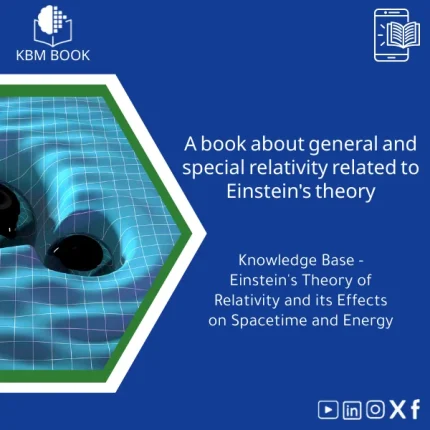
General and Special Relativity Book on Einstein’s Theory
A structured, searchable Knowledge Base Module (KBM) that converts Einstein's General and Special Relativity into a clear, hierarchical reference: formulas, derivations, worked examples, practical applications (GPS, astrophysics), and a compact research bibliography — ready to download and integrate into study, teaching, or research workflows.

General Biology Book: A Guide to Cells, Genetics & Taxonomy
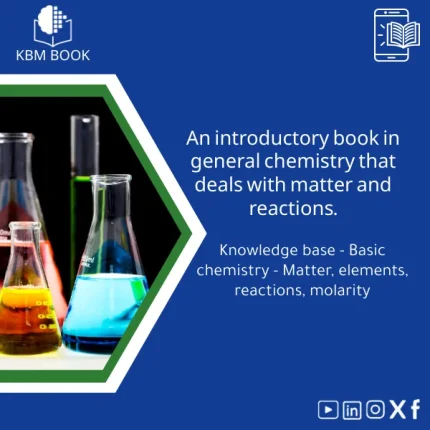
Introductory General Chemistry Book on Matter and Reactions
A structured, searchable Knowledge Base Module (KBM) that converts core general chemistry concepts — matter, elements, reactions, stoichiometry and molarity — into a hierarchical reference you can query, teach from, or integrate into study workflows. Ideal as a concise General Chemistry book alternative for students, researchers, and professionals who need accurate, practical chemistry knowledge fast.

Reviews
Clear filtersThere are no reviews yet.