


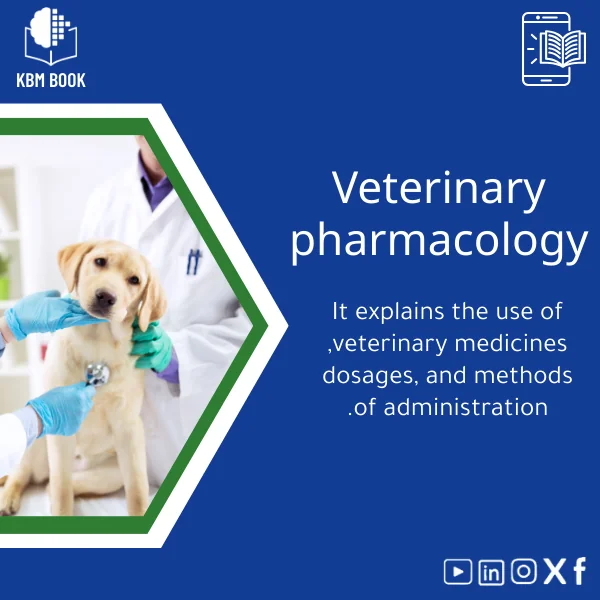
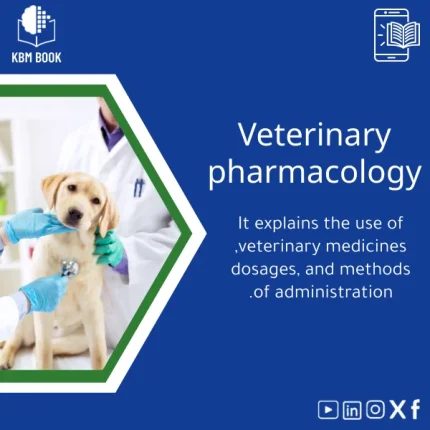
Veterinary Pharmacology Guide: Drugs, Doses, and Administration
Original price was: 349.00 $.279.00 $Current price is: 279.00 $.
A hierarchical, searchable veterinary pharmacology knowledge base (KBM) that converts complex drug information into a structured, practical reference — ideal for vet students, clinicians, researchers, and educators who need fast, accurate access to veterinary drugs, dosing regimens, routes of administration, and clinical notes.
Key benefits & value for the buyer
From raw data to actionable knowledge
This veterinary pharmacology KBM translates scattered literature into a single, consistent structure: drug profiles, dose tables by species and weight, recommended administration routes, pharmacokinetics highlights, adverse effects, interactions, and evidence notes. Instead of flipping between textbooks and journals, you query one precise module and get clinically useful answers.
Time-savings that reduce clinical risk
Quick access to standard dose ranges and administration checks speeds decision-making at the point of care. For students and clinicians, that means fewer errors, faster learning, and more defensible prescriptions.
Learning & teaching built-in
Use the KBM as a curriculum backbone: progressive learning paths take novices from basic pharmacology to species-specific therapeutics and emergency dosing protocols.
Use cases & real-life scenarios
Clinical rounds and emergency triage
On rounds, look up recommended sedation protocols for rabbits or emergency atropine dosing for cattle in seconds. The KBM provides concise dosing tables and contraindication flags for rapid triage.
Research and systematic reviews
Researchers extract standardized dosage metadata and links to primary pharmacokinetic studies to populate datasets — saving hours spent normalizing heterogeneous sources.
Teaching and exam preparation
Instructors and students use the KBM to create quizzes, case studies, and quick reference handouts. The hierarchical structure makes creating progressive lessons straightforward.
Who is this product for?
- Veterinary students preparing for clinical rotations or exams.
- Practicing veterinarians and technicians needing reliable dosing references.
- Researchers compiling drug-dose datasets for comparative studies.
- Educators and trainers building a structured pharmacology curriculum.
How to choose the right format & capacity
The KBM is available as a packaged download: searchable PDF (comprehensive reading), CSV/Excel tables (data extraction), and a lightweight JSON module (integration with clinic software). Choose based on your workflow:
- PDF: Best for reading, printing, and offline quick reference.
- CSV/Excel: Best for researchers who need to import or filter dose data.
- JSON: Best for developers or clinics that want to integrate the KBM into digital systems.
Licensing options include single-user, institutional, and site-wide deployment. Select institutional access when multiple clinicians need concurrent, searchable use.
Quick comparison with typical alternatives
Typical options are textbooks, scattered journal PDFs, or web pages. Compared to those:
- Textbooks: comprehensive but static; KBM is structured for search and quick lookup.
- Journal articles: authoritative but fragmented; KBM consolidates and cites sources for traceability.
- Web pages: variable quality and inconsistent dosing; KBM provides standardized, referenced entries.
Best practices & tips to get maximum value
- Integrate the JSON module into your clinic PMS for one-click dosing retrieval at the patient record.
- Use the CSV for batch comparisons across species when planning research protocols.
- Keep a printed PDF summary of emergency doses in treatment areas for low-connectivity situations.
- Cross-check KBM dose ranges with local formularies and regulations (withdrawal periods vary by jurisdiction).
Common mistakes when buying/using similar products — and how to avoid them
Buying an unstructured PDF
Problem: slow to search and hard to extract data. Solution: choose the KBM package with CSV/JSON for data use.
Assuming single-source dosing is definitive
Problem: one-size-fits-all doses may not account for regional drug availability or species variation. Solution: use the KBM as a primary reference, then confirm with local formularies and the product insert.
Ignoring licensing limits
Problem: sharing a single-user license across a clinic can breach terms. Solution: select institutional licensing when multiple users require access.
Product specifications
- Title: Veterinary Pharmacology Guide: Drugs, Doses, and Administration
- Formats included: Searchable PDF, CSV/Excel tables, JSON module
- Language: English (primary entries), with structured notes for region-specific variations
- Coverage: Small and large animal species (canine, feline, bovine, equine, caprine, ovine, poultry, exotic species)
- Content depth: Drug class summaries, agent profiles, dosing tables, administration routes, contraindications, monitoring, withdrawal periods, references
- File size: PDF ~25–45 MB (depends on selected package), CSV/JSON lightweight
- Delivery: Immediate download after purchase
- Licensing: Single-user, institutional, site license options
- Updates: Periodic content updates available — see licensing page for update policy
Frequently asked questions
Is this a replacement for veterinary textbooks or the product insert?
No. The KBM is designed as a practical, searchable reference and data source. It consolidates evidence and dosing guidance but should be used alongside clinical judgment, local formularies, and product inserts when prescribing.
Can I integrate the KBM into clinic software?
Yes. The JSON module is designed for integration. Developers can map fields (drug name, dose, species, route) into EMR/PMS systems. We provide a simple field mapping guide with the JSON package.
How often is the veterinary pharmacology PDF updated?
The KBM receives periodic updates as new evidence and regulatory changes emerge. Update frequency depends on your licensing tier; institutional licenses include priority updates. Check the product page for the latest revision log.
What if the dosing information doesn’t match my local guidelines?
Dosing ranges in the KBM reflect international literature and common practice. Local regulations, available formulations, and withdrawal periods vary — always confirm with local authorities and adjust accordingly.
Ready to make dosing faster and safer?
Get the Veterinary Pharmacology Guide as a downloadable KBM package today. Immediate access, multiple formats, and structured entries designed for clinical use and research.
Related products

Atomic Physics Guide: Understanding Atomic and Electron Properties
Knowledge Base — Atomic/Electron Properties & Electromagnetic Interactions. A structured, searchable KBM for students, researchers, and professionals who need an authoritative atomic physics reference that organizes concepts, formulas, experiments, and practical applications from basics of atomic physics to advanced electron properties.
Biochemistry Book: Understanding Chemical Processes in Living Systems

Biological Anthropology Study Guide on Human Evolution

Classical Mechanics Guide: Newton’s Laws and Dynamics
A searchable, hierarchical Knowledge Base Module (KBM) that turns classical mechanics into a practical, ready-to-use reference for fast problem solving, lecture preparation, and applied engineering. Designed for students, researchers, and professionals who need precise access to Newton’s laws, rotational motion, and applied dynamics without the noise of textbooks.


Reviews
Clear filtersThere are no reviews yet.