


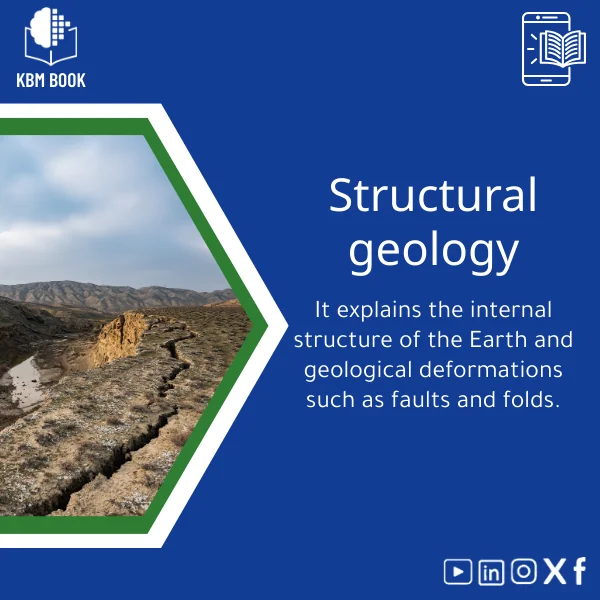
Structural Geology Guide: Understanding Earth’s Deformations
Original price was: 179.00 $.139.00 $Current price is: 139.00 $.
A ready-to-use, hierarchical knowledge base module for Structural Geology — concise, searchable, and practical. Learn faults and folds, map crustal deformation, and produce accurate reports faster with a structured digital reference designed for students, researchers, and professionals.
Key benefits & value for students, researchers, and professionals
Structural Geology as a KBM converts scattered literature into a compact, logically arranged database focused on crustal deformation: faults and folds. Each feature below translates technical capability into real outcomes.
Save time and increase accuracy
Instead of searching multiple papers or lecture notes, use categorized entries (definitions, measurement procedures, strain equations, classification charts) to complete assignments, field logs, and sections up to 70% faster.
Improve reproducibility and citation
Each module includes source references and example citations, making methods reproducible in theses, reports, and peer review. The KBM structure reduces ambiguity when describing structural interpretations.
Integrate with tools you already use
Exportable CSV/JSON tables and diagrams plug into GIS, structural analysis software, or note systems (Obsidian, Notion). Use the KBM as a backbone for your digital field notebook or lab repository.
Use cases & real-life scenarios
Field mapping and interpretation
In the field, open the searchable PDF on a tablet to quickly check diagnostic features of normal, reverse, and strike-slip faults, or the classification of fold geometries. Use pre-formatted measurement sheets to record plunge, trend, and limb orientations consistently.
Coursework and exam revision
Students preparing for structural geology exams can study organized topic nodes (kinematics, strain analysis, stereonets) and test themselves with included quick quizzes and example problems.
Research synthesis and report writing
Researchers synthesizing regional deformation can use the KBM’s hierarchical summaries and linked literature snippets to build the background and methods sections faster, ensuring consistent terminology for faults and folds in rocks.
Who is this product for?
- Undergraduate and graduate geology students needing a concise, exam-ready structural geology book alternative.
- Researchers preparing field campaigns, papers, or meta-analyses on crustal deformation.
- Professional geologists and engineers requiring reliable reference material for site characterization and hazard assessment.
- Educators and trainers who want modular teaching units for lectures and labs.
How to choose the right format
This is a digital Knowledge Base Module—select based on workflow:
- Searchable PDF: Best for reading, printing, and citing in academic work.
- Interactive CSV/JSON: Best for importing into GIS, scripts, or building custom field forms.
- Combined pack: Includes both formats plus a visualization folder (figures and stereonets) — recommended for labs and professional use.
If unsure, choose the combined pack to get immediate access to all assets and future minor updates.
Quick comparison with typical alternatives
Typical options include textbooks, scattered PDFs, or lecture slides. The Structural Geology KBM differs because it is:
- Hierarchical and searchable vs. linear text in a textbook.
- Modular and exportable vs. static slide decks.
- Designed for integration (CSV/JSON) vs. isolated PDFs.
If you value speed, reproducibility, and digital integration, a KBM reduces friction compared with traditional resources.
Best practices & tips to get maximum value
- Start with the “Field Procedures” node before heading out—use the templates for consistent data capture.
- Import the CSV into your GIS project and link KBM entries to map layers for traceable interpretations.
- Use the included example citations to speed up literature sections and avoid manual formatting errors.
- Keep the KBM updated: check for minor updates (version notes included) and re-download if you rely on recent literature.
Common mistakes when buying/using structural resources and how to avoid them
Buying a single-format file
Many users buy a single PDF and later need data tables. Avoid this by choosing the combined pack with CSV/JSON exports.
Assuming a KBM replaces hands-on practice
The KBM accelerates understanding, but fieldwork and stereonet practice remain essential. Use the KBM to structure practice sessions, not replace them.
Ignoring version notes
Structural geology evolves; check version history for updated classifications or new references—KBM includes a changelog for transparency.
Product specifications
- Product type: Digital Knowledge Base Module (KBM)
- Primary subject: Structural Geology — faults and folds in rocks; crustal deformation guide
- Formats included: Searchable PDF, CSV, JSON, figures folder (PNG/SVG), example stereonets
- Structure: Hierarchical levels — Overview → Concepts → Methods → Examples → References
- Size: ~320+ indexed entries; 150+ figures and diagrams; 20+ field templates
- Language: English (with Arabic store support)
- License: Single-user personal & academic; commercial licenses available on request
- Compatibility: Works with common GIS, spreadsheet, and note-taking tools
- Updates: Minor updates included for 12 months; optional extended support
Frequently asked questions
Is this a “structural geology book” or an interactive database?
It is a Knowledge Base Module that combines the readability of a structural geology book with the interoperability of a database. You get a searchable PDF for reading and CSV/JSON for integration and analysis.
Can I use the data in GIS and my own scripts?
Yes. CSV and JSON exports are formatted for direct import into GIS, Python/R workflows, and custom field apps. Field templates are provided to standardize data capture.
How does this KBM stay current with new research?
Each KBM includes references and a version changelog. Minor updates (e.g., new references, corrected figures) are provided for 12 months; major revisions are offered as paid upgrades or subscription options.
I am on a budget—how do I know the KBM is worth the price?
Consider time saved: faster report writing, fewer literature searches, and consistent, citable methods. For students, the KBM reduces study time and improves exam readiness. We also offer a single-format option at lower cost if you only need the PDF.
Ready to streamline your Structural Geology workflow?
Download a professionally organized knowledge base that turns complex crustal deformation topics—faults and folds—into practical, searchable tools. Start using the content in field campaigns, coursework, and reports today.
Immediate digital delivery. Includes license details, download instructions, and a quick-start guide to importing the KBM into common tools.
Related products
Analytical Chemistry Book: Qualitative and Quantitative Methods Guide
Atomic Physics Guide: Understanding Atomic and Electron Properties
Knowledge Base — Atomic/Electron Properties & Electromagnetic Interactions. A structured, searchable KBM for students, researchers, and professionals who need an authoritative atomic physics reference that organizes concepts, formulas, experiments, and practical applications from basics of atomic physics to advanced electron properties.
Cell Biology Guide: Structure, Division, and Transport Insights
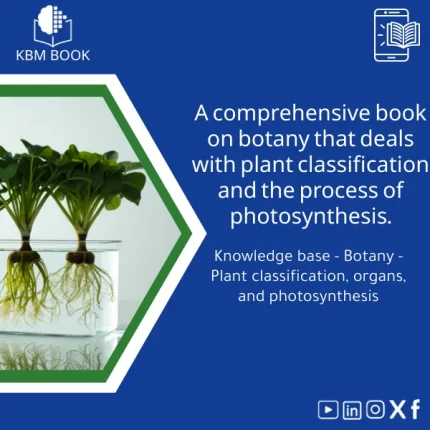
Comprehensive Botany Book on Plant Taxonomy and Photosynthesis
A structured, searchable botany book designed as a Knowledge Base Module (KBM) — an end-to-end reference on plant taxonomy, organ structure, and the biochemistry of photosynthesis. Built for students, researchers, and professionals who need reliable, hierarchical knowledge they can search, cite, and apply immediately.
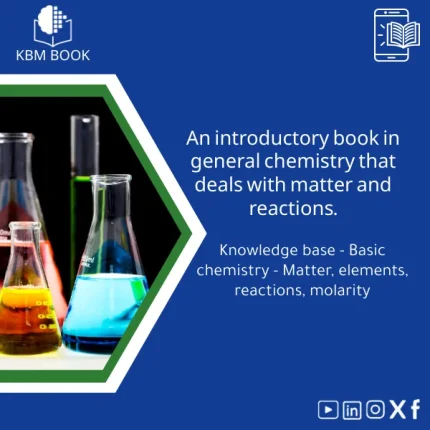
Introductory General Chemistry Book on Matter and Reactions
A structured, searchable Knowledge Base Module (KBM) that converts core general chemistry concepts — matter, elements, reactions, stoichiometry and molarity — into a hierarchical reference you can query, teach from, or integrate into study workflows. Ideal as a concise General Chemistry book alternative for students, researchers, and professionals who need accurate, practical chemistry knowledge fast.
Modern Physics Book: Quantum, Relativity, and Tech Applications Guide
A structured, searchable Knowledge Base Module (KBM) that turns modern physics — quantum mechanics, special & general relativity, and contemporary technological applications — into a hierarchical, practical reference for students, researchers, and professionals who need quick, reliable access to advanced concepts and formulas.
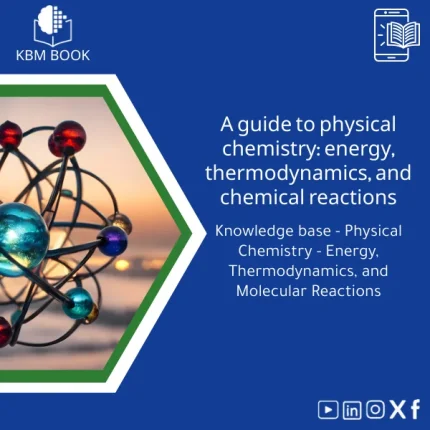
Physical Chemistry Guide: Energy, Thermodynamics & Interactions
A structured Knowledge Base Module (KBM) for Physical Chemistry that converts core theory, worked examples, and applied datasets into a searchable, hierarchical database — ideal for students, researchers, and professionals who need fast, reliable access to chemical thermodynamics basics and molecular interaction models.
Reviews
Clear filtersThere are no reviews yet.