


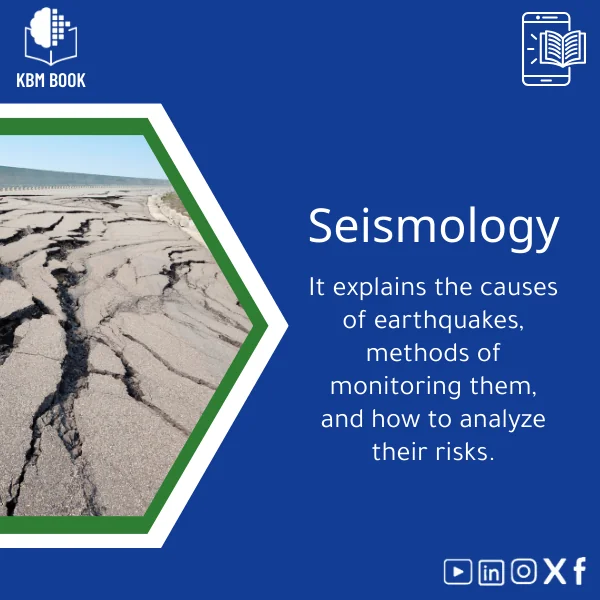
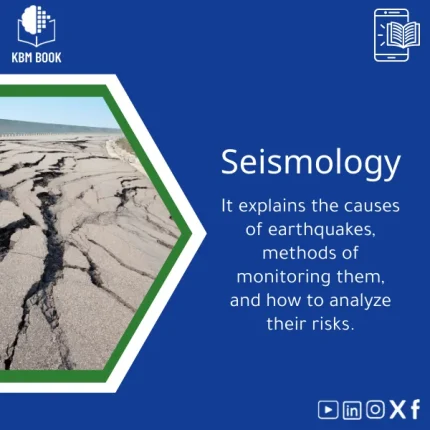
Seismology Guide to Earthquake Causes and Risk Analysis
Original price was: 179.00 $.139.00 $Current price is: 139.00 $.
A structured, searchable Knowledge Base Module (KBM) that converts seismology theory and practice into a hierarchical, downloadable database — optimized for students, researchers, and professionals who need fast, reliable access to earthquake causes, monitoring methods, and seismic risk analysis.
Key benefits & value for students, researchers, and professionals
This KBM turns scattered seismology resources into a coherent, searchable knowledge product. Each feature maps to a concrete benefit:
From feature to outcome
- Hierarchical topic structure: find “source mechanisms” or “attenuation models” in seconds — no reading dozens of papers.
- Modular monitoring procedures: replicate instrument setups and detection algorithms with step-by-step checklists for field work and lab exercises.
- Standardized metadata and export: integrate into existing datasets with minimal reformatting, accelerating reproducible research and reporting.
- Curated references: each module includes concise citations and further reading, saving hours of literature search.
- Practical templates: risk matrices, scenario-based hazard maps, and communicating uncertainty to stakeholders.
Use cases & real-life scenarios
Three realistic examples of how the seismology KBM is used in daily workflows:
University coursework and labs
Instructors create weekly labs using the KBM’s waveform processing recipes and datasets. Students follow stepwise modules to detect local events, compute magnitudes, and produce a final report that conforms to academic reproducibility standards.
Research projects and reproducible pipelines
Researchers import the KBM’s metadata schema into their data pipeline to standardize event catalogs across multiple stations, reducing preprocessing time and improving comparability across studies.
Professional hazard assessment
Engineers and risk analysts use the seismic risk analysis modules to build scenario-based hazard maps, apply vulnerability curves, and generate succinct briefs for non-technical stakeholders and municipal planners.
Who is this product for?
Designed specifically for:
- Undergraduate and graduate students studying geophysics or seismology.
- Academic and institutional researchers requiring structured datasets and reproducible methods.
- Seismic monitoring technicians, hazard analysts, and consultants who need practical monitoring guides and risk templates.
- Instructors and trainers who want ready-made teaching modules and lab exercises.
How to choose the right KBM package
We offer format and depth options. Choose based on your workflow:
- Starter (Introductory): concise theory, essential monitoring checklists, and small sample datasets — best for coursework and beginners.
- Standard (Applied): full monitoring workflows, medium datasets, export formats (CSV/JSON), and risk-analysis templates — ideal for researchers and consultants.
- Professional (Comprehensive): extended datasets, advanced scripts, metadata schemas for institutional integration, and instructor-ready modules — for labs and organizations.
If you need advice, select Standard for general use; upgrade to Professional for institutional deployment and automated pipelines.
Quick comparison with typical alternatives
How the KBM compares to common approaches:
- Textbooks: textbooks provide depth but are linear and hard to query. The KBM is searchable, modular, and quick to extract practical steps.
- Research articles: articles offer original methods but lack integration. The KBM synthesizes validated methods and provides implementation templates.
- Open code repos: code can be fragmented and undocumented. The KBM bundles code with explanations, metadata, and sample datasets for reproducibility.
Best practices & tips to get maximum value
- Start with the “Monitoring checklist” module before field deployment to reduce setup errors.
- Import the KBM metadata into your project management or GIS system to maintain consistent provenance.
- Use the risk-analysis templates as a baseline; customize vulnerability curves to local building stock for accurate assessments.
- Document any modifications to templates — the KBM is designed to be a reproducible foundation, not an immutable rulebook.
Common mistakes when buying or using similar products — and how to avoid them
- Buying raw code without documentation: choose modules that include explanations and example datasets to avoid integration delays.
- Overlooking metadata standards: use the KBM’s standardized schemas to prevent future interoperability issues.
- Assuming one-size-fits-all risk curves: always adapt vulnerability functions to local context; use the KBM’s guidance to do so correctly.
- Neglecting reproducibility: export and archive the KBM versions you used for any publication or report to ensure traceability.
Product specifications
- Product format: Knowledge Base Module (KBM) — downloadable bundle
- Included file types: JSON, CSV, Markdown summaries, Jupyter-compatible notebooks, printable PDF
- Content depth: Introductory → Advanced (modular levels)
- Core topics: earthquake causes, fault mechanics, wave propagation, seismic monitoring, event detection, magnitude scales, attenuation, seismic hazard and risk analysis
- Datasets: sample waveform files, event catalogs, station metadata (small/medium/large package options)
- Compatibility: GIS, ObsPy, Python/Jupyter, Excel, common database imports
- Language: English (with concise Arabic index and translations in selected modules)
- License: commercial use permitted; see included license file for redistribution terms
- Updates: periodic content updates and patch notes included for one year
FAQ
Is this KBM suitable as a primary textbook for an undergraduate seismology course?
Yes — the Introductory and Standard packages cover core theory and include lab-ready modules. For a full course, pair the KBM with selected academic readings; the KBM provides reproducible exercises and summaries that reduce prep time for instructors.
Which software is required to use the provided datasets and notebooks?
The KBM is platform-agnostic. Notebooks are Jupyter-compatible, scripts use Python with ObsPy where applicable, and data exports include CSV/JSON for use in GIS and Excel. No proprietary software is required unless you opt to use specialized analysis tools.
How reliable are the monitoring procedures and templates?
All procedures are synthesized from peer-reviewed practices and operational guidelines. Templates are generic starting points — you should calibrate instrument parameters and vulnerability inputs to local conditions. The KBM documents source references for each method.
What about updates and support?
Purchases include one year of content updates. Documentation includes a support channel for technical questions related to using the KBM; for institutional deployments, we offer optional integration assistance.
Ready to make seismology actionable?
Download an integrated, searchable knowledge database designed to speed up learning, reproducible research, and hazard assessment work. The KBM consolidates theory, monitoring practice, and risk analysis into one practical product.
Related products
Cell Biology Guide: Structure, Division, and Transport Insights
Comprehensive Genetics Book: DNA, Mendelian Genetics & Engineering
A structured, searchable knowledge base module (KBM) that turns genetics theory and practice into an immediately usable digital reference — from DNA structure to Mendelian genetics and contemporary genetic engineering techniques — optimized for students, researchers, and professionals who need reliable answers fast.

Comprehensive Microbiology Book on Bacteria, Viruses, and Fungi
General Physics Book: Fundamentals of Force, Motion, Energy

Inorganic Chemistry Guide: Bonding and Crystal Solids
A structured, searchable Knowledge Base Module (KBM) that converts inorganic chemistry fundamentals and advanced topics—bonding models, lattice structures, defects, and solid-state properties—into a practical digital reference for students, researchers, and professionals who need fast, reliable answers without wading through textbooks.
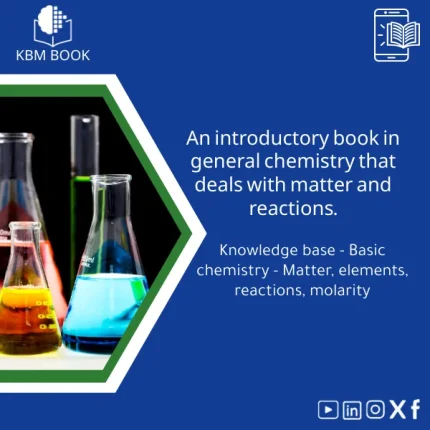
Introductory General Chemistry Book on Matter and Reactions
A structured, searchable Knowledge Base Module (KBM) that converts core general chemistry concepts — matter, elements, reactions, stoichiometry and molarity — into a hierarchical reference you can query, teach from, or integrate into study workflows. Ideal as a concise General Chemistry book alternative for students, researchers, and professionals who need accurate, practical chemistry knowledge fast.

Quantum Mechanics: A Beginner’s Guide to Superposition and Waves
Thermal Physics Guide: Understanding Heat, Energy, and Entropy
A downloadable, hierarchically structured Knowledge Base Module (KBM) that converts university-level thermodynamics into a searchable, practical digital database. Ideal for students, researchers, and professionals who need fast, reliable access to fundamentals and advanced topics in thermal physics.
Reviews
Clear filtersThere are no reviews yet.