


Audiovisual Translation Guide: Subtitling and Dubbing Techniques
Original price was: 179.00 $.139.00 $Current price is: 139.00 $.
A structured, searchable knowledge base for audiovisual translation — from alignment theory to practical subtitling workflows and Arabic dubbing techniques — designed to make film translation faster, more consistent, and professionally repeatable for students, researchers, and working translators.
Key benefits & value for students, researchers, and professionals
This audiovisual translation KBM converts scattered techniques and loose notes into a reproducible, step-by-step resource that removes guesswork from subtitling and dubbing. It was designed to answer the most common needs of translation education and production: accuracy, speed, and consistency.
What you gain
- Faster learning curve: Hierarchical modules let students progress from basic timing rules to advanced lip-sync strategies without skipping core concepts.
- Repeatable studio workflows: Producers and freelance translators get checklists and templates to standardize outputs across projects and teams.
- Research support: Compact literature summaries and citation-ready examples save researchers hours in background work.
- Localization-ready resources: Practical advice for Arabic dubbing skills, including cultural adaptation notes and voice casting criteria.
Use cases & real-life scenarios
Concrete examples of how the KBM is used day-to-day:
University course module
A lecturer imports the subtitling templates and assessment rubrics into the LMS. Students submit timecoded subtitle files and get automated feedback using the KBM’s checklist for reading speed and segmentation.
Freelance translator workflow
A freelancer uses the bilingual glossary and dubbing script templates to prepare a fast and consistent deliverable for an Arabic streaming platform, reducing rework and client queries.
Studio quality assurance
A post-production house integrates the KBM QA matrix into its delivery pipeline to ensure that subtitles meet legal limits, synchronization tolerances, and cultural adaptation standards before final review.
Who is this product for?
The KBM is explicitly aimed at “Students, researchers, and professionals who need structured knowledge databases across various fields for quick access to reliable information.”
- Translation and media students who need an authoritative audiovisual translation book alternative for coursework and projects.
- Researchers planning experiments or literature reviews on subtitling and dubbing techniques.
- Professional subtitlers, dubbing directors, and localization managers seeking standard operating procedures and templates.
How to choose the right format & level
KBM modules are flexible. Choose based on your role and immediate need:
- Student / beginner: Start with the Fundamentals module (timing, reading speed, caption grammar).
- Practitioner: Download the Production bundle (templates, scripts, voice direction sheets, QA checklist).
- Researcher: Select the Annotated Sources pack with literature summaries and example datasets.
All modules are searchable and exportable to CSV/Excel for integration with CAT tools and subtitle editors.
Quick comparison with typical alternatives
Compared with conventional books or scattered articles, this KBM focuses on modularity and reusability:
- Traditional book: Good for theory; limited for repetitive production tasks. KBM adds templates and machine-friendly exports.
- Online tutorials: Often fragmented. KBM provides a complete, cited, and versioned knowledge base.
- Studio SOPs: Company-specific and closed. KBM offers neutral, research-backed SOPs you can customize and adopt.
Best practices & tips to get maximum value
- Start with the glossary: aligning terminology early reduces revision cycles.
- Use the QA matrix during first edit to catch common sync or readability issues.
- Export templates into your subtitle editor (SRT/ASS workflows) to standardize delivery.
- For Arabic dubbing skills, apply the cultural adaptation checklist before final lip-sync adjustments.
Common mistakes when buying/using similar products and how to avoid them
- Mistake: Buying a collection of articles that duplicate content. Fix: Choose a hierarchical KBM that maps topics without repetition.
- Mistake: Overlooking export formats. Fix: Ensure the KBM provides CSV/Excel and plain-text templates for editors.
- Mistake: Assuming one-size-fits-all for dubbing. Fix: Use the voice direction and cultural adaptation modules specific to Arabic dubbing skills.
Product specifications
- Format: Downloadable Knowledge Base Modules (KBM) — structured CSV, Excel, and PDF summaries.
- Scope: Modules include Subtitling Fundamentals, Subtitle Templates, Dubbing Script Templates, Arabic Dubbing Skills, QA Matrix, Glossary, and Annotated Sources.
- Language coverage: English primary; additional Arabic adaptation module included.
- Delivery: Immediate digital download with searchable files; compatible with common subtitle editors and CAT tools.
- License: Single-user commercial and academic use (see terms on purchase page).
- Updates: Minor updates included for 12 months; extended support available.
Frequently asked questions
Is this an audiovisual translation book or a software package?
It is a structured knowledge base (KBM) delivered as downloadable files (CSV/Excel/PDF) and templates. Think of it as a digital, modular audiovisual translation book focused on practical workflows you can import into your tools — not a standalone software application.
Will this KBM teach Arabic dubbing skills from scratch?
Yes — the Arabic dubbing module covers beginner-to-intermediate skills: adaptation principles, voice casting criteria, timing adjustments, and culture-specific notes. Advanced studios may supplement with in-house training, but the KBM provides a repeatable baseline and scripts.
Can I use these templates in subtitle editors and CAT tools?
Yes. Templates and glossaries are provided in exchange-friendly formats (CSV/TSV/Excel) and include mapping notes for common editors and CAT tools so you can paste or import them directly.
What if the KBM doesn’t match my project’s style guide?
The KBM is explicitly modular and editable. Use the provided templates as a starting point and adapt the style-sheet section to match your project’s requirements. Documentation explains which fields to change and why.
Ready to standardize your audiovisual translation process?
Download a searchable, production-ready KBM that bridges theory and practice. Whether you need an audiovisual translation book for coursework, reproducible studio templates, or a research-ready dataset, this guide centralizes what professionals and academics use daily.
Secure download, immediate access, and 12 months of updates included. Purchase is protected and intended for practical, repeatable use in education and professional workflows.
Related products
Analytical Chemistry Book: Qualitative and Quantitative Methods Guide
Astrophysics Book: Understanding Stars, Galaxies, and Dark Energy
A searchable, hierarchical Knowledge Base Module (KBM) that converts astrophysics and cosmology into a practical, exam-ready and research-ready reference. Designed for students, researchers, and professionals who need immediate access to reliable explanations, equations, and data models for stars, galaxies, and dark energy.
Biochemistry Book: Understanding Chemical Processes in Living Systems
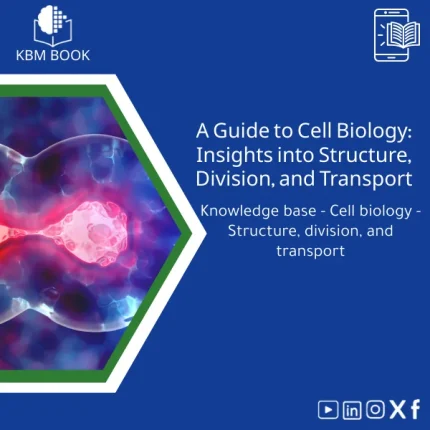
Cell Biology Guide: Structure, Division, and Transport Insights
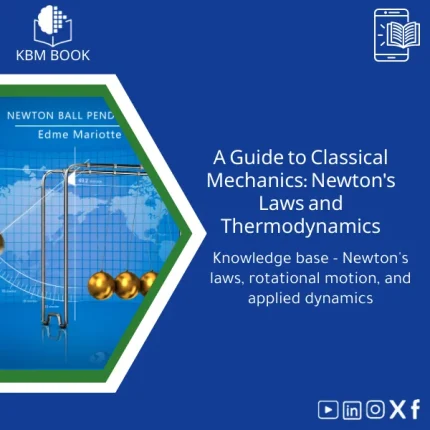
Classical Mechanics Guide: Newton’s Laws and Dynamics
A searchable, hierarchical Knowledge Base Module (KBM) that turns classical mechanics into a practical, ready-to-use reference for fast problem solving, lecture preparation, and applied engineering. Designed for students, researchers, and professionals who need precise access to Newton’s laws, rotational motion, and applied dynamics without the noise of textbooks.
Reviews
Clear filtersThere are no reviews yet.