


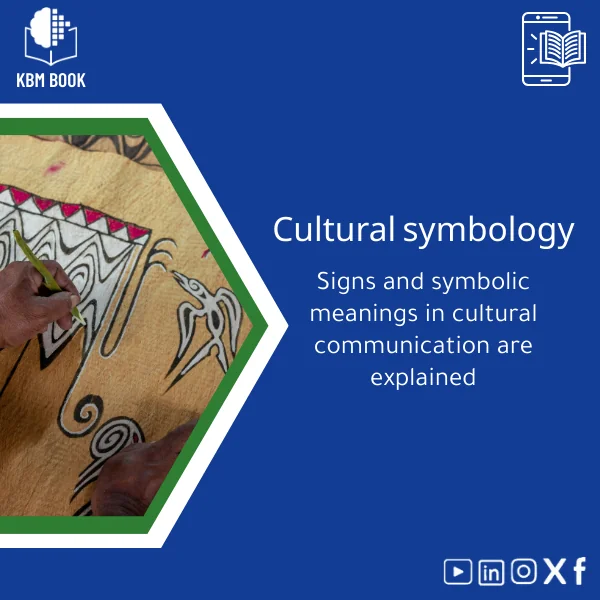
Cultural Semiotics: A Guide to Signs and Symbolic Meanings
Original price was: 199.00 $.159.00 $Current price is: 159.00 $.
A structured, searchable knowledge base for cultural semiotics that converts theory into practical reference: fast lookup of concepts, annotated case studies, coding templates and hierarchical taxonomies of cultural signs and meanings for students, researchers, and professionals.
Key benefits & value for the buyer
This cultural semiotics knowledge base transforms scattered theory into a compact, usable tool. Instead of reading multiple chapters across textbooks, you get an organized database of concepts and examples that speeds research, enhances classroom teaching, and standardizes coding for qualitative analysis.
Benefits translated from features
- Hierarchical structure → Faster comprehension: Begin with high-level concepts and drill down to case-specific sign analyses without losing context.
- Export formats → Immediate integration: Import entries into NVivo, Atlas.ti, Excel, or your LMS for immediate use in assignments and projects.
- Annotated citations → Reliable sourcing: Each entry links to primary sources and suggested readings, saving literature search time.
- Templates & rubrics → Consistent coding: Use provided rubrics to code media texts or ethnographic notes with reproducible criteria.
Use cases & real-life scenarios
Student — Coursework and essays
A student writing on symbolic communication in culture can use pre-defined definitions and case studies to construct a literature review, cite authoritative sources, and apply a ready-made rubric to analyze film scenes or advertisements.
Researcher — Coding corpora
Researchers performing content analysis can import the KBM taxonomy as a codebook, tag thousands of media items using the provided schema, and export coded results for statistical analysis—cutting project setup time from weeks to hours.
Professional — Communication & branding
A brand strategist can quickly consult the section on cultural signs and meanings to design campaigns that align with target audiences’ symbolic codes, with checklists that reduce cultural misinterpretation risk.
Who is this product for?
Tailored to the target audience, this cultural semiotics book-in-database is for:
- Undergraduate and graduate students in cultural studies, media studies, anthropology, and linguistics.
- Academic researchers needing consistent coding frameworks and reliable citations.
- Professionals in UX, marketing, and content strategy who rely on symbolic communication in culture.
- Instructors and trainers who want structured lesson plans and classroom exercises on semiotics.
How to choose the right module
The KBM is offered in three scope levels—choose the one that matches your needs:
- Introductory: Core terms, short case examples, classroom exercises — best for newcomers and undergraduate courses.
- Practitioner: Full taxonomies, coding rubrics, and applied frameworks — ideal for researchers and professionals.
- Advanced: Expanded bibliography, cross-cultural corpora, and integration scripts for data tools — for doctoral researchers and specialized analysts.
If you’re unsure which level you need, choose Practitioner for the most balanced set of theory and tools; upgrades are available.
Quick comparison with typical alternatives
Compared to traditional textbooks, a KBM prioritizes searchable entries, reusable data formats, and immediate applicability. Compared to articles or lecture notes, it offers hierarchical organization and exportable codebooks to speed project work. If you need single-read conceptual insight, a textbook may suffice; if you require repeatable, project-ready resources, this KBM is the more efficient choice.
Best practices & tips to get maximum value
- Start by importing the taxonomy into your preferred analysis tool and run a small pilot code on 50 items to calibrate categories.
- Use the annotated bibliography for quick citation rather than re-searching primary sources.
- Customize the rubrics conservatively—document changes to keep coding reproducible across team members.
- Combine entries with classroom exercises to turn passive reading into active learning sessions.
Common mistakes when buying/using similar products and how to avoid them
- Mistake: Buying a narrative book and expecting a reusable dataset. Fix: Choose a KBM if you need exportable, machine-readable structures.
- Mistake: Skipping taxonomy calibration. Fix: Pilot the codebook on a small subset before scaling.
- Mistake: Ignoring source references. Fix: Use the KBM’s annotated citations to verify interpretations.
Product specifications
- Title: Cultural Semiotics: A Guide to Signs and Symbolic Meanings
- Format: Downloadable KBM package (CSV, JSON, SQLite, PDF guide)
- Scope options: Introductory / Practitioner / Advanced
- Structure: Hierarchical taxonomy with core entries, subentries, examples, and bibliographic references
- Entries: 250+ core entries (Practitioner level), 600+ examples and annotated case studies (Advanced)
- License: Single-user digital license; multi-user and institutional licenses available
- Language: English (reference metadata included for multilingual tagging)
- Usage notes: Ready to import into qualitative analysis tools; includes annotation and coding templates
FAQ
What formats are included and how do I import them into analysis tools?
The KBM package includes CSV and JSON exports for immediate import into Excel, R, or Python workflows, plus a SQLite database for direct integration with qualitative analysis tools. We provide short import instructions and example scripts for common tools.
Is the content academically sourced and up-to-date?
Yes. Each entry includes annotated citations to primary literature and recommended readings. The Practitioner and Advanced modules include recent journal references and are maintained with periodic updates.
Can I use this KBM for commercial projects (e.g., consulting or product research)?
The standard single-user license allows commercial use. Institutional and multi-user licenses are available for teams—contact support for enterprise terms.
How do I know which scope to buy?
If you need a classroom-ready tool with practical templates, choose Practitioner. Select Introductory for basic coursework and Advanced for in-depth research and large corpora. Upgrades between tiers are available.
Ready to turn semiotic theory into a working knowledge base?
Download the KBM and start applying structured cultural semiotics to your projects today. The package combines academic rigor with practical tools so you spend less time searching and more time analyzing.
Related products
Biochemistry Book: Understanding Chemical Processes in Living Systems
Comprehensive Botany Book on Plant Taxonomy and Photosynthesis
A structured, searchable botany book designed as a Knowledge Base Module (KBM) — an end-to-end reference on plant taxonomy, organ structure, and the biochemistry of photosynthesis. Built for students, researchers, and professionals who need reliable, hierarchical knowledge they can search, cite, and apply immediately.

Comprehensive Microbiology Book on Bacteria, Viruses, and Fungi
Electromagnetism Book: A Comprehensive Guide to Fields and Circuits

General Physics Book: Fundamentals of Force, Motion, Energy

Introductory General Chemistry Book on Matter and Reactions
A structured, searchable Knowledge Base Module (KBM) that converts core general chemistry concepts — matter, elements, reactions, stoichiometry and molarity — into a hierarchical reference you can query, teach from, or integrate into study workflows. Ideal as a concise General Chemistry book alternative for students, researchers, and professionals who need accurate, practical chemistry knowledge fast.


Reviews
Clear filtersThere are no reviews yet.