


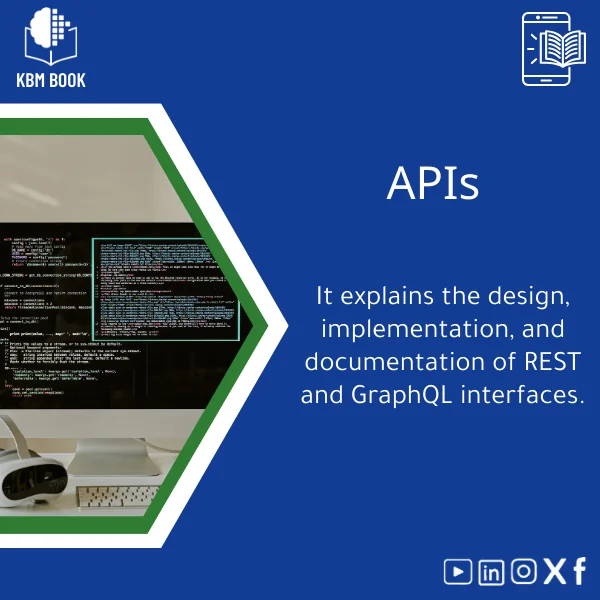
REST and GraphQL API Design Template for Documentation
Original price was: 199.00 $.159.00 $Current price is: 159.00 $.
A practical, hierarchical API design template that turns design rules, OpenAPI/GraphQL schemas, examples, and documentation drafts into a searchable, reusable knowledge base—so students, researchers, and professionals can author, review, and ship APIs faster with consistent, production-ready documentation.
Key benefits & value for the buyer
This API design template translates theory into an operational knowledge base: every design rule is paired with examples, ready-to-copy schema snippets, and documentation fragments. That means less time debating conventions and more time shipping stable APIs.
What you get — benefits, not just features
- Speed: Pre-built OpenAPI and GraphQL modules reduce authoring time by providing tested patterns and sample responses.
- Consistency: Enforce a single design language across teams using standardized templates for endpoints, mutations, errors, and pagination.
- Clarity: Structured KBM layout makes it easy for students and researchers to find authoritative answers quickly.
- Reusability: Copyable snippets for client SDKs, mock servers, and CI tests—integrate the template into your workflow immediately.
Use cases & real-life scenarios
Examples of how this API design template is used in practice:
For a university research group
A research team documenting data access endpoints uses the template to define consistent payloads, rate-limiting notes, and reproducible examples. The KBM structure allows new members to find schema definitions and test queries quickly.
For a small product team
A startup sets up its public REST API and a GraphQL gateway. Engineers reuse the template’s OpenAPI fragment and GraphQL SDL, generate mock servers for frontend development, and export documentation pages for external developers without rewriting examples.
For a technical writer or instructor
Instructors adapt the modules into course materials: exercises include designing a REST endpoint from the template, writing a GraphQL resolver spec, and generating sample requests for testing.
Who is this product for?
This KBM is built for students, researchers, and professionals who require a structured, searchable reference rather than fragmented blog posts or long books. Ideal profiles:
- CS students learning API design patterns and documentation practices.
- Backend developers and API architects formalizing conventions across projects.
- Technical writers who need templates for clear, reusable documentation.
- Researchers publishing reproducible APIs and datasets.
How to choose the right template for your project
Consider these factors when deciding if this API design template matches your needs:
- Scope: If you need both REST and GraphQL coverage, choose this combined KBM rather than single-format templates.
- Integration: Look for OpenAPI/Swagger snippets if you plan to generate clients or documentation automatically.
- Depth: This KBM covers from basic endpoint patterns to advanced topics (versioning, deprecation, auth). Prefer it if you want a single, progressive resource.
- Format: If you need editable schema files and plain-text templates (YAML, SDL, Markdown), this template provides them ready-to-download.
Quick comparison with typical alternatives
How this KBM differs from other options you might consider:
- Vs. books: Books explain concepts; this template gives modular, copy-paste-ready artifacts and structured searchability for implementation.
- Vs. blog posts: Blog posts are situational and shallow. The KBM provides exhaustive, non-redundant modules covering multiple real-world patterns.
- Vs. ad-hoc internal docs: Internal notes are inconsistent. This template enforces one design language you can adopt organization-wide.
Best practices & tips to get maximum value
- Start by importing the OpenAPI and GraphQL modules into your repo to generate documentation and mock servers early.
- Use the error-model templates to standardize client handling and create reproducible tests for edge cases.
- Adopt the versioning and deprecation patterns in the KBM to communicate breaking changes clearly.
- Extract example requests/responses into your test suites for regression checks.
Common mistakes when buying or using API resources — and how to avoid them
- Mistake: Buying a general book expecting ready-to-run assets. Avoid: Choose this KBM when you need actionable templates and schema files.
- Mistake: Copying patterns without adapting to domain constraints. Avoid: Use provided checklists to audit each endpoint for your business rules.
- Mistake: Treating documentation as an afterthought. Avoid: Integrate the documentation templates into CI to keep docs in sync.
Product specifications
- Format: Downloadable KBM package (YAML OpenAPI v3 fragments, GraphQL SDL, Markdown docs, JSON examples)
- Files included: openapi.yaml fragments, schema.graphql, examples/*.json, docs/*.md, README and implementation checklist
- Language: English (structured for easy translation)
- Compatibility: Integrates with Swagger/OpenAPI tools, GraphQL tooling, static site generators
- License: Commercial use allowed (see license.txt inside package for terms)
- Delivery: Immediate digital download after purchase
- Usage notes: Editable source files intended for integration into repositories and docs pipelines
Frequently asked questions
Does this template include ready-to-run OpenAPI or GraphQL files I can import?
Yes. The package includes OpenAPI v3 fragments and GraphQL SDL files formatted for common tools. Use them directly in Swagger UI, Postman, or GraphQL servers with minor adjustments for your domain models.
Will this replace a REST API book or an in-depth course?
No. This KBM is a practical toolkit and documentation template focused on implementation. It complements textbooks and courses by providing reusable artifacts and real examples for production usage.
Is the content suitable for academic research documentation?
Yes. Modules include reproducible examples and versioning guidelines that help researchers publish stable, testable APIs alongside datasets and experiments.
What if I need modifications or a custom version for my organization?
The KBM is provided as editable files. You can adapt, extend, or integrate modules into your internal KBM. Contact KBMBook for consultancy or customization options if you need hands-on help.
Ready to standardize your API design and documentation?
Download the REST and GraphQL API Design Template and get instant access to modular OpenAPI/GraphQL snippets, documentation templates, and real examples that teams actually use. Ideal for students, researchers, and professionals who want a reliable, searchable knowledge base — not another long book.
Note: Digital download is available immediately after purchase. See the included README for integration tips and a quick start checklist.
Related products
Analytical Chemistry Book: Qualitative and Quantitative Methods Guide
Astronomy Observational Techniques Guide for Celestial Motion
Biological Anthropology Study Guide on Human Evolution
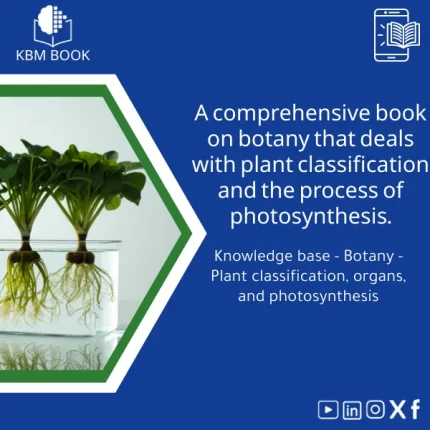
Comprehensive Botany Book on Plant Taxonomy and Photosynthesis
A structured, searchable botany book designed as a Knowledge Base Module (KBM) — an end-to-end reference on plant taxonomy, organ structure, and the biochemistry of photosynthesis. Built for students, researchers, and professionals who need reliable, hierarchical knowledge they can search, cite, and apply immediately.
General Biology Book: A Guide to Cells, Genetics & Taxonomy
Physical Chemistry Guide: Energy, Thermodynamics & Interactions
A structured Knowledge Base Module (KBM) for Physical Chemistry that converts core theory, worked examples, and applied datasets into a searchable, hierarchical database — ideal for students, researchers, and professionals who need fast, reliable access to chemical thermodynamics basics and molecular interaction models.
Thermal Physics Guide: Understanding Heat, Energy, and Entropy
A downloadable, hierarchically structured Knowledge Base Module (KBM) that converts university-level thermodynamics into a searchable, practical digital database. Ideal for students, researchers, and professionals who need fast, reliable access to fundamentals and advanced topics in thermal physics.
Reviews
Clear filtersThere are no reviews yet.