


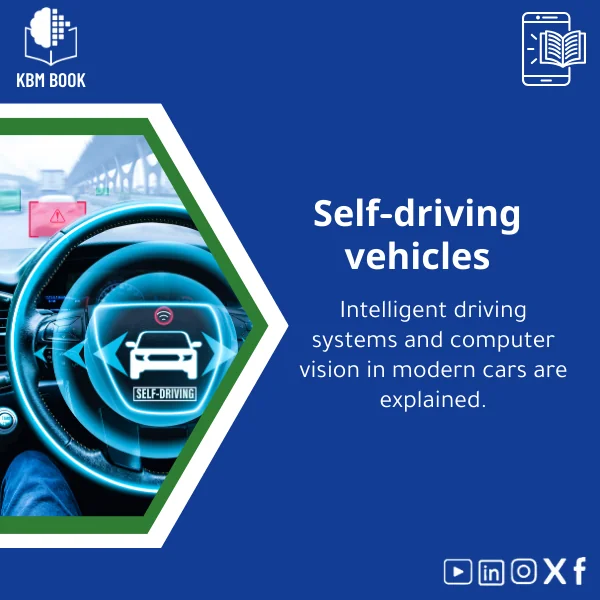
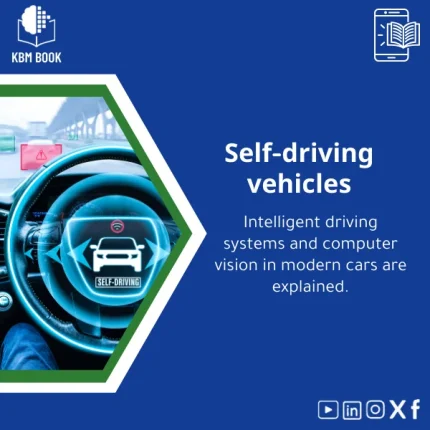
Autonomous Vehicles Guide to Intelligent Driving Systems
Original price was: 199.00 $.159.00 $Current price is: 159.00 $.
A structured, searchable knowledge base that breaks down autonomous vehicles into clear, hierarchical modules:
sensor systems, perception and computer vision in vehicles, decision-making stacks, control, safety architectures, and evaluation frameworks — built for quick reference, learning, and applied research.
Key benefits & value for the buyer
This KBM translates a complex field into modular, reusable knowledge units. Each module pairs concise explanations with formulas, diagrams, pseudo-code, and evaluation checklists so you can:
- Save time: replace scattered papers and slide decks with one indexed resource for autonomous vehicles.
- Accelerate projects: copy-ready architectures and pipeline templates reduce setup time for experiments or prototypes.
- Improve reliability: standard validation metrics and safety patterns reduce trial-and-error in system design.
- Teach effectively: use lesson-ready modules for courses or workshops on intelligent driving systems.
- Reuse & integrate: export sections into research notes, code repos, or documentation systems with minimal editing.
Use cases & real-life scenarios
Academic study and coursework
A graduate student building a course on perception for autonomous vehicles can use the KBM to assemble weekly modules: sensor theory, camera calibration, deep learning architectures for object detection, and performance benchmarks — each with reading lists and lab exercises.
Research prototypes
A research engineer can extract the perception-to-planning pipeline, copy the suggested evaluation scripts, and adapt the provided data formats to run reproducible experiments across different sensors and datasets.
Industry validation & onboarding
A product team piloting an intelligent driving feature can use the safety checklists and integration notes to align hardware, software, and test requirements while onboarding new engineers faster with a single verified reference.
Who is this product for?
The guide is built for learners and practitioners who need a compact, trustworthy, and immediately usable reference on autonomous vehicles:
- Undergraduate and graduate students in robotics, EE, and CS
- Researchers needing reproducible pipelines and evaluation criteria
- Engineers building perception stacks or vehicle controllers
- Trainers and course authors creating discipline-specific syllabi
How to choose the right edition & format
KBM editions are optimized by depth and format. Choose based on your workflow:
- Compact PDF edition — Best for quick reading and citation (students, instructors).
- Full KB export (JSON/CSV + indexed PDF) — Best for researchers and teams who will query, integrate, or import modules into tools.
- Lab pack — Includes datasets pointers, code snippets, and evaluation templates for hands-on experiments.
If you plan to integrate content into code or a knowledge system, select the Full KB export. For reading and classroom use, the Compact PDF is sufficient and more cost-effective.
Quick comparison with typical alternatives
You might consider textbooks, review articles, or scattered online tutorials. Compared to those:
- Textbooks: comprehensive but often slow to update and not modular for reuse.
- Review articles: high-level summaries lacking implementation details or reusable assets.
- Online tutorials & repos: practical but fragmented; hard to find consistent validation and safety guidance.
The KBM combines the structured depth of a textbook with the modularity and practical assets of repos, plus an index designed for fast lookup.
Best practices & tips to get maximum value
- Start with the overview module (architecture & safety) to set consistent system-level goals before deep-diving into perception or control.
- Use the evaluation checklists to define success metrics before running experiments — it reduces bias and rework.
- Export only the modules you need into your repo to keep documentation and code aligned.
- Combine KBM sections with your data logs and test benches for reproducible validation records.
Common mistakes when buying or using similar products — and how to avoid them
- Mistake: Buying a single-format reference when you need machine-readable modules. Fix: choose the Full KB export.
- Mistake: Skipping the safety and validation modules. Fix: integrate the provided safety checklist into your development sprints.
- Mistake: Treating perception examples as production-ready code. Fix: use code snippets as starting points and follow the deployment notes in the KBM.
Product specifications
- Title: Autonomous Vehicles Guide to Intelligent Driving Systems
- Formats: Compact PDF + optional Full KB export (JSON, CSV) + Lab pack (code snippets)
- Modules: Intro & safety, Sensors & calibration, Computer vision in vehicles, Perception pipelines, Planning & decision systems, Control, Validation & metrics, Deployment notes
- Pages (PDF edition): ~220 pages; modular breakdown by topic for fast navigation
- License: Standard single-user commercial/educational license (team & institutional licenses available)
- Compatibility: Import-ready for reference managers, integrated development environments, and documentation systems
- Delivery: Instant download after purchase
Usage note: choose the edition that matches your workflow. Full KB export recommended for programmatic use and reproducible research.
FAQ
What formats are included and can I get a machine-readable version?
The Compact edition is a searchable PDF. The Full KB export includes JSON and CSV files for each module plus an indexed PDF. These are designed for import into analysis tools or knowledge systems.
Is the content up-to-date with the latest practices in perception and computer vision in vehicles?
The KBM is curated to reflect contemporary architectures, best practices, and evaluation standards. Purchase includes notes on the version/date and options to buy update packs when new major revisions are released.
Can I use sections in classroom slides or published papers?
Yes — educational use is allowed under the single-user license with attribution. For redistribution, team use, or embedding in commercial products, choose an appropriate license or contact support for institutional options.
What if I’m unsure which edition to buy?
If you need editable, machine-readable modules for research or integration, choose Full KB export. For reading and teaching, the Compact PDF is sufficient. Contact support for a content sample if you need to verify coverage before purchase.
Ready to get started?
Acquire a structured, practical reference for autonomous vehicles that combines depth with usability. Whether you need an autonomous vehicles book PDF for study or a full intelligent driving systems guide to integrate into research workflows, this KBM speeds up results and reduces uncertainty.
Instant download. Includes purchase options for individual, lab-pack, and team licenses. Contact support for institutional access or sample modules.
Related products
Astronomy Observational Techniques Guide for Celestial Motion
Atomic Physics Guide: Understanding Atomic and Electron Properties
Knowledge Base — Atomic/Electron Properties & Electromagnetic Interactions. A structured, searchable KBM for students, researchers, and professionals who need an authoritative atomic physics reference that organizes concepts, formulas, experiments, and practical applications from basics of atomic physics to advanced electron properties.
Biological Anthropology Study Guide on Human Evolution
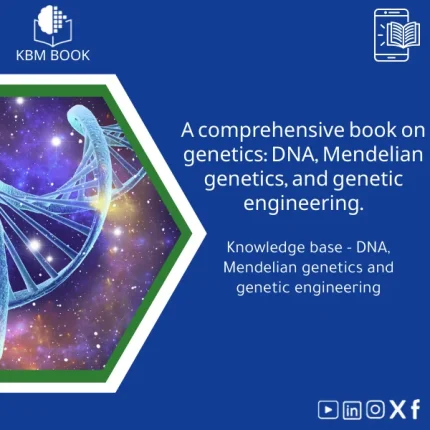
Comprehensive Genetics Book: DNA, Mendelian Genetics & Engineering
A structured, searchable knowledge base module (KBM) that turns genetics theory and practice into an immediately usable digital reference — from DNA structure to Mendelian genetics and contemporary genetic engineering techniques — optimized for students, researchers, and professionals who need reliable answers fast.

Inorganic Chemistry Guide: Bonding and Crystal Solids
A structured, searchable Knowledge Base Module (KBM) that converts inorganic chemistry fundamentals and advanced topics—bonding models, lattice structures, defects, and solid-state properties—into a practical digital reference for students, researchers, and professionals who need fast, reliable answers without wading through textbooks.

Molecular Biology Guide: Transcription, Translation & Repair
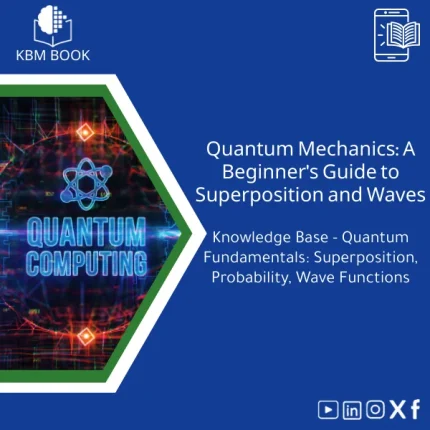
Quantum Mechanics: A Beginner’s Guide to Superposition and Waves
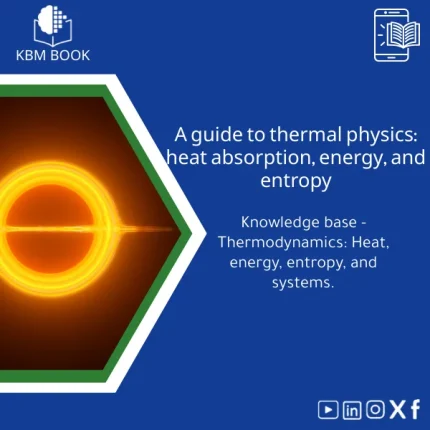
Thermal Physics Guide: Understanding Heat, Energy, and Entropy
A downloadable, hierarchically structured Knowledge Base Module (KBM) that converts university-level thermodynamics into a searchable, practical digital database. Ideal for students, researchers, and professionals who need fast, reliable access to fundamentals and advanced topics in thermal physics.
Reviews
Clear filtersThere are no reviews yet.