


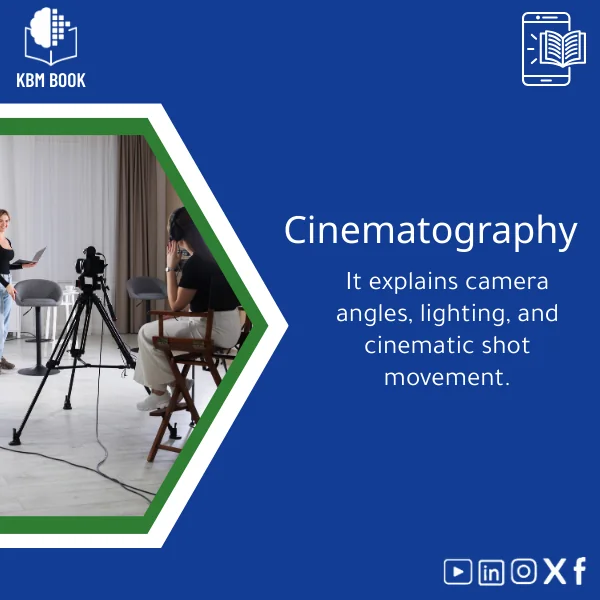
Cinematography Guide: Mastering Camera Angles and Lighting
Original price was: 179.00 $.139.00 $Current price is: 139.00 $.
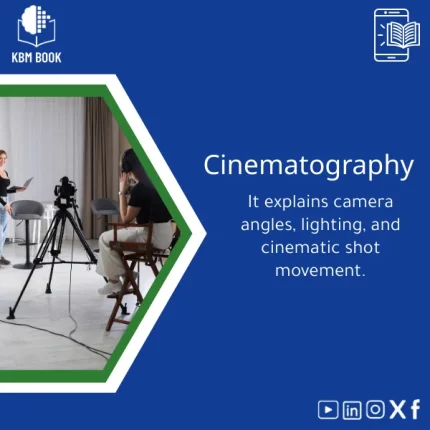
A structured, hierarchically organised knowledge base module for cinematography — focused on camera angles, cinematic lighting basics, and film shot movement — built so students, researchers, and professionals can find reliable, actionable guidance quickly and apply it on set or in study.
Key benefits & value for cinematography students and professionals
This KBM converts scattered cinematography knowledge into a single, actionable database. Each feature below is framed as a benefit you can use on set or in study:
Fast decision-making on set
Lookup-ready entries on camera angles, lens choices, and movement mean you spend less time experimenting and more time capturing the intended emotion. Example: choose a 35mm medium close-up with a slight Dutch tilt for constrained tension — the module shows lens effect, typical lighting, and blocking notes.
Consistent learning path
The KBM is sequential: fundamentals → intermediate techniques → scene-specific templates (dialogue, chase, montage). Students progress without repetition or gaps.
Re-usable production assets
Diagrams, shot-lists, and lighting schematics are formatted for copy-paste into call sheets and lesson plans — saving preparation time for educators and directors.
Use cases & real-life scenarios
Film student preparing a shot list
Scenario: You have one afternoon to build a three-shot sequence. Use the “Shot Movement” module to select entry, anchor, and exit shots; the guide provides framing references and recommended lens/lighting pairings that match mood and continuity.
Researcher compiling a comparative study
Scenario: Compare 1950s noir lighting with modern high-key drama. The lighting taxonomy lets you filter techniques by era, contrast ratio, and equipment requirements for direct comparison and citation.
Professional director on a tight budget
Scenario: Limited gear and time. Access the “Practical Lighting” section to recreate cinematic looks using minimal lights and practicals, with step-by-step diagrams and exposure targets.
Who is this product for?
The KBM is tailored to:
- Film and media students studying cinematography and beginner film directing.
- Researchers documenting shot movement patterns or lighting evolution in cinema.
- Professionals—DOPs, assistant directors, and content creators—who need a concise camera angles guide and practical lighting references.
- Educators building lesson plans and practical exercises from a verified database.
If your work requires repeatable, searchable knowledge rather than one-time reading, this KBM is designed for you.
How to choose the right KBM format
KBMbook distributes modules in formats optimized for different workflows. Choose based on how you’ll use the content:
- PDF (printable, annotated): Best for classroom handouts and offline review.
- Structured text (CSV/JSON): Ideal for researchers who will import entries into databases or analysis tools.
- Interactive index (HTML): Fast in-browser search and cross-references for on-set tablets.
Pick the format that fits your workflow; you can download multiple formats if you need portability and machine-readability.
Quick comparison with typical alternatives
Why a KBM instead of a cinematography book, online article, or course?
- Books: Deep but linear — harder to search quickly for a single technique.
- Articles/Blogs: Often narrow or anecdotal — lack a standardized taxonomy and cross-references.
- Video courses: Great for demonstration, poor for quick lookup and extracting exact settings or diagrams.
The KBM blends the depth of a book with the searchability of a database and the reusability of production assets.
Best practices & tips to get maximum value
- Start with the “Foundations” module to standardize terminology between crew and educators.
- Use the lighting diagrams directly in your previsualization doc to reduce set time.
- Export the shot-list templates to your scheduling software to streamline production planning.
- Annotate case studies in the KBM to build a shared team reference for recurring shot choices.
Common mistakes when buying/using similar resources — and how to avoid them
Buying a single-format resource
Problem: You purchase a static PDF but need machine-readable entries later. Solution: Choose the multi-format bundle or verify export options before purchase.
Assuming one resource replaces practice
Problem: Expecting the KBM to teach hands-on camera operation. Solution: Use the KBM to guide practice — follow the diagrams and recreate setups in controlled exercises.
Ignoring preservation & licensing
Problem: Not checking usage rights. Solution: Review included license notes; educational use is supported and production reuse is clearly described in the module.
Product specifications
- Title: Cinematography Guide: Mastering Camera Angles and Lighting
- Format options: PDF, HTML interactive index, CSV/JSON (structured export)
- Content structure: 6 hierarchical modules — Foundations, Lens & Framing, Lighting Taxonomy, Movement & Blocking, Scene Templates, Case Studies
- Assets included: 30+ lighting diagrams, 50+ shot templates, 20 scene breakdowns, exportable shot-lists
- Language: English (with Arabic site support for KBMbook platform navigation)
- Usage notes: Licensed for individual use and classroom distribution; commercial reuse policies included in download
FAQ
Is this a textbook or a searchable database?
It is a Knowledge Base Module (KBM): structured like a database with textbook-level depth. You get narrative explanations plus indexed entries and exportable assets for rapid searching and reuse.
Will this teach me how to operate a camera?
The KBM provides technical recommendations (lenses, aperture ranges, exposure targets) and practical exercises but does not replace hands-on training. Use it as a technical reference while practicing on your equipment.
What file formats are included and can I use them on set?
PDF and HTML are ready for tablets and print. CSV/JSON allow integration with call-sheet or scheduling tools so you can use templates directly on set.
How does this KBM save me time compared to courses or books?
The hierarchical index and practical templates reduce lookup time. Instead of re-watching videos or flipping chapters, you search or jump to the exact technique or diagram you need.
Ready to streamline your cinematography workflow?
Download the Cinematography KBM and replace fragmented notes with a single, searchable production-ready resource. Ideal for coursework, research, and on-set use.
Instant download — multiple formats included. Secure payment and education-friendly licensing from KBMBook.
Related products
Astronomy Observational Techniques Guide for Celestial Motion
Astrophysics Book: Understanding Stars, Galaxies, and Dark Energy
A searchable, hierarchical Knowledge Base Module (KBM) that converts astrophysics and cosmology into a practical, exam-ready and research-ready reference. Designed for students, researchers, and professionals who need immediate access to reliable explanations, equations, and data models for stars, galaxies, and dark energy.
Atomic Physics Guide: Understanding Atomic and Electron Properties
Knowledge Base — Atomic/Electron Properties & Electromagnetic Interactions. A structured, searchable KBM for students, researchers, and professionals who need an authoritative atomic physics reference that organizes concepts, formulas, experiments, and practical applications from basics of atomic physics to advanced electron properties.
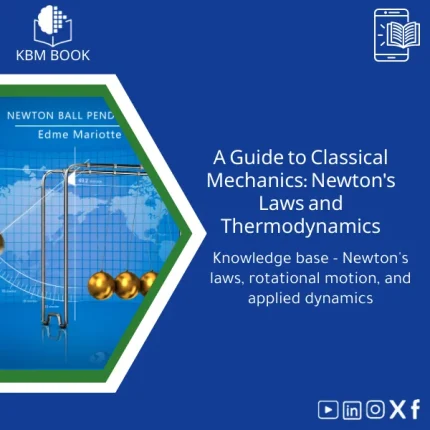
Classical Mechanics Guide: Newton’s Laws and Dynamics
A searchable, hierarchical Knowledge Base Module (KBM) that turns classical mechanics into a practical, ready-to-use reference for fast problem solving, lecture preparation, and applied engineering. Designed for students, researchers, and professionals who need precise access to Newton’s laws, rotational motion, and applied dynamics without the noise of textbooks.

Comprehensive Evolutionary Biology Book on Natural Selection
Cosmology Book: Guide to Big Bang and Galaxy Evolution
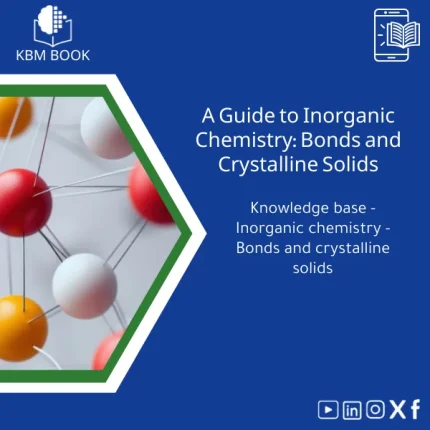
Inorganic Chemistry Guide: Bonding and Crystal Solids
A structured, searchable Knowledge Base Module (KBM) that converts inorganic chemistry fundamentals and advanced topics—bonding models, lattice structures, defects, and solid-state properties—into a practical digital reference for students, researchers, and professionals who need fast, reliable answers without wading through textbooks.
Reviews
Clear filtersThere are no reviews yet.