


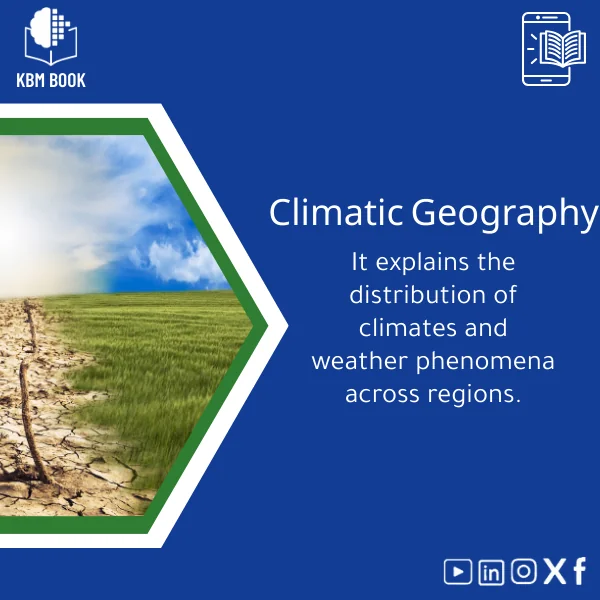
Climatic Geography Guide: Understanding Regional Climate Patterns
Original price was: 179.00 $.139.00 $Current price is: 139.00 $.
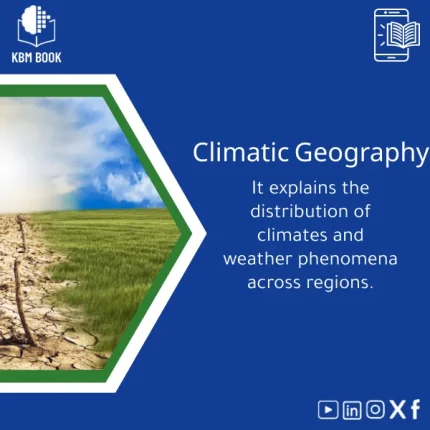
A structured, searchable knowledge base that maps regional distributions of climates and weather phenomena into a hierarchical, practice-ready module — designed for students, researchers, and professionals who need fast, reliable access to climatic geography concepts, classifications, and applied datasets.
Key benefits & value for students, researchers, and professionals
The Climatic Geography Guide converts scattered knowledge about regional climates into an organized, traceable knowledge base (KBM). Instead of flipping through chapters or searching multiple papers, you get:
- Speed: Structured headings and tags let you find definitions, maps, and datasets in seconds — ideal when you need an authoritative citation during writing or presentations.
- Reliability: Each entry cites standard classification schemes (e.g., Köppen, Thornthwaite) and points to source datasets, reducing the time spent verifying facts.
- Reusability: CSV and JSON exports let you import climate parameters into your models, GIS projects, or teaching materials without manual reformatting.
- Depth without noise: Hierarchical modules cover fundamentals, intermediate methods, and advanced analytics — no duplicate text or irrelevant filler.
Use cases & real-life scenarios
1. University coursework and exam prep
Instructors use the module to assemble lecture slides: the KBM’s sequenced topics (climate classification, controls, regional case studies) map directly to weekly syllabi. Students can download the climatic geography pdf to revise definitions and exam-style questions.
2. Research & literature reviews
Researchers fast-track literature reviews by accessing pre-compiled summaries of regional climate studies, linked datasets, and standardized terminology — saving hours of source hunting.
3. Applied environmental planning
Planners and consultants extract local climate parameters (temperature ranges, precipitation regimes, seasonality indices) from CSV exports to feed vulnerability assessments and adaptation plans.
4. Teaching materials & training
Trainers reuse KBM sections as modular handouts, lab instructions, and GIS exercises — each module is chunked so you can assemble or reorder content for workshops.
Who is this product for?
The Climatic Geography Guide is built for anyone who needs dependable, well-organized climatic information:
- Undergraduate and graduate students studying physical geography or climate science.
- Researchers needing quick access to regional climate classifications, datasets, and reproducible workflows.
- Professionals in environmental consulting, urban planning, agriculture, and risk assessment who require region-specific climate parameters.
- Instructors and trainers preparing structured lessons with ready-to-use data and case studies.
How to choose the right format and module depth
The KBM is available in multiple electronic formats to fit different workflows. Choose based on purpose:
- PDF (searchable): Best for reading, printing, and course handouts. Ideal for students and instructors.
- CSV tables: Export climate variables and station data directly into spreadsheets or statistical software — recommended for analysts and consultants.
- JSON: For integration with GIS apps, web tools, or custom scripts. Useful for researchers building automated pipelines.
- Module depth: Select a concise module for quick reference or the full module for advanced methods and regional datasets. If unsure, start with the full module — content is sectional, so you can use only the parts you need.
Quick comparison with typical alternatives
How this KBM differs from other options you might consider:
- Textbooks: Linear narratives; good for theory but not for extractable data or modular reuse.
- Single PDFs and articles: Fragmented, inconsistent formats; require manual consolidation.
- Raw datasets: Provide numbers but lack explanatory context, classification keys, and applied examples.
- Climatic Geography Guide: Combines standardized theory, regional classifications, reproducible data tables, and applied workflows in one searchable package.
Best practices & tips to get maximum value
- Use the searchable PDF as your orientation tool; then export CSV/JSON for analysis.
- Integrate exports with GIS layers — sample import scripts are included in the module.
- Cite module entries and original data sources in papers and reports to maintain traceability.
- Customize module sections when preparing lectures; the hierarchical design supports copy-paste without losing context.
- Keep an archived copy of the module for reproducibility; changes in public datasets can be traced back to the module snapshot.
Common mistakes when buying or using climatic geography resources — and how to avoid them
- Mistake: Buying narrative-only material expecting usable data.
Fix: Confirm the module includes CSV/JSON exports and sample workflows. - Mistake: Assuming one classification fits all regions.
Fix: Use the KBM’s comparative section on classification schemes to choose appropriately. - Mistake: Overlooking license terms for professional use.
Fix: Review the included license note; professional-use options are available. - Mistake: Not testing format compatibility.
Fix: Download sample pages and sample CSV before committing to a large course bundle.
Product specifications
- Product type: Knowledge Base Module (KBM) — Climatic Geography
- Main keyword: climatic geography
- Formats included: Searchable PDF, CSV tables, JSON export
- Structure: Hierarchical modules (Intro → Methods → Regional Profiles → Case Studies → Data Exports)
- Pages / entries: ~180 pages; ~1200 indexed entries and tags
- Languages: English (primary); metadata includes Arabic site descriptions where applicable
- Compatibility: Desktop and mobile PDF readers; import-ready CSV/JSON for GIS and analysis tools
- License: Personal use; options for academic and professional licenses available in purchase flow
- Delivery: Instant digital download after purchase
Frequently asked questions
Is this a PDF only, or can I get the data to analyze?
The Climatic Geography Guide includes a searchable PDF for reading and teaching, plus CSV and JSON exports for all core climate parameters and regional tables — ready to import into spreadsheets, R/Python, or GIS tools.
Can I use this in a university course or professional report?
Yes. The module is designed for academic and professional use. The default purchase grants personal and classroom use; extended licenses for institutional or commercial use are offered at checkout. All source references are provided to support citation.
How current are the datasets and classifications?
Entries reference established classification schemes and the most recent public datasets available at publication date. Each module includes a versioned snapshot and links to primary sources so you can verify and update as needed.
What if the format isn’t compatible with my tools?
We include CSV and JSON to maximize compatibility. If you need an alternate format or assistance, contact support — we provide guidance and conversion tips for common GIS and analysis platforms.
Ready to save time and work with reliable climatic geography resources?
Purchase a structured, research-ready KBM that turns climatic geography into an actionable database — not a fragmented reading list. Instant download, multiple formats, and modular content ready for teaching, research, or applied projects.
Related products
Astrophysics Book: Understanding Stars, Galaxies, and Dark Energy
A searchable, hierarchical Knowledge Base Module (KBM) that converts astrophysics and cosmology into a practical, exam-ready and research-ready reference. Designed for students, researchers, and professionals who need immediate access to reliable explanations, equations, and data models for stars, galaxies, and dark energy.

Classical Mechanics Guide: Newton’s Laws and Dynamics
A searchable, hierarchical Knowledge Base Module (KBM) that turns classical mechanics into a practical, ready-to-use reference for fast problem solving, lecture preparation, and applied engineering. Designed for students, researchers, and professionals who need precise access to Newton’s laws, rotational motion, and applied dynamics without the noise of textbooks.
Comprehensive Botany Book on Plant Taxonomy and Photosynthesis
A structured, searchable botany book designed as a Knowledge Base Module (KBM) — an end-to-end reference on plant taxonomy, organ structure, and the biochemistry of photosynthesis. Built for students, researchers, and professionals who need reliable, hierarchical knowledge they can search, cite, and apply immediately.
Cosmology Book: Guide to Big Bang and Galaxy Evolution
Electromagnetism Book: A Comprehensive Guide to Fields and Circuits

Inorganic Chemistry Guide: Bonding and Crystal Solids
A structured, searchable Knowledge Base Module (KBM) that converts inorganic chemistry fundamentals and advanced topics—bonding models, lattice structures, defects, and solid-state properties—into a practical digital reference for students, researchers, and professionals who need fast, reliable answers without wading through textbooks.

Introductory General Chemistry Book on Matter and Reactions
A structured, searchable Knowledge Base Module (KBM) that converts core general chemistry concepts — matter, elements, reactions, stoichiometry and molarity — into a hierarchical reference you can query, teach from, or integrate into study workflows. Ideal as a concise General Chemistry book alternative for students, researchers, and professionals who need accurate, practical chemistry knowledge fast.
Reviews
Clear filtersThere are no reviews yet.