


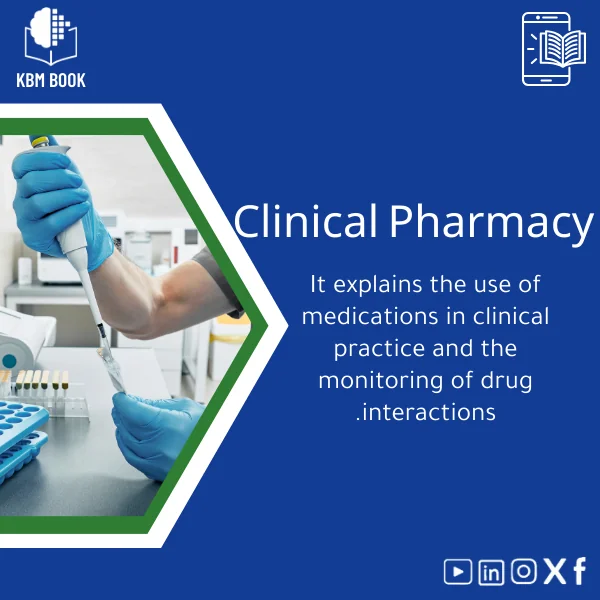
Clinical Pharmacy Guide for Medication Use and Interaction
Original price was: 349.00 $.279.00 $Current price is: 279.00 $.
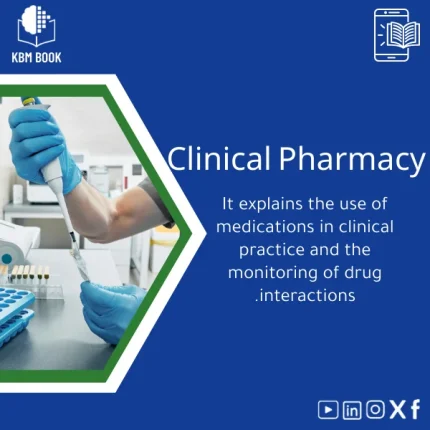
A structured, searchable knowledge base module (KBM) that turns clinical pharmacy knowledge into a practical digital reference for medication use in practice and drug interaction monitoring — designed for students, researchers, and healthcare professionals who need fast, reliable answers.
Key benefits & value for students, researchers, and clinicians
This Clinical Pharmacy KBM converts dispersed textbook chapters, interaction tables, and monitoring protocols into a compact, logically layered database you can query and apply immediately. The value is practical: less time searching, fewer dosing errors, clearer patient counselling, and faster literature-backed decisions.
Feature → Buyer benefit
- Hierarchical modules: Follow a learning path from fundamentals to complex cases — ideal for coursework and progressive competency development.
- Interaction matrix with clinical actions: Not just warnings — recommendations on dose change, lab monitoring, and therapeutic alternatives.
- Clinical scenarios &chevrons decision trees: Apply knowledge during rounds or case-study exercises without flipping through multiple sources.
- Downloadable & machine-readable formats: Use offline during shifts or integrate into research tools and electronic notebooks.
Use cases & real-life scenarios
Scenario: Student preparing for clinical rounds
Use the KBM to review high-yield drug safety checks the night before rounds. The “anticoagulants” submodule provides quick dosing charts, reversal agents, and a summarized interaction table with common antibiotics and antiplatelets.
Scenario: Researcher building a study on polypharmacy
Export interaction data as CSV/JSON to quantify interaction prevalence in your dataset. The KBM’s severity tags and recommended management steps let you standardize outcome definitions across chart reviews.
Scenario: Clinical pharmacist in a busy ward
Search the KBM for patient-specific guidance (renal dosing, drug-drug interactions with chemotherapy agents) and paste the concise counseling notes into the electronic health record during medication reconciliation.
Who is this product for?
- Pharmacy and medical students who need a structured clinical pharmacy book alternative for study and revision.
- Clinical pharmacists requiring a fast drug interaction reference during rounds or consultations.
- Researchers who need clean, categorized drug interaction datasets for analysis.
- Trainers and educators looking for modular content to build case-based teaching sessions.
How to choose the right KBM format
Our KBMs come in multiple formats to match different workflows. Choose based on how you plan to use the material:
- Clinical pharmacy PDF — Best for reading, printing, and offline study. Use this if you prefer a linear, book-like layout.
- Spreadsheet / CSV — Best for researchers and EMR integration where table operations and filtering are necessary.
- JSON / API-ready index — Best for developers and teams integrating the KBM into decision support or custom apps.
If you are unsure, the standard bundle (PDF + CSV + JSON index) offers the widest compatibility and is recommended for institutional use.
Quick comparison with typical alternatives
Clinical guidelines and textbooks are comprehensive but not always searchable or structured for quick checks. Single-topic articles give depth but lack integration. This KBM sits between: it is more structured and machine-friendly than a book and broader and more clinically actionable than isolated papers.
- Vs. textbooks: Faster lookup and interaction logic, easier to export.
- Vs. single-topic reviews: Broader coverage with cross-linked subtopics and consistent management recommendations.
- Vs. clinical apps: Offline, ownable files you can adapt and cite in research or teaching without subscription constraints.
Best practices & tips to get maximum value
- Start with the “Core Concepts” module to align terminology and grading systems used across the KBM.
- Use the interaction matrix’s severity filter during medication reconciliation to prioritize interventions.
- Export relevant submodules into your notes or LMS for rapid retrieval during assessments or case discussions.
- Review the monitoring checklists before discharge to reduce readmissions related to medication issues.
Common mistakes when buying or using similar resources — and how to avoid them
- Mistake: Buying a single-format resource. Fix: Choose the bundle (PDF + CSV + JSON) for flexibility.
- Mistake: Relying on interaction alerts without management steps. Fix: Use KBM recommendations to convert alerts into clinical actions.
- Mistake: Treating the KBM as a substitute for clinical judgment. Fix: Use it as a structured reference alongside local protocols and patient-specific factors.
Product specifications
- Product type: Knowledge Base Module (KBM) — Clinical Pharmacy
- Primary focus: medication use in practice, drug interaction monitoring, dosing guidance
- Formats included: PDF (print-friendly), CSV/Excel tables, JSON index
- Coverage: core therapeutics, high-risk drugs, interaction matrix, monitoring checklists, clinical scenarios
- Language: English (organized for learners and practitioners)
- License: Personal & institutional use license options (see purchase page)
- Compatibility: works offline; JSON suitable for integration with EHR tooling and research scripts
- Update policy: periodic updates available — change log included with downloads
FAQ
Is this a replacement for a clinical pharmacy textbook?
No. The KBM is a practical, structured database and reference designed for quick decisions, teaching, and research support. It complements textbooks by providing a searchable interaction matrix, exportable datasets, and focused clinical actions rather than exhaustive narrative chapters.
Can I use the data in research or presentations?
Yes. Files include CSV/JSON for research use. Please follow the license terms for attribution and redistribution; institutional licenses are available for broader use.
How often is the interaction data updated?
The KBM includes a change log and scheduled updates. Critical safety updates are pushed periodically; major version updates are documented so you can track changes relevant to your work.
What if the KBM doesn’t match my local formulary or protocols?
The KBM is organized around international standards and evidence-based recommendations. You can adapt sections to local formularies — CSV/JSON formats make it straightforward to customize dosing or preferred drug lists.
Ready to streamline medication decisions and interaction checks?
Get an evidence-structured clinical pharmacy book alternative that fits into study workflows, research pipelines, and clinical practice. Download formats that match the way you work and start reducing time-to-decision today.
Instant download after purchase. Includes PDF, CSV, and JSON index. Institutional licensing available — check the product page for details.
Related products
Analytical Chemistry Book: Qualitative and Quantitative Methods Guide

Cell Biology Guide: Structure, Division, and Transport Insights

Classical Mechanics Guide: Newton’s Laws and Dynamics
A searchable, hierarchical Knowledge Base Module (KBM) that turns classical mechanics into a practical, ready-to-use reference for fast problem solving, lecture preparation, and applied engineering. Designed for students, researchers, and professionals who need precise access to Newton’s laws, rotational motion, and applied dynamics without the noise of textbooks.

Comprehensive Microbiology Book on Bacteria, Viruses, and Fungi

General Biology Book: A Guide to Cells, Genetics & Taxonomy

General Physics Book: Fundamentals of Force, Motion, Energy
Organic Chemistry Guide: Carbon Chains and Reactions
Physical Chemistry Guide: Energy, Thermodynamics & Interactions
A structured Knowledge Base Module (KBM) for Physical Chemistry that converts core theory, worked examples, and applied datasets into a searchable, hierarchical database — ideal for students, researchers, and professionals who need fast, reliable access to chemical thermodynamics basics and molecular interaction models.
Reviews
Clear filtersThere are no reviews yet.