


Companion Animal Care Guide for Nutrition and Wellbeing
Original price was: 159.00 $.119.00 $Current price is: 119.00 $.
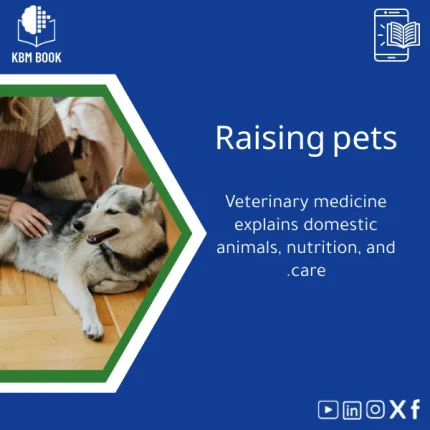
A structured, searchable knowledge base module (KBM) covering companion animal care — practical, evidence‑based guidance on pet nutrition, routine wellbeing, and small animal veterinary basics designed for students, researchers, and professionals who need fast access to reliable information.
Key benefits & value for buyers
From raw knowledge to usable tools
This companion animal care KBM transforms scattered facts into an indexed, hierarchical resource you can search, cite, and reuse. Instead of reading a long narrative, you can jump to a feeding chart, a differential diagnosis table, or a therapeutic diet protocol — all in a consistent, referenced format.
Concrete advantages
- Save time: Rapid lookup for clinical decisions, assignments, or literature reviews.
- Reduce errors: Consolidated feeding guidelines and diagnostic checklists lower the risk of oversight in routine care.
- Teach and scale: Ready-made modules for course slides, practical workshops, or clinic onboarding.
- Integrate easily: Export tables and taxonomies to spreadsheets, LMS platforms, or clinic management systems.
Use cases & real-life scenarios
Clinical quick-reference
A veterinary technician preparing for a wellness visit uses the KBM to verify calorie needs for an overweight cat and prints the feeding plan to hand to the owner. The module’s therapeutic diet section lists contraindications and monitoring checkpoints.
Academic & research workflow
A researcher building a literature review exports nutrient requirement tables and cross‑references disease incidence data to create a dataset for meta‑analysis — all sourced from the KBM’s referenced entries.
Teaching and training
An instructor compiles case studies and exam checklists using the KBM taxonomy so that students practice standardised clinical reasoning across species (dogs, cats, rabbits, small exotics).
Who is this product for?
The Companion Animal Care KBM is designed for:
- Veterinary and animal science students needing structured study materials.
- Researchers compiling clinical or nutritional datasets.
- Practicing veterinarians and technicians who want a rapid reference for pet nutrition and home care.
- Educators and trainers building curriculum or practical exercises.
- Pet care consultants and experienced owners seeking a professional-level pet nutrition guide.
How to choose the right KBM for your needs
When evaluating a companion animal care book or KBM, consider format, depth, update policy, and integration ability:
- Format: Choose KBMs that provide both human‑readable summaries and exportable data (CSV, JSON, or tables) if you plan to use the content in research or teaching.
- Depth: For coursework, a comprehensive hierarchical KBM with references is preferable; for clinic checklists, a compact module with protocols suffices.
- Updates & support: Verify whether the KBM receives periodic updates to reflect new guidelines or nutritional data.
- Licensing: Confirm permitted uses (personal study, classroom, or commercial integration) before bulk distribution.
Quick comparison with typical alternatives
Unlike traditional companion animal care books or PDFs, this KBM offers indexed entries and exportable data built for quick lookup and reuse. Compared to standalone articles, the KBM reduces redundancy and gathers validated information in a single, consistent taxonomy.
- KBM vs Book: Faster targeted lookup, modular updates, and data export vs linear reading and single version static text.
- KBM vs Articles: Consolidated, cross‑referenced, and curated content with practical tools (charts, protocols) rather than fragmented studies.
Best practices & tips to get maximum value
- Use the KBM index to create one‑page clinical checklists for common visits.
- Export nutrient tables and adapt them to local measurement systems before applying to patient care.
- Cross‑check therapeutic diet recommendations with the latest manufacturer data when prescribing commercial diets.
- Integrate the taxonomy into your LMS or notes system to tag cases by condition, species, and diet.
Common mistakes when buying or using pet care resources — and how to avoid them
- Assuming one KBM fits every need: Match the KBM depth to your role — students need learning layers; clinicians need concise protocols.
- Using outdated charts: Always check the KBM update notes and apply the latest recommended values.
- Ignoring export options: If you plan to use data for research or teaching, ensure the KBM provides clean, reusable tables.
Product specifications
- Title: Companion Animal Care Guide for Nutrition and Wellbeing
- Format: Downloadable KBM package — searchable HTML + exportable CSV/JSON tables + printable PDF summaries
- Coverage: Nutrition requirements, feeding management, common conditions, preventive care, therapeutic diets, species-specific notes (dogs, cats, rabbits, rodents, small exotics)
- Structure: Hierarchical taxonomy with indexed entries, cross-references, and bibliographic sources
- Language: English (structured for professional use)
- Usage notes: Licensed for individual, academic, or institutional use per license agreement (see download page)
- Delivery: Instant download after purchase — includes user guide for integration
FAQ
Is this companion animal care book suitable for clinical decision-making?
Yes — the KBM is designed as a clinical support resource with referenced guidelines and actionable protocols. It is not a substitute for clinical judgement; confirm any patient‑specific decisions with current clinical standards and local formulary information.
What file formats are included and can I export data for research?
The package includes searchable HTML for quick lookup, printable PDF summaries, and exportable tables in CSV and JSON formats suitable for spreadsheets and analysis tools.
How often is the content updated?
KBMBook provides periodic updates. Purchase includes update notes and access to minor content revisions for a defined period — see the license page for exact terms.
Can I use this KBM in classroom materials or presentations?
Yes — the KBM is structured to support teaching. Classroom use is permitted under standard educational licensing; redistribution or resale requires explicit permission.
Ready to streamline companion animal care knowledge?
Purchase the Companion Animal Care Guide now and get instant access to a structured, research‑grade KBM that makes pet nutrition and wellbeing information usable every day — in clinic, classroom, or research.
Need a larger institutional license, bulk access, or bespoke integration? Contact KBMBook support after purchase for options and onboarding help.
Related products
Analytical Chemistry Book: Qualitative and Quantitative Methods Guide
Atomic Physics Guide: Understanding Atomic and Electron Properties
Knowledge Base — Atomic/Electron Properties & Electromagnetic Interactions. A structured, searchable KBM for students, researchers, and professionals who need an authoritative atomic physics reference that organizes concepts, formulas, experiments, and practical applications from basics of atomic physics to advanced electron properties.
Cell Biology Guide: Structure, Division, and Transport Insights
Comprehensive Nuclear Physics Book on Structure and Radioactivity
General and Special Relativity Book on Einstein’s Theory
A structured, searchable Knowledge Base Module (KBM) that converts Einstein's General and Special Relativity into a clear, hierarchical reference: formulas, derivations, worked examples, practical applications (GPS, astrophysics), and a compact research bibliography — ready to download and integrate into study, teaching, or research workflows.
Introductory General Chemistry Book on Matter and Reactions
A structured, searchable Knowledge Base Module (KBM) that converts core general chemistry concepts — matter, elements, reactions, stoichiometry and molarity — into a hierarchical reference you can query, teach from, or integrate into study workflows. Ideal as a concise General Chemistry book alternative for students, researchers, and professionals who need accurate, practical chemistry knowledge fast.
Modern Physics Book: Quantum, Relativity, and Tech Applications Guide
A structured, searchable Knowledge Base Module (KBM) that turns modern physics — quantum mechanics, special & general relativity, and contemporary technological applications — into a hierarchical, practical reference for students, researchers, and professionals who need quick, reliable access to advanced concepts and formulas.
Physical Chemistry Guide: Energy, Thermodynamics & Interactions
A structured Knowledge Base Module (KBM) for Physical Chemistry that converts core theory, worked examples, and applied datasets into a searchable, hierarchical database — ideal for students, researchers, and professionals who need fast, reliable access to chemical thermodynamics basics and molecular interaction models.
Reviews
Clear filtersThere are no reviews yet.