


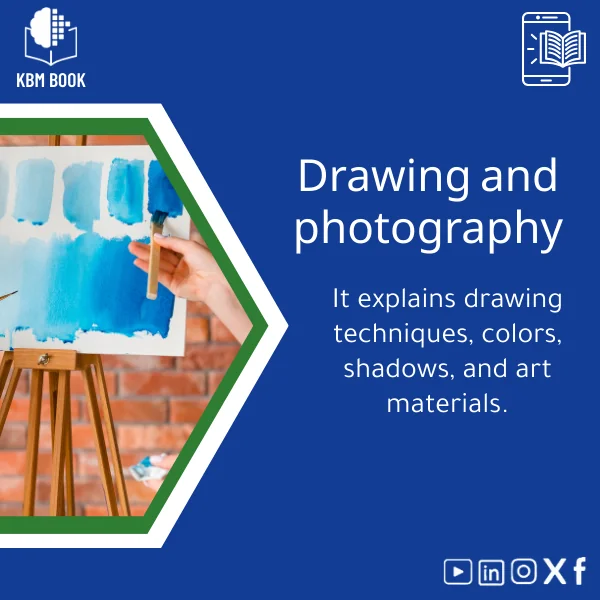
Drawing and Painting Techniques Guide: Color, Shading, Media
Original price was: 139.00 $.99.00 $Current price is: 99.00 $.
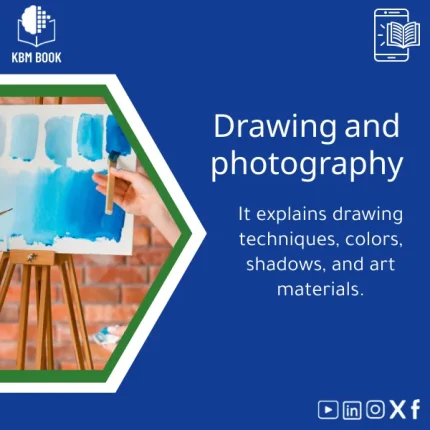
A practical, hierarchically organized knowledge base module (KBM) for drawing and painting: step-by-step techniques for color theory, shading practice, and media selection — created for students, researchers, and professionals who need reliable, searchable reference material that speeds learning and supports research.
Key benefits & value for students, researchers, and professionals
This KBM transforms scattered “drawing and painting” knowledge into a compact, hierarchical database you can query and reuse. Rather than reading lengthy books or sifting through isolated tutorials, you get:
- Immediate application: Actionable shading techniques (hatching, cross-hatching, chiaroscuro) with practice progressions and time estimates.
- Reliable color systems: Practical color mixing tables for common media (watercolor, acrylic, oil, gouache), plus contrast and harmony rules annotated with visual examples.
- Media decision matrix: Guidance on choosing media for a specific outcome (texture, drying time, layering).
- Searchable references: Each module is indexed and cross-referenced for citations, lesson planning, and research notes.
Use cases & real-life scenarios
1. Classroom and curriculum planning
An art instructor assembles a 6-week shading unit by exporting exercises and reference charts directly from the KBM. Each class includes learning objectives, demonstration steps, and assessment checklists.
2. Research and technical documentation
A graduate researcher documents perceptual effects of glazing in oil paint. The KBM provides standardized terminology, reproducible color recipes, and citation-ready figures for publication.
3. Professional studio workflow
A freelance illustrator uses the media decision matrix to select ground preparation and layering sequences that reduce rework and match client delivery timelines.
4. Self-paced learning for beginners
Beginners follow the “start-to-competence” path: foundational line control → tonal studies → color mixing → mixed-media projects. Each step includes checklists and sample assignments.
Who is this product for?
Specifically designed for:
- Art students and teachers needing structured lesson content and fast references.
- Researchers documenting technique, perception, or materials science in visual arts.
- Professional artists and studio managers optimizing process and materials.
- Hobbyists who want a reliable, non-redundant learning path to master shading and color.
How to choose the right edition & license
Because this product is a digital KBM, “size” and “capacity” map to edition and license:
- Student Edition: Essential modules, practice exercises, and printable sheets — suitable for single learners and classroom handouts.
- Research Edition: Extended references, high-resolution figures, reproducible recipes, and citation metadata.
- Professional Edition: All content plus project templates, client-ready checklists, and commercial-use licensing.
Choose based on intended use: educators and institutions should select the Research or Professional edition for classroom and commercial rights; individual learners will usually prefer the Student Edition.
Quick comparison with typical alternatives
Alternatives: single-topic books, scattered online tutorials, and video courses. Compared to those:
- Books: Deep but linear — KBM provides modular, searchable access and exportable sections.
- Online tutorials: Practical but fragmented — KBM consolidates validated techniques and removes duplication.
- Video courses: Great for demonstrations — KBM complements them with downloadable diagrams, recipes, and practice progressions you can print or integrate into LMS systems.
Best practices & tips to get maximum value
- Start with the foundational modules (line, value, basic color theory) before attempting mixed-media sequences.
- Use the KBM’s practice checklists to structure short daily sessions — 20–40 minute focused drills are more effective than sporadic long sessions.
- Export color recipes into your studio log to create a reproducible palette across projects.
- If teaching, map KBM modules to your syllabus weeks and reuse the assessment templates to track student progress.
Common mistakes when buying or using similar products — and how to avoid them
- Mistake: Buying a single tutorial and expecting comprehensive coverage. Fix: Choose a KBM that maps learning stages and includes both theory and exercises.
- Mistake: Ignoring media compatibility (e.g., using watercolor recipes for acrylic). Fix: Use the media decision matrix to match technique and material before buying supplies.
- Mistake: Overlooking licensing for classroom or commercial use. Fix: Select the appropriate edition (Research or Professional) that includes redistribution or commercial rights.
Product specifications
- Format: Downloadable KBM package (searchable PDF, structured HTML export, CSV tables for palettes)
- Modules: 12 core modules + 8 advanced technique annexes (color theory, tonal language, glazing, impasto, mixed-media)
- Assets included: High-resolution diagrams, printable practice sheets, color mixing tables, lesson templates
- Language: English (structured metadata supports Arabic titles/labels for bilingual classrooms)
- Licenses: Student, Research, Professional (single-user and institution options available)
- Delivery: Instant download after purchase; optional LMS-compatible package on request
- Updates: Minor updates included for 12 months; major updates available at discounted upgrade rates
FAQ
Is this KBM suitable for complete beginners?
Yes. The Student edition begins with foundational skills (line, proportion, basic shading) and includes step-by-step exercises designed for beginners. Progression paths take learners from novice to intermediate competency.
What formats are provided and can I integrate content into a course LMS?
The KBM includes searchable PDF and structured HTML exports. The Research and Professional editions provide CSV/JSON tables and LMS-ready packages to import exercises and quizzes directly into most learning management systems.
How current are the techniques and materials data?
Content is curated from established pedagogy and contemporary studio practices. Material properties and recipes are regularly reviewed; minor updates are included for 12 months after purchase, with optional paid upgrades for major revisions.
What if I need a license for multiple students or an institution?
Institution and site-wide licenses are available under the Professional edition. Contact support for pricing and deployment guidance to ensure compliance with educational use.
Ready to organize your drawing and painting knowledge?
Purchase the KBM and get immediate access to a structured, research-ready drawing and painting database that saves time, reduces trial-and-error, and supports reproducible practice. Ideal for course building, studio work, and academic research.
Instant download • 12-month update policy • Choose Student, Research, or Professional edition at checkout
Related products
Analytical Chemistry Book: Qualitative and Quantitative Methods Guide
Biochemistry Book: Understanding Chemical Processes in Living Systems
Comprehensive Nuclear Physics Book on Structure and Radioactivity
Cosmology Book: Guide to Big Bang and Galaxy Evolution
General and Special Relativity Book on Einstein’s Theory
A structured, searchable Knowledge Base Module (KBM) that converts Einstein's General and Special Relativity into a clear, hierarchical reference: formulas, derivations, worked examples, practical applications (GPS, astrophysics), and a compact research bibliography — ready to download and integrate into study, teaching, or research workflows.
Inorganic Chemistry Guide: Bonding and Crystal Solids
A structured, searchable Knowledge Base Module (KBM) that converts inorganic chemistry fundamentals and advanced topics—bonding models, lattice structures, defects, and solid-state properties—into a practical digital reference for students, researchers, and professionals who need fast, reliable answers without wading through textbooks.
Introductory General Chemistry Book on Matter and Reactions
A structured, searchable Knowledge Base Module (KBM) that converts core general chemistry concepts — matter, elements, reactions, stoichiometry and molarity — into a hierarchical reference you can query, teach from, or integrate into study workflows. Ideal as a concise General Chemistry book alternative for students, researchers, and professionals who need accurate, practical chemistry knowledge fast.
Reviews
Clear filtersThere are no reviews yet.