


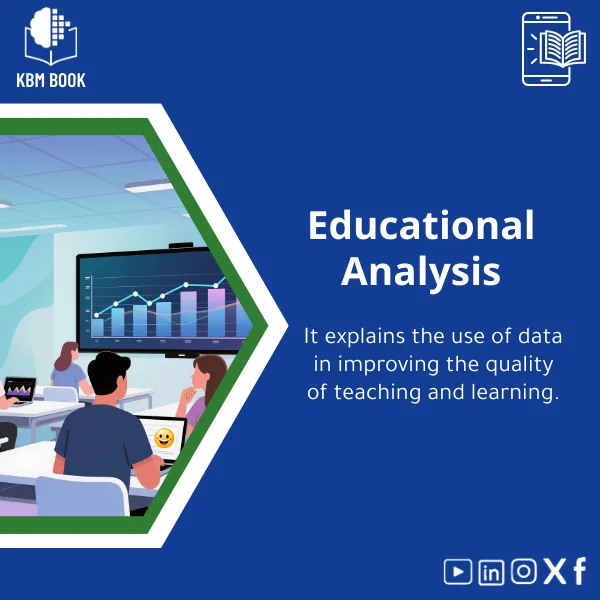
Educational Analytics Guide for Data-Driven Learning Improvements
Original price was: 179.00 $.139.00 $Current price is: 139.00 $.
A ready-to-use, hierarchical educational analytics template designed to turn student data into clear, actionable insights — accelerate improvements in teaching quality and learning outcomes without starting from scratch.
Key benefits & value for the buyer
The Educational Analytics Guide converts raw educational data into decision-ready knowledge. Each feature maps to a direct benefit:
- Hierarchical knowledge structure: Saves time by guiding users from basic indicators (attendance, grades) to advanced analytics (growth models, predictive flags).
- Reusable templates: Standardized student performance analysis form reduces errors and ensures comparable reports across classes or semesters.
- Practical workflows: Clear step-by-step processes — collect → clean → analyze → report — so teachers and researchers spend more time on interventions than on data prep.
- Interoperability: Files and mapping ready for Excel, CSV, Power BI and Google Data Studio so you can integrate with existing systems and LMS exports.
- Documentation & provenance: Built-in metadata fields and version notes improve reproducibility for research and accreditation reviews.
Use cases & real-life scenarios
Classroom teacher — weekly intervention planning
Use the student performance analysis form to collect weekly formative assessment scores, automatically flag students below growth targets, and generate a one-page intervention plan for each student within minutes.
School administrator — cohort monitoring
Upload term grades and attendance exports into the template to produce cohort-level dashboards showing achievement gaps, at-risk groups, and impact of recent policy changes — ready for board or parent reports.
Researcher — reproducible learning outcomes analysis
The KBM includes standardized variable definitions, cleaning scripts and a reproducible analysis plan to support publication-ready results and easy replication across datasets.
Corporate L&D professional — training effectiveness
Adapt the learning outcomes analysis module to measure pre/post training competencies and link training activities to business KPIs using the included mapping templates.
Who is this product for?
This Educational analytics template is built for students, researchers, and professionals who need structured knowledge databases across fields for fast, reliable access to analytics-ready materials. Recommended personas:
- Teachers and curriculum coordinators who must produce frequent, consistent reports.
- Researchers conducting educational evaluations or meta-analyses.
- School and university administrators responsible for accreditation, compliance, and improvement planning.
- Instructional designers and L&D teams measuring learning outcomes in organizations.
How to choose the right version
Choose based on your workflow and toolset:
- Starter (Excel/CSV): If you use spreadsheets and need quick forms and basic dashboards.
- Analyst (Excel + Power BI templates): For teams that need interactive dashboards and scheduled refreshes.
- Researcher (includes analysis scripts & documentation): If you require reproducible pipelines and publication-ready outputs.
Start with the Starter pack if unsure — all upgrades include migration notes so you won’t lose previous work.
Quick comparison with typical alternatives
Typical alternatives include ad-hoc spreadsheets, one-off dashboards, or hiring external consultants. Compared with those:
- Faster setup: Pre-built KBM modules reduce time-to-first-insight from weeks to hours.
- Consistency: Standard forms and definitions avoid the variability of ad-hoc spreadsheets.
- Cost-effective: Cheaper than repeated consultant hours and reusable across semesters or projects.
Best practices & tips to get maximum value
- Start with the provided student performance analysis form and follow the recommended variable definitions to ensure consistency.
- Run the data cleaning checklist before loading files into dashboards to avoid misleading signals.
- Use cohort comparisons and growth measures instead of raw averages for fairer evaluation of progress.
- Document any local changes to templates in the version notes to preserve reproducibility.
- Schedule a monthly review with stakeholders and use the one-page intervention summaries as the agenda.
Common mistakes when buying or using educational analytics templates — and how to avoid them
- Buying a template without integration options: Ensure the KBM provides CSV/Excel export and connectors for your BI tools.
- Ignoring metadata and provenance: Always fill the included metadata fields — they matter for research and audits.
- Using raw scores only: Combine growth models and contextual variables for fairer comparisons.
- Underestimating training needs: Allocate one hour for staff to learn the form and one planning meeting to align indicators.
Product specifications
- Formats included: Excel (.xlsx), CSV exports, Power BI template (.pbit), Google Data Studio connector guide, analysis scripts (R/Python snippets).
- Modules: Data dictionary, Student performance analysis form, Cleaning & validation rules, Reporting templates, Intervention planner, Metadata & version log.
- Languages: English (primary); notes included for Arabic adaptation where relevant.
- Compatibility: Works with Excel 2016+, Google Sheets (CSV import), Power BI Desktop, and common LMS export formats (CSV).
- License: Single-user commercial license with upgrade options for teams and institutional use.
- Delivery: Immediate digital download; documentation and sample dataset included.
- Support: 30 days email support and update notes for six months.
FAQ
What exactly is included in the Educational analytics template?
The package includes hierarchical KBM modules: a detailed data dictionary, student performance analysis form (spreadsheet), cleaning rules, Power BI and Google Data Studio templates, R/Python analysis snippets, and documentation with a sample dataset and intervention planner.
Will this work with my LMS and existing exports?
Yes — the templates accept standard CSV exports from common LMS and SIS systems. We include mapping instructions and examples to align your export columns with the KBM variable definitions.
Can I customize the templates for my institution?
Absolutely. Files are provided in editable formats. The KBM includes notes on safe customizations and how to record changes so you preserve reproducibility. For large custom projects, ask about institutional licensing and migration support.
What if the template doesn’t meet my needs — is there a refund?
We offer a 14-day refund policy for unused downloads; if you’ve applied the templates to live data, contact support for a guided review — often a short adjustment resolves the issue.
How often is the guide updated?
Minor updates and clarifications are issued regularly; purchasers receive six months of update notes and patch downloads. Major version upgrades are communicated with upgrade paths.
Ready to standardize your analysis and act on learning data?
Start using a proven structure for educational analytics that minimizes setup time and maximizes actionable outcomes. Download, adapt, and run your first student performance analysis today.
Related products

Astronomy Observational Techniques Guide for Celestial Motion

Cell Biology Guide: Structure, Division, and Transport Insights

Comprehensive Evolutionary Biology Book on Natural Selection

Comprehensive Microbiology Book on Bacteria, Viruses, and Fungi

Inorganic Chemistry Guide: Bonding and Crystal Solids
A structured, searchable Knowledge Base Module (KBM) that converts inorganic chemistry fundamentals and advanced topics—bonding models, lattice structures, defects, and solid-state properties—into a practical digital reference for students, researchers, and professionals who need fast, reliable answers without wading through textbooks.

Materials Physics Guide: Understanding Solid-State Properties
Physical Chemistry Guide: Energy, Thermodynamics & Interactions
A structured Knowledge Base Module (KBM) for Physical Chemistry that converts core theory, worked examples, and applied datasets into a searchable, hierarchical database — ideal for students, researchers, and professionals who need fast, reliable access to chemical thermodynamics basics and molecular interaction models.

Reviews
Clear filtersThere are no reviews yet.