


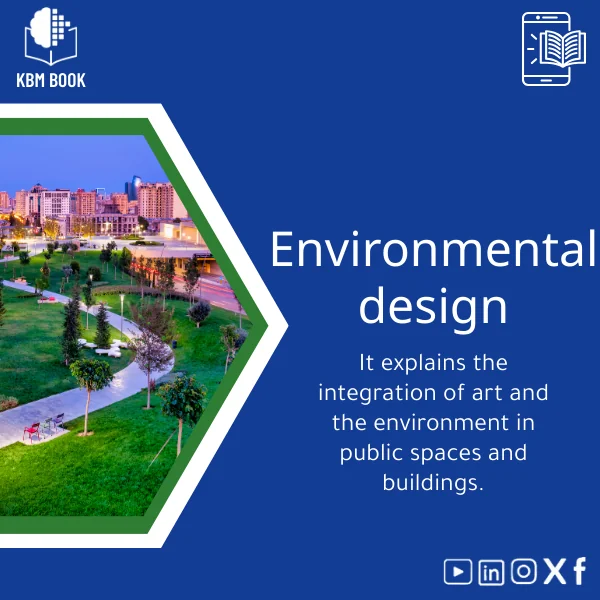
Environmental Design Guide for Art in Public Spaces
Original price was: 179.00 $.139.00 $Current price is: 139.00 $.
A structured, searchable Knowledge Base Module (KBM) that maps environmental design principles, sustainable building design strategies, and practical methods for integrating art into public buildings and open spaces — built for students, researchers, and professionals who need reliable, instantly usable reference material.
Key benefits & value for students, researchers, and professionals
This Environmental Design KBM transforms scattered information into a coherent, layered resource focused on environmental design, environmental design in architecture, and sustainable building design. It is not an article or a textbook replacement — it is a working database designed for action.
Converts knowledge into usable outputs
- Save time on literature review: curated summaries and source links reduce search time from hours to minutes.
- From theory to spec: each module ties design principles to technical specs (materials, luminance targets, drainage, plant palettes).
- Decision-ready tools: checklists and scoring rubrics help justify design choices to supervisors, clients, or funding panels.
Reliable, structured, and update-friendly
Modules are organized hierarchically (Concept > Principles > Techniques > Examples) so you can drill down to the exact level of detail needed. When standards or best practices change, the KBM structure lets you update single nodes without rewriting entire chapters — important for sustainability metrics and codes that evolve rapidly.
Use cases & real-life scenarios
Design studio and coursework
A student preparing a midterm can pull a module on “site microclimate and public art siting,” extract the checklist and annotated diagram, and insert the findings into a presentation with citations — all within an hour.
Professional practice
An architect tasked with a civic plaza commission uses the KBM to compare sustainable building design strategies (permeable paving, native planting) and generate a specification sheet to include in tender documents.
Research and grant applications
Researchers can compile evidence-backed case studies and sustainability metrics from the database to support a grant application, with ready-made bibliographic entries and comparative tables.
Who is this product for?
This KBM is tailored to:
- Architecture and landscape students who need concise, exam-ready summaries and project templates.
- Researchers requiring structured datasets and curated references on environmental design in architecture and public art integration.
- Design professionals, public artists, and urban planners seeking practical specifications and rapid decision-support tools for sustainable building design.
How to choose the right KBM (size, scope, format)
Choose based on workflow and output format:
- If you work in CAD/BIM or need to import tables: select the KBM version with CSV/JSON exports and mapped fields for easy integration.
- If your focus is teaching or presentations: opt for the version that includes editable slide templates and annotated diagrams.
- If research reproducibility is critical: choose the edition with full bibliographies and versioned change logs to track updates.
All options are described in the product specifications below so you can match format to how you work.
Quick comparison with typical alternatives
Compared with textbooks, scattered articles, or static PDFs, this KBM offers:
- Faster retrieval — modular indexing vs. linear reading.
- Practical outputs — checklists and templates vs. descriptive chapters.
- Maintainability — update nodes instead of republishing long documents.
If you need a one-time overview, a book might suffice. If you require repeated access, templates, or integration with design tools, the KBM saves time and reduces risk.
Best practices & tips to get maximum value
- Start with the ‘Project Brief’ module: adapt the template to define scope and constraints before detailed design.
- Use the evaluation rubrics during early concept reviews to maintain consistent criteria across team members.
- Link modules to your project files — import specifications into your procurement documents to avoid rework.
- Schedule periodic checks of the sustainability criteria module; update nodes when codes or local regulations change.
Common mistakes when buying/using similar products and how to avoid them
- Mistake: Buying a long PDF and treating it as a living document. Fix: Use a modular KBM that supports exports and updates.
- Mistake: Overlooking format compatibility (CSV vs. JSON). Fix: Check specs and pick the format matching your tools.
- Mistake: Expecting one-size-fits-all advice. Fix: Use the KBM as a foundation and adapt checklists and specs to local codes and site conditions.
Product specifications
- Title: Environmental Design Guide for Art in Public Spaces — KBM
- Structure: Hierarchical modules — Concept → Principles → Techniques → Templates → Case Studies
- Formats included: PDF (readable), CSV (tables & specs), JSON (integrations), DOCX (editable templates)
- Content scope: Site analysis, climate adaptation, material & lighting specifications, sustainability metrics, public art curation, case studies with annotated plans
- Language: English (with Arabic-indexed metadata for bilingual projects)
- Licensing: Commercial use permitted for project work; redistribution restricted — see license file included
- Delivery: Instant digital download after purchase; version change log included
- Usage notes: Designed for adaptation — cite original module when used in publications or grant submissions
Frequently asked questions
What formats are included and are they compatible with common design tools?
The KBM includes PDF for quick reading, CSV/JSON for import into spreadsheets or scripting workflows, and DOCX templates for reports and presentations. CSV and JSON are structured to map to common BIM and database import routines; compatibility notes are provided in the download package.
How current is the information on sustainability and building codes?
The KBM documents the date of the most recent content update and includes a versioned change log. It summarizes widely accepted sustainability frameworks and points to primary sources; local code compliance should always be verified separately, and the KBM is designed to be updated as standards evolve.
Is this suitable for someone new to environmental design?
Yes. The modules start with foundational concepts and progress to technical practice. Beginners will find guided checklists and glossary sections; intermediate and advanced users benefit from technical specifications and case studies.
Can I use KBM content in client deliverables?
Yes — commercial use for project deliverables is permitted under the included license. Redistribution or resale of the KBM itself is not allowed. Please retain attribution where specified in academic or publication contexts.
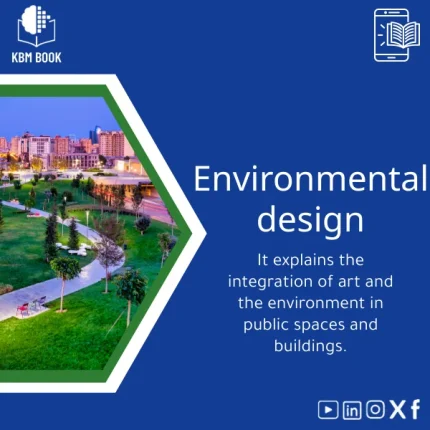
Ready to integrate art and environment in your projects?
The Environmental Design Guide for Art in Public Spaces gives you a practical, research-backed, and searchable knowledge base — ideal for project work, teaching, or research. Fast access to templates, specs, and decision tools accelerates design cycles and reduces rework.
Not sure if it’s the right fit? Check the product specifications above, or contact KBMBook support for a sample module before purchasing.
Related products
Analytical Chemistry Book: Qualitative and Quantitative Methods Guide
Astronomy Observational Techniques Guide for Celestial Motion
Atomic Physics Guide: Understanding Atomic and Electron Properties
Knowledge Base — Atomic/Electron Properties & Electromagnetic Interactions. A structured, searchable KBM for students, researchers, and professionals who need an authoritative atomic physics reference that organizes concepts, formulas, experiments, and practical applications from basics of atomic physics to advanced electron properties.
Biological Anthropology Study Guide on Human Evolution
Electromagnetism Book: A Comprehensive Guide to Fields and Circuits
General Biology Book: A Guide to Cells, Genetics & Taxonomy
Introductory General Chemistry Book on Matter and Reactions
A structured, searchable Knowledge Base Module (KBM) that converts core general chemistry concepts — matter, elements, reactions, stoichiometry and molarity — into a hierarchical reference you can query, teach from, or integrate into study workflows. Ideal as a concise General Chemistry book alternative for students, researchers, and professionals who need accurate, practical chemistry knowledge fast.
Reviews
Clear filtersThere are no reviews yet.