


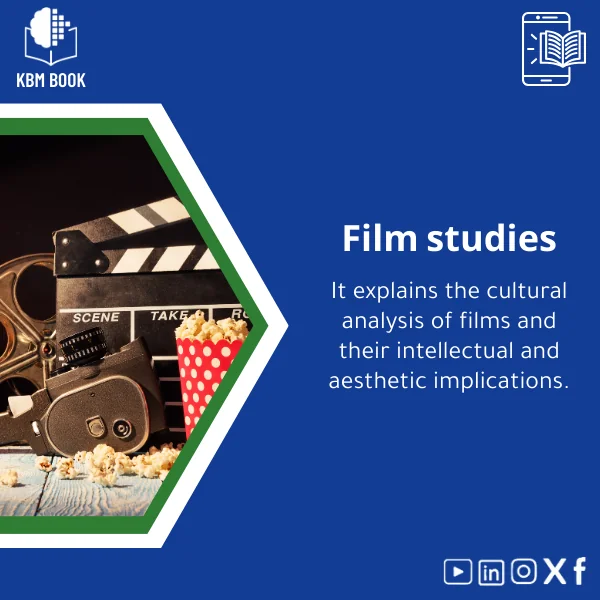
Film Studies Guide to Cultural Film Analysis
Original price was: 199.00 $.159.00 $Current price is: 159.00 $.
A structured, searchable Knowledge Base Module (KBM) that turns cultural film analysis into a practical, hierarchical reference—designed to help students, researchers, and professionals find reliable interpretations, methods, and examples of film aesthetics quickly and confidently.
Key benefits & value for the buyer
Unlike a narrative textbook, this KBM is a modular, searchable knowledge product that converts film studies theory into immediately applicable components. Each feature below translates technical content into tangible outcomes:
Benefit-driven features
- Faster research: Look up theoretical frameworks and exemplar scenes in seconds instead of scanning multiple books.
- Higher-quality analysis: Use pre-structured frameworks (e.g., formal, ideological, postcolonial readings) to produce consistent, academically defensible critiques.
- Reproducible results: Standardized taxonomies let instructors and researchers compare readings across different films without ambiguity.
- Time savings: Pre-sourced citations and reading lists shorten literature reviews and lecture prep by hours.
Use cases & real-life scenarios
Practical examples of how the KBM is used day-to-day:
- Undergraduate student: Quickly assemble scene analyses and citation-ready paragraphs for an essay on national identity in cinema.
- Graduate researcher: Cross-reference theoretical positions (e.g., auteur vs. structuralist) with film examples and bibliographic entries for a thesis chapter.
- Film critic/journalist: Prepare evidence-based reviews using the KBM’s checklist of aesthetic devices and cultural contexts.
- Instructor: Build lecture modules, assignment rubrics, and in-class exercises with the KBM’s hierarchical lessons and case studies.
- Archivist/librarian: Integrate KBM entries into institutional repositories for standardized metadata on film topics.
Who is this product for?
This KBM is tailored to learners and professionals who need organized, practical access to film studies content:
- Students (BA/MA) studying film theory, cultural studies, or media.
- Academic researchers preparing literature reviews or comparative analyses.
- Film critics, festival programmers, and cultural analysts requiring quick reference.
- Educators designing curricula or assessment tools in cinema studies.
- Professionals in related fields (journalism, archival work, cultural policy) seeking reliable analytical frameworks.
How to choose the right version
We offer formats and licensing suited to different workflows. Choose based on how you plan to use the KBM:
- Student Pack (single-user): PDF + interactive HTML for study and assignments.
- Research Pack (multi-format): Includes CSV/JSON/Excel exports for data analysis, plus printable PDFs.
- Instructor Pack (site license): Multi-user license, lecture-ready slides, and editable rubrics for classroom adoption.
Pick the pack that matches your access needs and the expected number of users. If in doubt, the Research Pack offers the best balance of flexibility and citation-ready content.
Quick comparison with typical alternatives
How this KBM compares to common substitutes:
- Traditional textbooks: Textbooks provide depth but are linear; this KBM is non-linear, searchable, and modular for faster application.
- Academic articles: Articles are deep but narrow; the KBM synthesizes multiple perspectives and links them to examples across decades and regions.
- Online blogs/unsourced summaries: Those are quick but unreliable; this KBM emphasizes curated, referenced content appropriate for academic citation.
Best practices & tips to get maximum value
- Start with the KBM’s core taxonomy—identify which analytical lens you need (formal, ideological, gendered, postcolonial) before deep-diving.
- Use export features to compile a personalized reading list and bibliography for your project.
- Apply the provided scene-analysis templates directly in assignments to ensure consistent methodology.
- For teaching, adapt the sample rubrics and slide decks to fit course objectives and assessment standards.
Common mistakes when buying or using similar products—and how to avoid them
- Mistake: Buying a single-format product. Fix: Choose multi-format if you need data exports or classroom resources.
- Mistake: Expecting broad generalities. Fix: This KBM provides specific, cited analyses—use taxonomy to target depth where needed.
- Mistake: Ignoring licensing limits. Fix: Select the Instructor Pack for shared use to avoid compliance issues.
Product specifications
- Product title: Film Studies Guide to Cultural Film Analysis
- Format: Interactive HTML, printable PDF, CSV, JSON, Excel exports
- Entries: 650+ indexed concepts, 120+ scene analyses, 40+ theorist profiles
- Language: English (academic register)
- License: Single-user, multi-user, and instructor/site license options
- Delivery: Instant digital download after purchase
- Compatibility: Works in standard web browsers; CSV/JSON compatible with common data tools
- Updates: Minor updates included for 12 months; update options available thereafter
Frequently asked questions
What exactly is included in the KBM?
The KBM includes a hierarchical taxonomy of film studies concepts, scene-by-scene analyses, theorist summaries, recommended bibliographies, and exportable datasets (CSV/JSON/Excel). Also included are printable PDFs and an interactive HTML version optimized for quick search.
How does this differ from a traditional film studies book?
Unlike a linear book, the KBM is modular and searchable. Content is chunked into reusable units (definitions, methods, case studies) so you can assemble targeted analyses, export data for research, or adapt materials for teaching without scanning entire chapters.
Can I cite the KBM in academic work?
Yes. Each entry includes recommended citations and primary/secondary sources. Use the provided bibliographic entries to support literature reviews and references in essays and theses.
What if I need support or updates?
Purchases include 12 months of minor updates. Technical support for formats and export issues is provided via KBMBook’s support channel. Upgrade options for extended updates and multi-user licenses are available.
Ready to streamline your film studies research?
Gain instant access to a structured, academically rigorous knowledge base that saves time and improves the quality of your analysis. Whether you are writing an essay, preparing a lecture, or compiling a literature review, this KBM converts film theory into usable tools.
Related products
Biochemistry Book: Understanding Chemical Processes in Living Systems
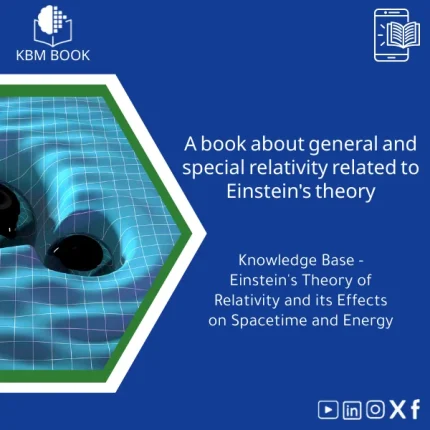
General and Special Relativity Book on Einstein’s Theory
A structured, searchable Knowledge Base Module (KBM) that converts Einstein's General and Special Relativity into a clear, hierarchical reference: formulas, derivations, worked examples, practical applications (GPS, astrophysics), and a compact research bibliography — ready to download and integrate into study, teaching, or research workflows.
Inorganic Chemistry Guide: Bonding and Crystal Solids
A structured, searchable Knowledge Base Module (KBM) that converts inorganic chemistry fundamentals and advanced topics—bonding models, lattice structures, defects, and solid-state properties—into a practical digital reference for students, researchers, and professionals who need fast, reliable answers without wading through textbooks.
Modern Physics Book: Quantum, Relativity, and Tech Applications Guide
A structured, searchable Knowledge Base Module (KBM) that turns modern physics — quantum mechanics, special & general relativity, and contemporary technological applications — into a hierarchical, practical reference for students, researchers, and professionals who need quick, reliable access to advanced concepts and formulas.
Molecular Biology Guide: Transcription, Translation & Repair
Organic Chemistry Guide: Carbon Chains and Reactions
Thermal Physics Guide: Understanding Heat, Energy, and Entropy
A downloadable, hierarchically structured Knowledge Base Module (KBM) that converts university-level thermodynamics into a searchable, practical digital database. Ideal for students, researchers, and professionals who need fast, reliable access to fundamentals and advanced topics in thermal physics.
Reviews
Clear filtersThere are no reviews yet.