


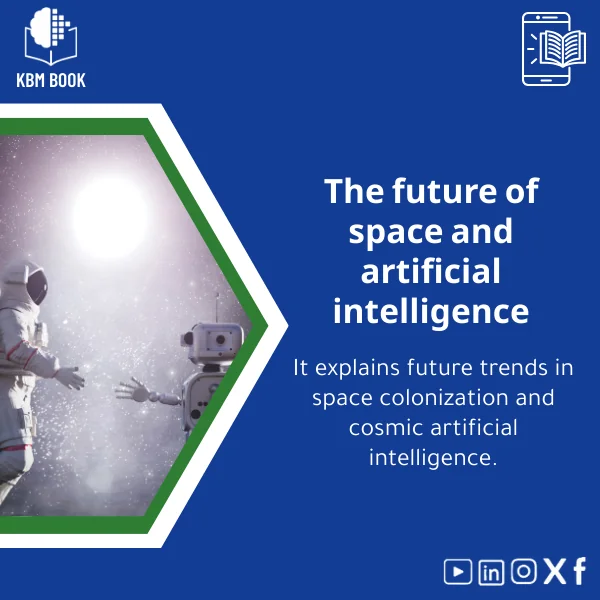
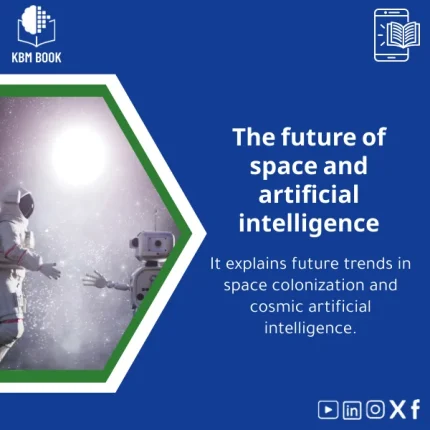
Guide to the Future of Space and Artificial Intelligence Trends
Original price was: 179.00 $.139.00 $Current price is: 139.00 $.
A structured, searchable knowledge base module (KBM) that maps emerging trajectories where space settlement intersects with artificial intelligence — designed for students, researchers, and professionals who need fast, reliable, hierarchical access to evidence-based insights and operational frameworks.
Key benefits & value for buyers
This KBM converts scattered scholarship and technical standards into an immediately usable, non-redundant structure. It saves hours of literature synthesis, reduces risk from outdated or isolated sources, and provides actionable frameworks you can apply to research proposals, prototype roadmaps, or policy briefs.
Benefits translated from features
- Structured taxonomy: Find concepts fast — from orbital logistics to on-site autonomy — without wading through unrelated material.
- Exportable modules: Integrate mission architectures, AI model specs, and risk registers into your tools (no retyping).
- Evidence layers: Each module links to source summaries and confidence levels so you can judge applicability quickly.
- Scenario templates: Use built-in scenario matrices for feasibility analysis (cost, latency, autonomy level, resiliency).
Use cases & real-life scenarios
Student — Thesis and coursework
Use the KBM to build a literature map in days, not weeks. Example: a master’s student mapping autonomy stacks for lunar rovers can export the “Autonomy & Navigation” module as a reference appendix and a reproducible bibliography for their thesis.
Researcher — Grant proposals & experiments
Researchers can reuse metrics definitions, instrumentation specifications, and risk matrices from the KBM to make grant submissions more replicable; scenario templates speed up sensitivity analyses for funding reviewers.
Professional — Product & policy planning
Startups and agencies can import the “Space Settlement & AI” decision framework to evaluate trade-offs (compute at edge vs. ground), regulatory constraints, and staffing profiles for deployment timelines.
Who is this product for?
The KBM is designed for anyone who needs reliable, structured knowledge about the future of space and artificial intelligence:
- Undergraduate and graduate students creating literature reviews or capstone projects.
- Academic and industry researchers synthesizing cross-domain evidence.
- Engineers and product managers planning AI-enabled space systems.
- Policy analysts and regulators assessing governance and safety implications.
Quick comparison with typical alternatives
How this KBM compares to standard options you might consider:
- Textbooks: Textbooks provide narrative depth but are static and often too broad; the KBM is modular, updatable, and export-ready for practical use.
- Research articles: Articles are granular but fragmented; the KBM synthesizes and tags evidence, saving hours of manual cross-referencing.
- Online courses: Courses teach skills but rarely provide an exportable, searchable knowledge structure tailored to research workflows — the KBM does both.
Best practices & tips to get maximum value
- Start with the taxonomy map: identify the modules you need (e.g., autonomy, habitat design, comms) before exporting.
- Use the scenario templates to test assumptions with colleagues — they are designed for rapid iteration.
- Integrate KBM exports into your reference manager and version control to keep traceability for reviews.
- Check the evidence confidence tags when applying insights to safety-critical designs.
Common mistakes when buying or using similar products — and how to avoid them
- Buying a bulky PDF without structure: Avoid resources that are long but unsearchable. Choose structured KBMs that provide multiple export formats.
- Assuming one-size-fits-all: Many resources mix policy, engineering, and ethics without separation. Use the KBM’s modular approach to extract only what’s relevant.
- Ignoring update policies: Check how often the dataset is updated. This KBM includes update logs and recommended review intervals for fast-moving topics.
Product specifications
- Format: Knowledge Base Module (KBM) — hierarchical JSON + CSV + PDF summary
- Modules included: Orbital systems, surface habitats, AI autonomy, communications, power & logistics, ethics & governance, scenario templates, annotated bibliography
- Language: English (structured metadata available for translation)
- Compatibility: Import-ready for Excel, Jupyter, Zotero, common LMS and documentation systems
- License: Single-user research & educational license; team and commercial licenses available
- Delivery: Instant digital download after purchase; includes README and integration guide
- Updates: Versioned updates with changelog for 12 months; optional extended support available
Usage note: Not a simulation package. The KBM provides frameworks, definitions, and templates rather than executable mission software.
FAQ
Is this KBM suitable for a PhD literature review on AI for planetary habitats?
How frequently is the content updated?
Can I use the KBM content in a commercial product or service?
What formats are included and how do I integrate them?
Ready to work with a practical KBM on the future of space and artificial intelligence?
Download a research-grade, exportable knowledge base that scales from a classroom assignment to mission-level planning. Gain structured access to the latest trends in space settlement and cosmic AI so you can move from insight to action faster.
Instant download • Export-friendly • 12 months of updates included
Related products
Astrophysics Book: Understanding Stars, Galaxies, and Dark Energy
A searchable, hierarchical Knowledge Base Module (KBM) that converts astrophysics and cosmology into a practical, exam-ready and research-ready reference. Designed for students, researchers, and professionals who need immediate access to reliable explanations, equations, and data models for stars, galaxies, and dark energy.
Biochemistry Book: Understanding Chemical Processes in Living Systems
Biological Anthropology Study Guide on Human Evolution
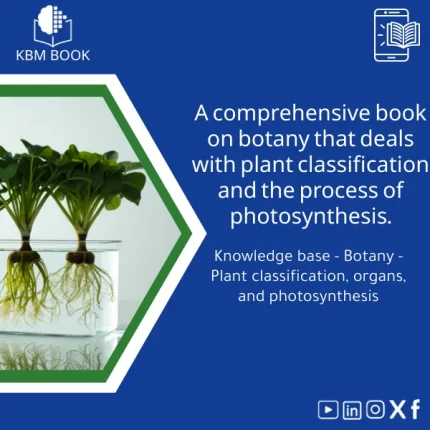
Comprehensive Botany Book on Plant Taxonomy and Photosynthesis
A structured, searchable botany book designed as a Knowledge Base Module (KBM) — an end-to-end reference on plant taxonomy, organ structure, and the biochemistry of photosynthesis. Built for students, researchers, and professionals who need reliable, hierarchical knowledge they can search, cite, and apply immediately.
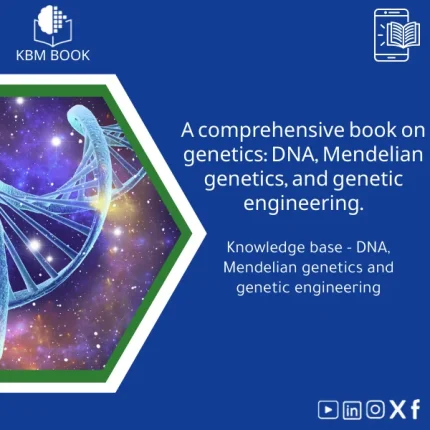
Comprehensive Genetics Book: DNA, Mendelian Genetics & Engineering
A structured, searchable knowledge base module (KBM) that turns genetics theory and practice into an immediately usable digital reference — from DNA structure to Mendelian genetics and contemporary genetic engineering techniques — optimized for students, researchers, and professionals who need reliable answers fast.

Inorganic Chemistry Guide: Bonding and Crystal Solids
A structured, searchable Knowledge Base Module (KBM) that converts inorganic chemistry fundamentals and advanced topics—bonding models, lattice structures, defects, and solid-state properties—into a practical digital reference for students, researchers, and professionals who need fast, reliable answers without wading through textbooks.
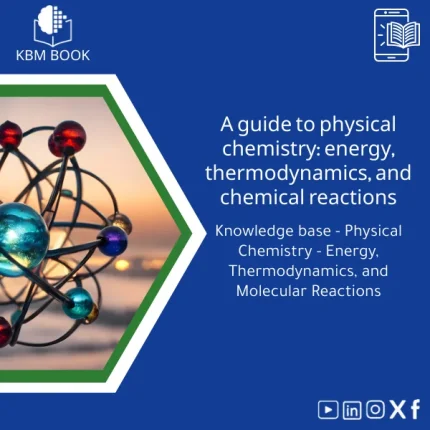
Physical Chemistry Guide: Energy, Thermodynamics & Interactions
A structured Knowledge Base Module (KBM) for Physical Chemistry that converts core theory, worked examples, and applied datasets into a searchable, hierarchical database — ideal for students, researchers, and professionals who need fast, reliable access to chemical thermodynamics basics and molecular interaction models.
Reviews
Clear filtersThere are no reviews yet.