


Futuristic Arts Book: AI and Metaverse Creative Trends Guide
Original price was: 179.00 $.139.00 $Current price is: 139.00 $.
A structured, searchable knowledge base that maps AI-driven and metaverse-driven creative trends into a hierarchical, practical guide — designed for students, researchers, and professionals who must access reliable, actionable insights fast.
Key benefits & value for the buyer
The Futuristic Arts book is not a conventional narrative; it’s a Knowledge Base Module (KBM) — a deliberate, hierarchical dataset that turns scholarly and industry knowledge into a practical toolkit. Benefits include:
- Speed: Find validated concepts, case studies, and step-by-step workflows in seconds thanks to clear indexing and cross-references.
- Depth without noise: Each topic is scoped to prevent repetition—covering definitions, methods, recommended tools, and examples.
- Actionable outputs: Ready-made cheat sheets, prompt templates for AI art, and deployment checklists for metaverse installations.
- Academic & practical balance: Citations and sources for researchers, plus applied templates for practitioners and students.
Whether you need a Futuristic Arts PDF to cite in a paper or a modular KBM to embed into a course, this product delivers structured knowledge with immediate usability.
Use cases & real-life scenarios
For students and instructors
Use the KBM to build a course module on AI art trends: learning objectives, weekly topics, lecture slides outline, assignments, and grading rubrics. Export the Futuristic Arts PDF as a reading pack.
For researchers
Quickly gather taxonomy of generative models, ethical frameworks, and dataset considerations. The KBM’s citations and structured notes reduce literature review time.
For professionals and studios
Implement prompt engineering templates, production pipelines for metaverse-ready assets, and productized UX patterns for virtual galleries — all presented as operational checklists.
For curriculum designers & educational platforms
Integrate KBM modules into LMS systems, adapt the hierarchical units to modules or microcredentials, and supply learners with the Futuristic Arts PDF for self-study.
Who is this product for?
Targeted to:
- Students building portfolios in digital arts and interactive design.
- Researchers mapping the evolution of AI art trends and metaverse ecosystems.
- Designers, creative directors, and technical leads who need practical templates and workflows.
- Trainers and educational institutions seeking structured course material.
If you need a reliable, structured reference that bridges theory and practice, the Futuristic Arts book is built for you.
How to choose the right format & license
This is a digital KBM available as a downloadable Futuristic Arts PDF and as an importable dataset for knowledge management tools. Choose based on use:
- Futuristic Arts PDF: Best for reading, citation, and offline study.
- KBM data package: Best if you plan to integrate into a course or team knowledge system (searchable, taggable, and modular).
- License options: Single-user academic, multi-user team, and institutional use. Select the license that matches deployment — the purchase page lists precise terms.
Quick comparison with typical alternatives
Compared to books, articles, or scattered web resources, the Futuristic Arts book offers:
- Structure: Topic hierarchies and crosslinks vs. linear chapters.
- Searchability: KBM indexing makes retrieval faster than searching multiple sources.
- Actionability: Ready-to-use templates and checklists versus conceptual overviews.
If you need a resource that teams can operationalize, the KBM approach reduces time-to-action and minimizes redundant research.
Best practices & tips to get maximum value
- Start with the table of core modules: Fundamentals → Tools → Ethics → Production → Monetization.
- Export the PDF module for classroom handouts and use the KBM package for internal search and tagging.
- Adopt the provided prompt templates—customize them, then document results directly in your knowledge system to build institutional know-how.
- Use the citation list to expand literature reviews; the KBM reduces repeated searches by centralizing sources.
Common mistakes when buying or using similar products — and how to avoid them
- Mistake: Purchasing a long narrative book expecting immediate workflows.
Fix: Choose a KBM for practical templates and checklists. - Mistake: Overlooking license scope (personal vs. institutional).
Fix: Confirm your deployment scenario and select the corresponding license. - Mistake: Using outdated tool recommendations.
Fix: Follow the KBM’s update notes and versioning policy included with the purchase.
Product specifications
- Product name: Futuristic Arts Book: AI and Metaverse Creative Trends Guide
- Formats: Futuristic Arts PDF (print-friendly) + KBM data package (JSON/CSV/Markdown bundles)
- Length: Equivalent to a 150–200 page reference (modular sections)
- Language: English (structured, technical register)
- Licenses: Single-user, Team, Institutional (details on purchase page)
- Compatibility: Importable into common knowledge managers; PDF viewable on any device
- Includes: Prompt templates, production checklists, ethical frameworks, case studies, bibliography
Frequently asked questions
Is this the same as a printed book? Which format should I buy?
The Futuristic Arts book is distributed primarily as a KBM and a downloadable Futuristic Arts PDF. If you need a physical book, the PDF can be printed, but the KBM package is recommended for research, teaching, and team workflows because it provides searchable structure and reusable modules.
How current are the AI and metaverse trends covered?
The KBM synthesizes peer-reviewed studies, industry reports, and primary case studies up to the publication date. Buyers receive version notes and can access update metadata; institutional licenses include priority update notifications.
Can I use the templates in commercial projects?
Yes—licenses include commercial use options. Check the specific license you select at checkout: Single-user commercial use is available, and team/institutional licenses cover broader deployment.
What support is provided after purchase?
Support includes download assistance, instructions for importing the KBM into popular knowledge platforms, and a short onboarding guide to apply templates and checklists effectively.
Ready to add structured knowledge to your workflow?
Choose the format and license that matches your needs and start using expert-curated frameworks, templates, and checklists today. Secure, instant download and clear integration instructions included.
Still unsure? Select a single-user license to evaluate the Futuristic Arts PDF and KBM package — refunds and upgrade paths are detailed on the purchase page.
Related products
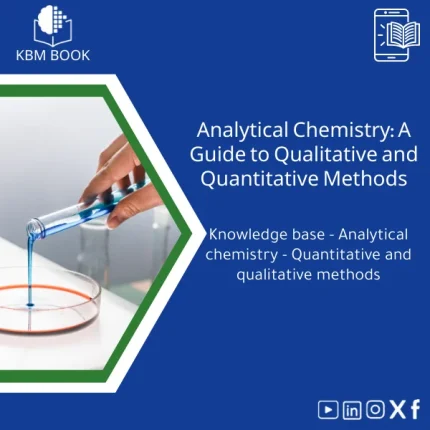
Analytical Chemistry Book: Qualitative and Quantitative Methods Guide
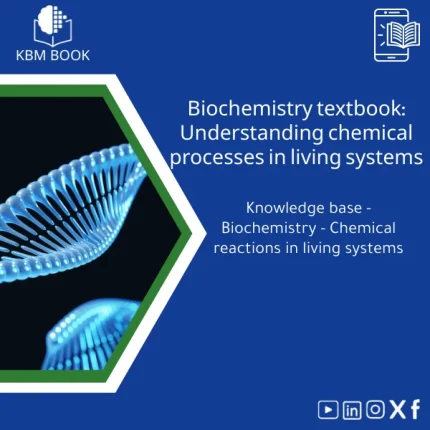
Biochemistry Book: Understanding Chemical Processes in Living Systems
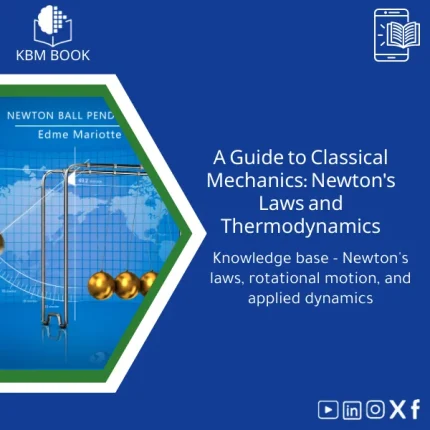
Classical Mechanics Guide: Newton’s Laws and Dynamics
A searchable, hierarchical Knowledge Base Module (KBM) that turns classical mechanics into a practical, ready-to-use reference for fast problem solving, lecture preparation, and applied engineering. Designed for students, researchers, and professionals who need precise access to Newton’s laws, rotational motion, and applied dynamics without the noise of textbooks.
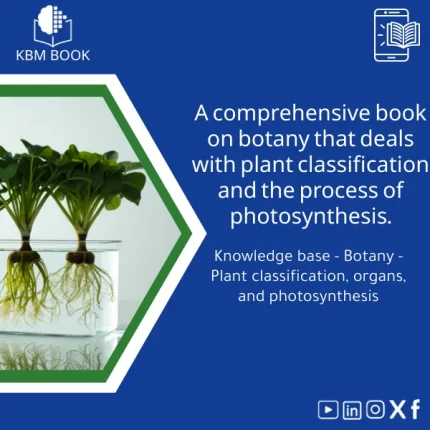
Comprehensive Botany Book on Plant Taxonomy and Photosynthesis
A structured, searchable botany book designed as a Knowledge Base Module (KBM) — an end-to-end reference on plant taxonomy, organ structure, and the biochemistry of photosynthesis. Built for students, researchers, and professionals who need reliable, hierarchical knowledge they can search, cite, and apply immediately.

Molecular Biology Guide: Transcription, Translation & Repair
Physical Chemistry Guide: Energy, Thermodynamics & Interactions
A structured Knowledge Base Module (KBM) for Physical Chemistry that converts core theory, worked examples, and applied datasets into a searchable, hierarchical database — ideal for students, researchers, and professionals who need fast, reliable access to chemical thermodynamics basics and molecular interaction models.
Reviews
Clear filtersThere are no reviews yet.