


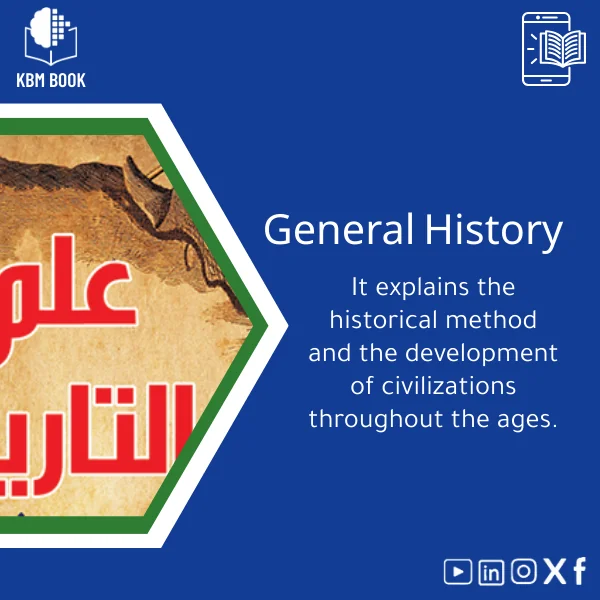
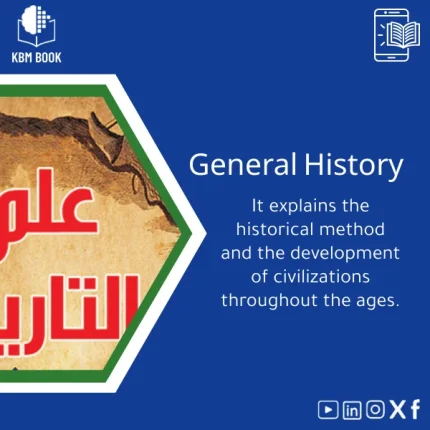
General History Book on Historiography and Civilizational Development
Original price was: 179.00 $.139.00 $Current price is: 139.00 $.
A structured, searchable general history book designed as a Knowledge Base Module (KBM) to teach historiography and civilizational development step‑by‑step — ideal for students, researchers, and professionals who need reliable, organized historical knowledge for study, teaching, or applied research.
Key benefits & value for the buyer
This general history book is not a linear textbook or an encyclopedic dump — it is a purpose-built KBM that transforms historiography into structured, usable knowledge. Each feature is translated into a practical benefit:
- Hierarchy of concepts: Learn progressively — concepts, methods, schools of thought, and case studies arranged to speed comprehension and retention.
- Searchable modules: Save time in assignments and literature reviews with instant access to definitions, timelines, and annotated bibliographies.
- Research-ready tools: Citation templates, research method checklists, and primary-source handling protocols make the KBM directly actionable in real research.
- Modular format: Use one chapter or the whole KBM — integrate into courses, workshops, or independent study plans without reformatting.
Use cases & real-life scenarios
For a student preparing a term paper
Open the KBM’s “Historical research method” module to follow a step‑by‑step plan: research question → primary sources → historiographical context → drafting outline. Prebuilt citation snippets and sample literature reviews accelerate the writing process and improve quality.
For a lecturer building a course
Extract sequential modules to form weekly lesson plans: introduction to historiography, methods of periodization, comparative civilizational frameworks, and case studies with assessment rubrics. All content is ready to drop into an LMS.
For a policy analyst or professional
Use cross-referenced civilizational development modules to place contemporary policy issues in long-term context and source historically grounded analogies with proper citation support.
Who is this product for?
Designed for anyone who needs a reliable, organized humanities history book as a practical resource:
- Undergraduate and graduate students needing a general history textbook and introduction to historiography.
- Researchers who require consistent, citable summaries and method checklists.
- Lecturers, curriculum designers, and trainers who build courses and need modular content.
- Professionals and analysts seeking structured civilizational overviews for reports and policy work.
How to choose the right KBM format
This is a digital product available in multiple formats. Choose based on your workflow:
- PDF (annotated): Best if you read on tablets or print selected modules for class handouts.
- Searchable JSON/CSV: Ideal for researchers and instructors who integrate content into databases, LMS, or text-analysis tools.
- Compact textbook export: Use when you need a single-file general history textbook-ready package for distribution to students.
If you need advice on format choice, check the FAQ or contact KBMBook support for a short consultation.
Quick comparison with typical alternatives
Compared with traditional textbooks or scattered articles, this KBM offers:
- Faster retrieval: Search and cross-reference beats flipping chapters or hunting through journals.
- Less redundancy: Carefully curated modules avoid repetition and long digressions.
- Actionable tools: Built-in research method workflows and citation blocks are absent from most humanities history books.
Best practices & tips to get maximum value
- Start with the “Historiography primer” module to align terminology and conceptual frameworks before diving into case studies.
- Use the KBM’s timeline exports to create visuals for presentations and essays.
- Integrate the “Research method checklist” into every project stage — it reduces revision cycles and strengthens methodology sections.
- Regularly sync the JSON module with your reference manager to keep sources organized.
Common mistakes when buying or using similar products — and how to avoid them
- Mistake: Buying a long narrative textbook expecting searchability. Fix: Choose the KBM format for searchable, modular access.
- Mistake: Skipping methodological modules. Fix: Use the “Historical research method” chapter as your checklist — it saves time and improves rigor.
- Mistake: Assuming one format fits all workflows. Fix: Pick PDF for reading, JSON/CSV for research integration, or request custom export options.
Product specifications
- Title: General History Book on Historiography and Civilizational Development
- Formats: PDF (annotated, print-ready), JSON (searchable), CSV (tables and timelines)
- Structure: Hierarchical KBM — 8 modules, 42 submodules, 320+ entries, timelines, and 150+ cited sources
- Languages: English (primary). Arabic interface notes available in select modules.
- Compatibility: LMS import friendly, reference manager compatible, CSV/JSON for data tools
- License: Personal and institutional use with citation requirement; redistribution restricted — see license file
- Delivery: Instant download after purchase with optional update subscription
Frequently asked questions
Is this a replacement for a general history textbook?
The KBM functions as a comprehensive general history textbook in modular form, but it goes further by providing method tools, timelines, and data exports. If you need a traditional linear narrative, the compact textbook export provides that format; if you need a research-ready resource, use the searchable KBM modules.
How up-to-date are the sources and references?
The KBM includes peer-reviewed sources and updated historiographical debates current to the publish date. Purchasing the update subscription ensures you receive periodic additions and bibliographic updates without repurchasing.
Can I use the content in a university course?
Yes — the license permits classroom use. Institutional licensing options are available for bulk distribution or LMS integration; contact KBMBook for a tailored quote.
What if I need a custom export or integration?
KBMBook offers one-off integration or export services (e.g., LMS package, customized chapter sequence) for a fee. Request service details before purchase if you require custom delivery.
Ready to use a structured general history book?
Move from scattered notes to a disciplined, searchable knowledge base. This KBM saves hours on research, clarifies historiographical debates, and provides frameworks you can reuse in teaching and professional work.
Immediate download. Formats: PDF, JSON, CSV. Optional update subscription and institutional licensing available.
Related products
Cell Biology Guide: Structure, Division, and Transport Insights
Comprehensive Botany Book on Plant Taxonomy and Photosynthesis
A structured, searchable botany book designed as a Knowledge Base Module (KBM) — an end-to-end reference on plant taxonomy, organ structure, and the biochemistry of photosynthesis. Built for students, researchers, and professionals who need reliable, hierarchical knowledge they can search, cite, and apply immediately.
Comprehensive Genetics Book: DNA, Mendelian Genetics & Engineering
A structured, searchable knowledge base module (KBM) that turns genetics theory and practice into an immediately usable digital reference — from DNA structure to Mendelian genetics and contemporary genetic engineering techniques — optimized for students, researchers, and professionals who need reliable answers fast.

Comprehensive Microbiology Book on Bacteria, Viruses, and Fungi
Cosmology Book: Guide to Big Bang and Galaxy Evolution
Electromagnetism Book: A Comprehensive Guide to Fields and Circuits
General Physics Book: Fundamentals of Force, Motion, Energy
Physical Chemistry Guide: Energy, Thermodynamics & Interactions
A structured Knowledge Base Module (KBM) for Physical Chemistry that converts core theory, worked examples, and applied datasets into a searchable, hierarchical database — ideal for students, researchers, and professionals who need fast, reliable access to chemical thermodynamics basics and molecular interaction models.
Reviews
Clear filtersThere are no reviews yet.