


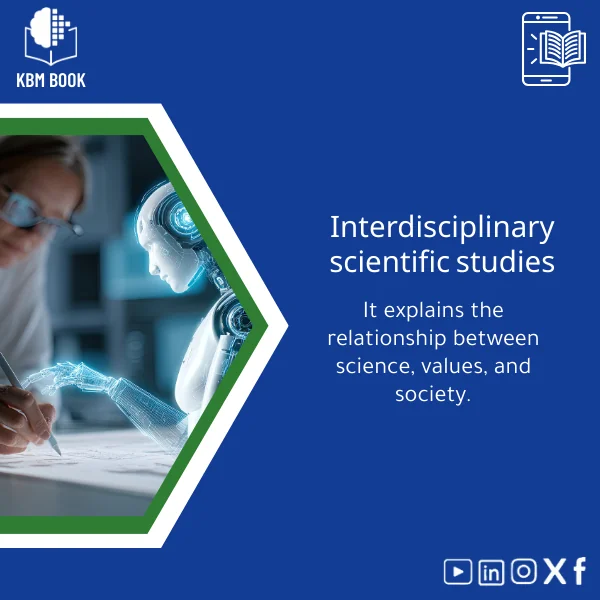
Interdisciplinary Science Studies Course on Society and Values
Original price was: 199.00 $.159.00 $Current price is: 159.00 $.
A structured, searchable Knowledge Base Module (KBM) that maps how science, ethics, and social values intersect — designed for students, researchers, and professionals who need precise, navigable reference material for study, teaching, and applied research.
Key benefits & value for the buyer
The Interdisciplinary Science Studies KBM converts complex debates about science and society into a compact, navigable structure. Each feature below translates directly into faster decisions, clearer teaching plans, and stronger evidence-based reports.
From features to outcomes
- Hierarchical modules: Navigate from definitions to case studies in seconds — reduces literature scanning time by up to 60% in course prep.
- Standardized citations: Use the KBM’s curated bibliographic nodes to build literature reviews with consistent referencing.
- Cross-linked concepts: Follow links between ethics, policy, and empirical research to design multidisciplinary syllabi or policy evaluations.
- Downloadable data: Integrate KBM nodes into your research workflows or LMS without reformatting.
Use cases & real-life scenarios
For students
Use the KBM to structure readings for assignments, create annotated bibliographies quickly, or build thematic study guides. Example: a master’s student preparing a thesis on the role of values in scientific advising uses the KBM’s “values frameworks” node to extract 12 primary sources and three comparative tables in under an hour.
For researchers
Use the integrated concept map to locate empirical gaps, generate research questions, and compile reproducible literature matrices. Example: a researcher drafting a grant proposal maps policy implications across technologies using pre-linked case studies and policy summaries included in the module.
For professionals & educators
Build training modules, policy briefs, or classroom units from modular KBM blocks. Example: a policy analyst assembles a 20-slide briefing by exporting targeted nodes on “public trust” and “risk communication” in minutes.
Who is this product for?
This KBM is designed for:
- Graduate and undergraduate students in science and cultural studies.
- Researchers in STS (science and technology studies), ethics, and public policy.
- Professionals developing science communication, regulatory policy, or training curricula.
If you need authoritative, structured reference material for fast integration into coursework, research, or practice, this KBM fits your workflow.
How to choose the right KBM format and depth
KBM modules come in different export formats and depth profiles. Choose based on how you plan to use the content:
- Light (overview): One-page concept maps and summary nodes — best for classroom introductions.
- Standard (recommended): Full hierarchical KBM with curated references and exportable CSV/JSON — ideal for most students and researchers.
- Advanced: Extended datasets, raw source links, and teaching-ready exercises — suitable for course instructors and policy teams.
Pick “Standard” if you want a balance of depth and portability; select “Advanced” if you require complete source chains and teaching materials.
Quick comparison with typical alternatives
Alternatives include textbooks, article collections, and ad-hoc literature folders. Compared to those:
- Textbooks: Provide narrative depth but lack modular searchability and exportable indices.
- Article collections: Offer primary sources but require manual organization and linking.
- Ad-hoc folders: Flexible but not standardized, which slows reproducible research.
The KBM combines structure, citation standards, and exportability — enabling faster, more reliable results than stitched-together resources.
Best practices & tips to get maximum value
- Start with the concept map to locate your research node quickly.
- Export the CSV index for spreadsheet-based literature matrices.
- Use the standardized citations when drafting bibliographies to keep references consistent.
- Integrate KBM nodes into your LMS or research notebook to create reusable teaching and research modules.
- Schedule periodic syncs with KBMBook updates to receive expanded nodes and recent sources.
Common mistakes when buying or using similar resources — and how to avoid them
- Mistake: Buying raw article dumps. Fix: Choose structured KBMs that include summaries and links, not just PDFs.
- Mistake: Assuming format compatibility. Fix: Confirm export formats (CSV/JSON/PDF) before purchase — this KBM supports each.
- Mistake: Overlooking citation consistency. Fix: Use the KBM’s citation nodes to avoid reformatting later.
Product specifications
- Format: Digital Knowledge Base Module (KBM) with hierarchical nodes
- Included files: PDF map, CSV index, JSON export, printable syllabus templates
- Depth: 4 hierarchical levels (Foundations → Theories → Case Studies → Policy Applications)
- Language: English (with Arabic metadata for KBMBook compatibility)
- License: Single-user research & teaching license (commercial licensing options available)
- Compatibility: Importable into common LMS and reference managers
- Update policy: Periodic content updates announced to registered buyers
- Usage notes: Best used with spreadsheet software or JSON-aware tools for maximum flexibility
FAQ
What exactly do I get when I buy this KBM?
You receive a packaged KBM including a printable concept map (PDF), a CSV index of nodes and references, a JSON export for programmatic use, and teaching templates. The package is designed to be plug-and-play for course design, research matrices, and policy briefs.
Can I use the KBM content in published research or in a course I charge for?
Yes — the single-user license supports academic and teaching use. For commercial redistribution or embedding in paid products, contact KBMBook to arrange an expanded license.
How current are the references and case studies?
The KBM includes curated references up to the last published update; KBMBook provides periodic updates and notifies registered buyers. Each node includes a “last reviewed” tag so you can assess currency at a glance.
Is technical support available if I need help importing files?
Yes. KBMBook offers step-by-step import guides and email support to help integrate the CSV/JSON files into your LMS or workflow.
Ready to streamline your study or research workflow?
The Interdisciplinary Science Studies KBM removes the friction of organizing cross-disciplinary material so you can focus on analysis and teaching. Confidently build syllabi, write literature reviews, and brief stakeholders with one structured reference.
Questions about fit or licensing? Contact KBMBook support before purchase to confirm the right depth and license for your needs.
Related products
Atomic Physics Guide: Understanding Atomic and Electron Properties
Knowledge Base — Atomic/Electron Properties & Electromagnetic Interactions. A structured, searchable KBM for students, researchers, and professionals who need an authoritative atomic physics reference that organizes concepts, formulas, experiments, and practical applications from basics of atomic physics to advanced electron properties.
Biochemistry Book: Understanding Chemical Processes in Living Systems
Biological Anthropology Study Guide on Human Evolution
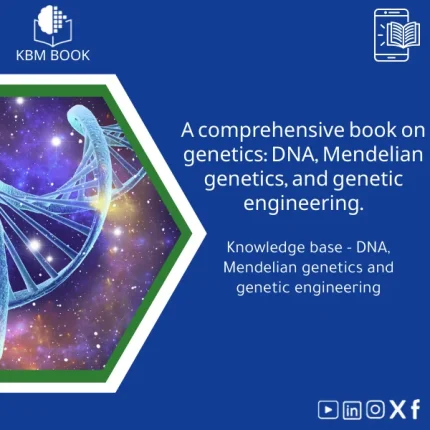
Comprehensive Genetics Book: DNA, Mendelian Genetics & Engineering
A structured, searchable knowledge base module (KBM) that turns genetics theory and practice into an immediately usable digital reference — from DNA structure to Mendelian genetics and contemporary genetic engineering techniques — optimized for students, researchers, and professionals who need reliable answers fast.
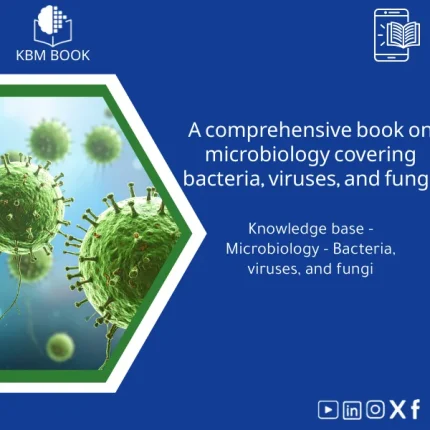
Comprehensive Microbiology Book on Bacteria, Viruses, and Fungi
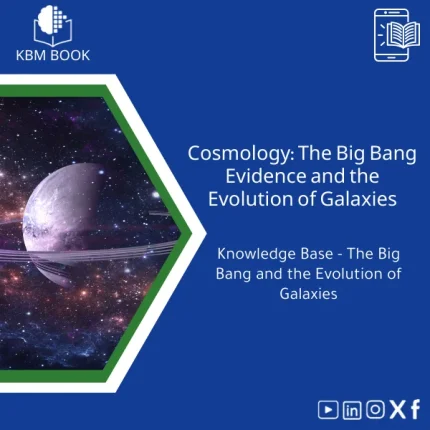
Cosmology Book: Guide to Big Bang and Galaxy Evolution
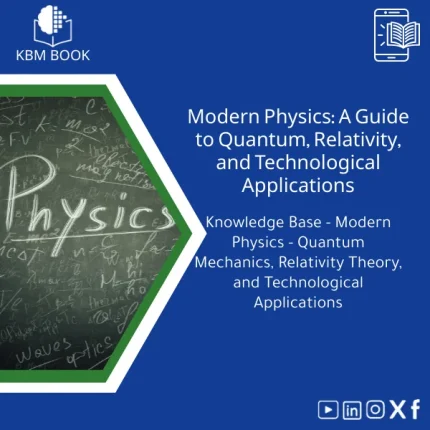
Modern Physics Book: Quantum, Relativity, and Tech Applications Guide
A structured, searchable Knowledge Base Module (KBM) that turns modern physics — quantum mechanics, special & general relativity, and contemporary technological applications — into a hierarchical, practical reference for students, researchers, and professionals who need quick, reliable access to advanced concepts and formulas.
Reviews
Clear filtersThere are no reviews yet.