


Investigative Journalism Guide for Effective Information Gathering
Original price was: 179.00 $.139.00 $Current price is: 139.00 $.
A practical, structured Knowledge Base Module (KBM) that teaches Investigative Journalism from fundamentals to advanced investigative reporting techniques — designed for students, researchers, and professionals who need rapid access to reliable methods and checklists.
Key benefits & value for the buyer
This KBM converts the theory of Investigative Journalism into a working toolkit. Each feature is translated into a clear benefit you can use immediately:
- Faster research cycles: Pre-built search trees and source categories reduce time spent finding reliable documents.
- Consistent quality: Standardized checklists improve accuracy and reduce legal/reputational risk across projects.
- Portable knowledge: Export modules as an investigative journalism book pdf or integrated data for team sharing.
- Training-ready: Use the KBM as a syllabus for labs, workshops, or supervised student projects.
- Evidence audit trail: Structured logs make it easy to show how claims were verified — essential for editorial and academic standards.
Use cases & real-life scenarios
University classroom — research assignments
Instructors can assign specific KBM modules to teach in-depth news investigation skills: source mapping, public records requests, and FOIA strategy. Students follow the hierarchy from topic selection to evidence synthesis.
Small newsroom — resource-constrained investigations
Reporters use the KBM to run quick verifications, prepare interview guides, and assemble a defensible evidence file before publication — saving senior editors’ time and avoiding rework.
Independent researchers & NGOs
Researchers compiling policy reports will appreciate the KBM’s templates for metadata, chain-of-custody notes, and reproducible search queries that become part of reports or supplement an investigative journalism book pdf.
Who is this product for?
The KBM is designed for three overlapping groups:
- Media students learning investigative reporting techniques and needing a structured learning path.
- Researchers who must verify claims and build evidence-based narratives quickly.
- Professional journalists and independent reporters who want a repeatable system for in-depth investigations.
If you publish, teach, or produce research that depends on verifiable sources, this module is relevant and actionable.
How to choose the right format
The KBM is offered in multiple digital formats so you can pick what fits your workflow:
- Interactive KBM (recommended): Searchable database + templates; best for teams and repeated use.
- PDF package: Printable investigative journalism book pdf containing all modules, checklists, and forms — ideal for classrooms and offline use.
- CSV/JSON export: Import logs and taxonomies into your research tools or newsroom CMS.
Choose Interactive if you collaborate and update the KBM frequently; choose PDF for certification assignments and archival distribution.
Quick comparison with typical alternatives
Before you buy, consider how this KBM differs from other study materials:
- Versus a single book: Books are linear; this KBM is modular and searchable, letting you jump directly to the task you need.
- Versus online courses: Courses teach concepts but rarely provide reusable data structures; the KBM supplies templates and exportable evidence logs.
- Versus ad-hoc templates: This KBM offers a complete, hierarchical system built for end-to-end investigations rather than isolated forms.
Best practices & tips to get maximum value
- Start with the “Topic Scoping” module to map stakeholders and known documents before deep searches.
- Use the “Source Reliability” checklist on every interview and document to keep standards consistent.
- Export a case file (PDF + metadata) at project milestones to maintain a clear audit trail.
- Integrate a short weekly KM review to update templates with lessons learned from completed investigations.
Common mistakes when buying/using investigative tools — and how to avoid them
- Mistake: Treating the KBM as a one-off read. Fix: Use it as a living database and customize templates to your beats.
- Mistake: Skipping legal checks. Fix: Follow the included legal-risk checklist before publishing.
- Mistake: Expecting instant mastery. Fix: Pair the KBM with supervised practice: small projects or classroom labs accelerate skill acquisition.
Product specifications
- Format: Interactive Knowledge Base Module (KBM); optional investigative journalism book pdf and CSV/JSON exports
- Contents: 12 hierarchical modules (topic scoping, source management, document acquisition, verification, legal review, data analysis, publishing workflow)
- Included templates: Interview guide, source log, FOIA/record request templates, evidence audit trail, redaction checklist
- Language: English (structured and indexed for quick search)
- Compatibility: Browser-based KBM; PDF readable on all devices; CSV/JSON for import to research tools
- Usage notes: Commercial and educational use allowed; recommended periodic updates for legal practices
FAQ
Can I download an investigative journalism book pdf version?
Yes. The KBM includes a printable PDF package that compiles modules and templates. The interactive KBM offers richer functionality (search, export), while the PDF is optimized for offline teaching and distribution.
Will this teach investigative reporting techniques from scratch?
Yes. The KBM is structured from fundamentals to advanced techniques. It provides step-by-step workflows and practical templates so beginners can follow guided projects while experienced users can jump to advanced modules.
Is the content kept up to date for legal and ethical practices?
KBMBook maintains versioned updates focusing on verification and legal best practices. When you purchase the interactive KBM you receive update notifications and guidance on applying changes to existing projects.
How does this compare with courses or mentorship?
The KBM is a toolset and reference system. It complements courses and mentorship by providing reusable templates and a searchable evidence framework you can apply immediately to projects.
Ready to build reliable investigations faster?
Invest in a repeatable workflow that saves time, reduces risk, and improves the quality of your reporting. The KBM is designed so students, researchers, and professionals can produce verifiable, defensible work — from classroom assignments to publishable investigations.
Related products
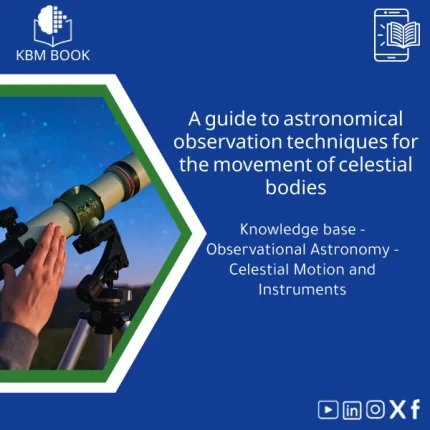
Astronomy Observational Techniques Guide for Celestial Motion

Atomic Physics Guide: Understanding Atomic and Electron Properties
Knowledge Base — Atomic/Electron Properties & Electromagnetic Interactions. A structured, searchable KBM for students, researchers, and professionals who need an authoritative atomic physics reference that organizes concepts, formulas, experiments, and practical applications from basics of atomic physics to advanced electron properties.
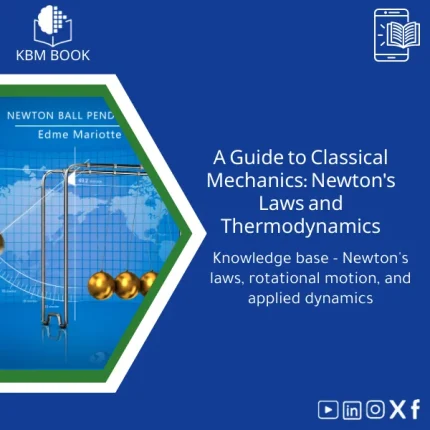
Classical Mechanics Guide: Newton’s Laws and Dynamics
A searchable, hierarchical Knowledge Base Module (KBM) that turns classical mechanics into a practical, ready-to-use reference for fast problem solving, lecture preparation, and applied engineering. Designed for students, researchers, and professionals who need precise access to Newton’s laws, rotational motion, and applied dynamics without the noise of textbooks.
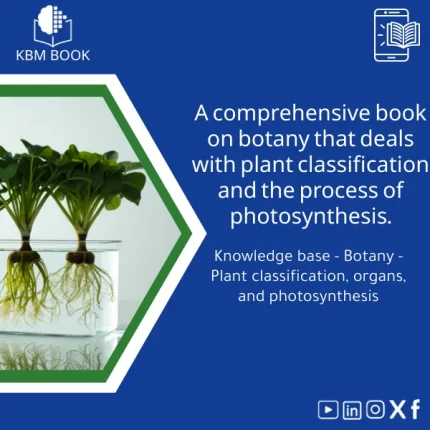
Comprehensive Botany Book on Plant Taxonomy and Photosynthesis
A structured, searchable botany book designed as a Knowledge Base Module (KBM) — an end-to-end reference on plant taxonomy, organ structure, and the biochemistry of photosynthesis. Built for students, researchers, and professionals who need reliable, hierarchical knowledge they can search, cite, and apply immediately.
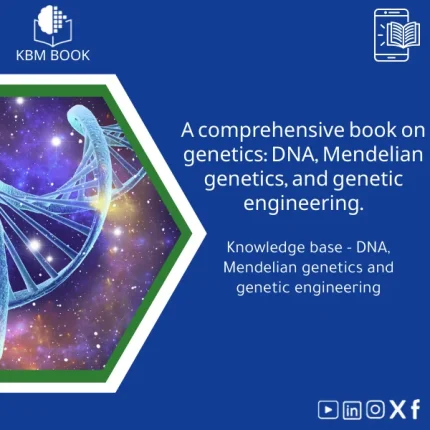
Comprehensive Genetics Book: DNA, Mendelian Genetics & Engineering
A structured, searchable knowledge base module (KBM) that turns genetics theory and practice into an immediately usable digital reference — from DNA structure to Mendelian genetics and contemporary genetic engineering techniques — optimized for students, researchers, and professionals who need reliable answers fast.

Modern Physics Book: Quantum, Relativity, and Tech Applications Guide
A structured, searchable Knowledge Base Module (KBM) that turns modern physics — quantum mechanics, special & general relativity, and contemporary technological applications — into a hierarchical, practical reference for students, researchers, and professionals who need quick, reliable access to advanced concepts and formulas.
Molecular Biology Guide: Transcription, Translation & Repair

Physical Chemistry Guide: Energy, Thermodynamics & Interactions
A structured Knowledge Base Module (KBM) for Physical Chemistry that converts core theory, worked examples, and applied datasets into a searchable, hierarchical database — ideal for students, researchers, and professionals who need fast, reliable access to chemical thermodynamics basics and molecular interaction models.

Reviews
Clear filtersThere are no reviews yet.