


Mass Communication Guide: Understanding Media Impact on Audiences
Original price was: 179.00 $.139.00 $Current price is: 139.00 $.
A structured, searchable Knowledge Base Module (KBM) that converts the core concepts of mass communication into an organized digital reference — from mass‑media features to measurable effects on public opinion — designed for students, researchers, and professionals who need fast, reliable access to structured knowledge.
Key benefits & value for students, researchers, and professionals
This KBM transforms the traditional mass communication book into a practical, retrievable knowledge asset. Instead of reading linear chapters, you get a hierarchical, tagged database that answers specific questions quickly while keeping academic rigor.
From features to outcomes
- Faster literature reviews: Topic pages compile definitions, theoretical frameworks, and annotated bibliographies — move from question to source in minutes.
- Reliable summaries for lectures and reports: Each module includes concise executive summaries you can adapt for slides, briefs, or handouts.
- Methodology-ready sections: Research methods, measurement scales, and sample survey instruments help you design studies that measure media impact on audiences.
- Practical policy and campaign insights: Case studies and impact matrices translate theory into actionable recommendations for communication campaigns and media literacy programs.
Use cases & real-life scenarios
1. Students preparing for exams or assignments
Open the KBM, search “agenda setting + public opinion”, and get a compact page with definitions, the seminal studies, counter-evidence, and suggested citations ready to copy into your bibliography.
2. Researchers writing literature reviews
Use the module’s tagged bibliography and exportable citation list (RIS/CSV) to build a review quickly and confidently, with clear distinctions between classic theories and recent empirical findings.
3. Professionals designing media interventions
Campaign planners can extract impact logic frameworks and sample evaluation metrics from the KBM to compare predicted audience responses across channels (broadcast, social, print).
4. Trainers and lecturers
Import slide-ready outlines and case study packets to save prep time and ensure your material follows an evidential structure appropriate for undergraduate or professional training.
Who is this product for?
The KBM is tailored to three overlapping groups:
- Students who need concise, exam‑ready summaries and reliable citations for essays on mass communication theories and media effects.
- Researchers conducting empirical studies or reviews who require structured bibliographies, measurement tools, and methodological notes.
- Professionals (communications officers, media strategists, policy analysts) who need to translate academic findings into implementable communication strategies.
Keywords supported: mass communication, mass communication book, mass media communication pdf, introduction to mass communication.
How to choose the right version & format
Select based on workflow:
- PDF (Readable): Best for offline study and printing. Choose this if you prefer annotated reading with stable formatting.
- CSV/JSON (Integrable): Ideal for researchers who want to import topic lists, citations, or survey items into analysis tools.
- Presentation Pack: Slide-ready outlines and handouts for lecturers and trainers.
- Combined Bundle: For maximum flexibility, get the full bundle (searchable PDF + data export + slides).
If unsure, start with the searchable PDF and add integrations later — the structure is identical across formats, so upgrading is seamless.
Quick comparison with typical alternatives
How this KBM differs from common options:
- Traditional textbooks: Textbooks offer narrative depth but are linear and slow to search. The KBM provides the same depth in modular, retrievable units with direct citations.
- Academic articles: Articles are focused but narrow. The KBM aggregates multiple studies, shows contradictions, and synthesizes practical implications.
- Online articles & blogs: Often shallow or opinionated. The KBM prioritizes evidence, methodology, and transparent sourcing for academic and professional use.
Best practices & tips to get maximum value
- Use the KBM’s search filters (theory, method, case study) to narrow results by relevance quickly.
- Start with executive summaries to identify the most relevant modules, then drill into methodology and citations for depth.
- Export citation lists directly into reference managers (RIS/CSV) to speed up drafting and reduce errors.
- For teaching, adapt the slide pack and case studies to local contexts — each case includes discussion prompts and assessment questions.
Common mistakes when buying/using similar products and how to avoid them
- Mistake: Buying a single PDF and expecting editable data. Fix: Choose the bundle with CSV/JSON exports if you need integration.
- Mistake: Assuming summary pages replace original studies. Fix: Use summaries as roadmaps, and always consult primary sources in the annotated bibliography for critical claims.
- Mistake: Overlooking methodology when planning research. Fix: Review the KBM’s methodology modules before designing surveys or experiments; they include validated scales and sampling recommendations.
Product specifications
- Title: Mass Communication Guide: Understanding Media Impact on Audiences
- Format: Searchable PDF (primary), optional CSV/JSON exports, Slide pack (PPTX)
- Size: ~220 indexed pages equivalent; ~45 modular topic pages
- Content structure: Theoretical frameworks, empirical summaries, annotated bibliography, methodology toolkit, case studies, policy implications
- Language: English (with Arabic interface notes where relevant)
- Delivery: Instant digital download after purchase, ZIP package with chosen formats
- Usage notes: Academic and professional license for single-user; institutional and multi-user licensing options available on request
FAQ
Is this KBM suitable as an introduction to mass communication?
Yes. The module contains an “Introduction to Mass Communication” section that covers core concepts, major theories, and a guided reading list — structured so beginners can progress to intermediate topics without getting lost.
Does it include references and citations for academic use?
Absolutely. Each topic includes annotated references, DOI links where available, and exportable citation lists in RIS/CSV to import into citation managers (EndNote, Zotero, Mendeley).
What formats are included and can I integrate data into my research tools?
The primary delivery is a searchable PDF. For integration, choose CSV/JSON exports which contain structured topic metadata, citation tables, and measurement items ready for import into qualitative or quantitative tools.
How current is the content and are updates provided?
The KBM is compiled from peer-reviewed literature and recent empirical studies. Purchase includes access to minor content updates for 12 months; larger revised editions are available as paid upgrades. A sample preview is available so you can verify relevance before purchase.
Ready to speed up your research and coursework?
Get instant access to a structured, evidence-based mass communication knowledge base designed for practical use — not just reading. The KBM format saves time, reduces citation errors, and turns theory into usable tools for study, research, and practice.
Prefer a sample first? Click the product page for a free preview and format options before you buy.
Related products
Analytical Chemistry Book: Qualitative and Quantitative Methods Guide
Astronomy Observational Techniques Guide for Celestial Motion
Comprehensive Botany Book on Plant Taxonomy and Photosynthesis
A structured, searchable botany book designed as a Knowledge Base Module (KBM) — an end-to-end reference on plant taxonomy, organ structure, and the biochemistry of photosynthesis. Built for students, researchers, and professionals who need reliable, hierarchical knowledge they can search, cite, and apply immediately.
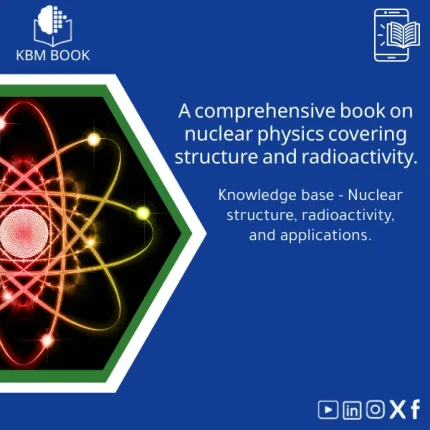
Comprehensive Nuclear Physics Book on Structure and Radioactivity
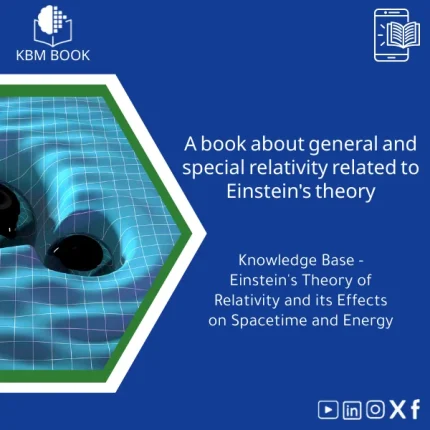
General and Special Relativity Book on Einstein’s Theory
A structured, searchable Knowledge Base Module (KBM) that converts Einstein's General and Special Relativity into a clear, hierarchical reference: formulas, derivations, worked examples, practical applications (GPS, astrophysics), and a compact research bibliography — ready to download and integrate into study, teaching, or research workflows.
General Physics Book: Fundamentals of Force, Motion, Energy

Inorganic Chemistry Guide: Bonding and Crystal Solids
A structured, searchable Knowledge Base Module (KBM) that converts inorganic chemistry fundamentals and advanced topics—bonding models, lattice structures, defects, and solid-state properties—into a practical digital reference for students, researchers, and professionals who need fast, reliable answers without wading through textbooks.
Reviews
Clear filtersThere are no reviews yet.