


Mathematical Cryptography Knowledge Base for Information Security
Original price was: 199.00 $.159.00 $Current price is: 159.00 $.
A compact, hierarchical Knowledge Base Module (KBM) that converts the mathematical foundations of cryptography into a searchable, practice-ready reference — ideal for students, researchers, and professionals who need fast, reliable access to cryptography concepts and worked examples.
Key benefits & value for the buyer
Translate mathematical theory into usable tools
Mathematical Cryptography is dense: definitions, lemmas, and reductions can be difficult to retrieve when you need them. This KBM packages those building blocks into a logical, indexed database so you can:
- Reduce research time: Find proofs, definitions, and standard reductions in seconds instead of searching through multiple papers or textbooks.
- Improve precision: Standardized formulations of assumptions (e.g., discrete logarithm, RSA, lattice problems) to avoid ambiguous interpretations in reports or code.
- Speed learning: A progressive path from the basics of cryptography to advanced constructions with checkpoints and worked examples.
- Integrate easily: Export modules into your note system, Jupyter notebooks, or LMS to build course materials or security assessments.
Use cases & real-life scenarios
For students
Prepare for exams and assignments by following the hierarchical learning path: start with modular arithmetic and progress to elliptic curves and lattice-based schemes. Each topic includes concise proofs, intuitive commentary, and practice problems with solutions.
For researchers
Use the KBM as a reference when writing papers: ready-made, citation-ready definitions, theorem statements, and a curated bibliography. Quickly cross-reference assumptions used in security proofs and confirm the exact statement you need.
For professionals
Security engineers and architects can use the KBM to validate protocol choices, derive security bounds, and translate mathematical guarantees into practical recommendations for system design.
Practical example
Scenario: Designing a secure messaging protocol. Use the KBM to (1) choose an appropriate hardness assumption, (2) find a pairing-friendly curve with recommended parameters, and (3) copy a standard IND-CCA security reduction as a template for your threat model documentation.
Who is this product for?
This KBM is tailored to:
- Undergraduate and graduate students taking cryptography, information security, or mathematics courses.
- Researchers needing a concise, authoritative reference on mathematical cryptography for proofs and bibliographic curation.
- Security practitioners who must map cryptographic guarantees to system requirements and produce defensible design documents.
- Instructors and trainers who want modular course material without authoring every proof from scratch.
How to choose the right KBM for your needs
Consider these practical filters before purchasing:
- Scope: If you need an overview, select modules covering “basics of cryptography” and “classic public-key systems.” For research depth, choose modules labeled “advanced proofs” and “assumption taxonomy.”
- Format & integration: If you use notebooks or knowledge systems, prefer KBMs with JSON/CSV exports. If you need printable references, choose the PDF-included option.
- Updates & support: Check whether the KBM includes periodic updates on new cryptographic assumptions or constructions.
Quick comparison with typical alternatives
Traditional textbooks
Textbooks are narrative and thorough but often verbose. The KBM provides the same rigorous statements and examples in searchable modules with no redundant exposition — faster to consult.
Research papers & articles
Papers are focused and up-to-date but fragmented. The KBM aggregates canonical results, standard proofs, and commentary, saving you the effort of reassembly.
Lecture slides / course notes
Slides are great for teaching but rarely capture full proofs or variant assumptions. The KBM complements slides with complete derivations and counterexamples.
Best practices & tips to get maximum value
- Map the KBM modules to your syllabus or project checklist to create a week-by-week study plan.
- Use the export feature to load definitions into your codebase’s documentation for consistent terminology across teams.
- Cross-check assumptions in system designs with the KBM’s “assumption implications” pages to avoid mismatched security claims.
- Keep a local copy of the most-used modules for offline reference during coding or exams.
Common mistakes when buying/using similar products and how to avoid them
- Buying a generalist resource: Avoid KBMs that are purely high-level summaries if you need proofs and parameter choices.
- Ignoring format needs: Confirm export formats before purchase if you plan automated imports into notebooks or documentation.
- Assuming currency: Cryptography evolves; choose KBMs that document versioning and update policies rather than static, unmaintained files.
Product specifications
- Title: Mathematical Cryptography Knowledge Base for Information Security
- Coverage: Number theory, algebra, finite fields, complexity assumptions, symmetric & public-key constructions, proof techniques, post-quantum overview
- Structure: Hierarchical modules with topic indices and cross-referenced examples
- Formats included: JSON, CSV, PDF (print-ready), and plain-text extracts
- Entries: ~450 indexed definitions & theorems, 120 worked examples, 60 reference proofs, curated bibliography
- Language: English (with Arabic-themed curation and references where relevant)
- License: Single-user digital license; commercial team licenses available
- Delivery: Instant download after purchase; optional paid updates subscription
Frequently asked questions
What formats are the KBM files available in and how do I use them?
The KBM includes JSON and CSV for automated imports, a PDF for offline reading and printing, and plain-text extracts for quick copying into notes. JSON is structured to map modules → topics → subtopics for easy programmatic access.
Can I use the content in course materials or commercial projects?
The standard purchase grants a single-user digital license for study and internal professional use. For redistribution, integration into commercial products, or classroom licensing, contact support to obtain a team or institutional license.
How often is the KBM updated to reflect new research (e.g., post-quantum developments)?
Core updates are released periodically. Optional update subscriptions ensure you receive additions on new constructions, parameter recommendations, and notable security results. Check the product page for current update policy.
Can I preview sample modules before buying?
Yes. A downloadable sample includes the introductory module, table of contents, and one complete worked example so you can evaluate structure and depth before purchase. If the sample doesn’t match your needs, a refund policy applies (see purchase terms).
Ready to speed up your work in Mathematical Cryptography?
Gain instant access to a structured, citation-ready knowledge base designed for rigorous study and practical application in cryptography and information security. Confidently choose assumptions, reproduce proofs, and integrate textbook-quality modules into your workflows.
Perpetual access after purchase. Team licenses and update subscriptions available.
Related products
Analytical Chemistry Book: Qualitative and Quantitative Methods Guide
Astrophysics Book: Understanding Stars, Galaxies, and Dark Energy
A searchable, hierarchical Knowledge Base Module (KBM) that converts astrophysics and cosmology into a practical, exam-ready and research-ready reference. Designed for students, researchers, and professionals who need immediate access to reliable explanations, equations, and data models for stars, galaxies, and dark energy.
Biological Anthropology Study Guide on Human Evolution
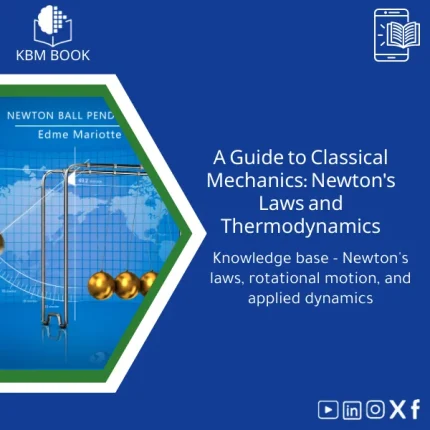
Classical Mechanics Guide: Newton’s Laws and Dynamics
A searchable, hierarchical Knowledge Base Module (KBM) that turns classical mechanics into a practical, ready-to-use reference for fast problem solving, lecture preparation, and applied engineering. Designed for students, researchers, and professionals who need precise access to Newton’s laws, rotational motion, and applied dynamics without the noise of textbooks.
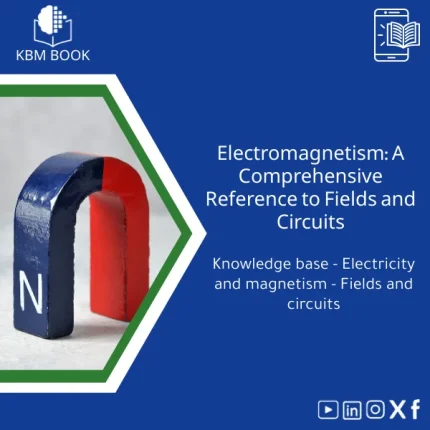
Electromagnetism Book: A Comprehensive Guide to Fields and Circuits
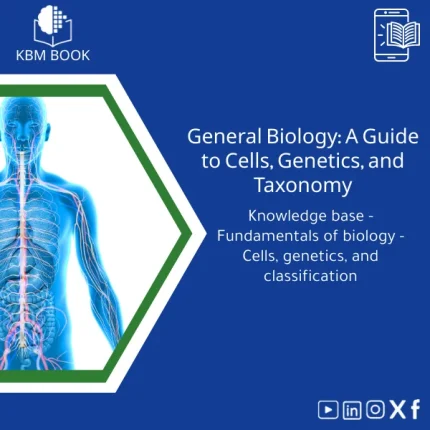
General Biology Book: A Guide to Cells, Genetics & Taxonomy

Inorganic Chemistry Guide: Bonding and Crystal Solids
A structured, searchable Knowledge Base Module (KBM) that converts inorganic chemistry fundamentals and advanced topics—bonding models, lattice structures, defects, and solid-state properties—into a practical digital reference for students, researchers, and professionals who need fast, reliable answers without wading through textbooks.
Reviews
Clear filtersThere are no reviews yet.