


Mathematical Methods in Computer Science Guide to Algorithms
Original price was: 349.00 $.279.00 $Current price is: 279.00 $.
A compact, hierarchical knowledge base module that links mathematical methods to algorithm design and complexity analysis — built for students, researchers, and professionals who need a fast, reliable reference for algorithmic reasoning and proofs.
Key benefits & value for the buyer
This KBM transforms theoretical mathematics into immediately usable algorithmic tools. Instead of reading scattered chapters, you get:
- One-stop reference: Concise entries for definitions, lemmas, and proof patterns frequently used in algorithm analysis (induction, recurrences, amortized analysis, probabilistic bounds).
- Applied templates: Step-by-step templates that show how to convert a mathematical statement into an algorithmic proof or complexity bound.
- Time savings: Pre-structured sections reduce search and synthesis time — ideal before coding exercises, paper writing, or teaching.
- Reliable citations: Each entry links to formal sources and includes suggested exercises, so you can trust the accuracy and follow up on depth when needed.
- Interoperability: Exports and API-friendly formats let you integrate content with note apps, digital notebooks, or LMS.
These benefits map directly to outcomes students and professionals care about: faster problem solving, clearer proofs, and reproducible analysis for research or production code.
Use cases & real-life scenarios
Undergraduate coursework
Use the KBM to review discrete math and complexity topics before exams. Example: open the “Recurrences” node to find the Master theorem template, worked examples and templated proof steps you can adapt for homework.
Graduate research & paper preparation
Researchers can quickly pull lemmas, formal proofs, and complexity arguments when drafting introductions or analyzing new algorithms. Each KBM entry includes suggested references and common variants to speed literature linkage.
Software engineering and interviews
Practitioners preparing for technical interviews or designing algorithms in production can use the KBM as a compact algorithms complexity reference — translate mathematical bounds into implementation decisions (e.g., choosing data structures based on amortized complexity).
Teaching & training
Instructors and trainers can extract modular lessons: slide-ready problem sets, stepwise proofs, and quiz generators for compact classroom modules.
Who is this product for?
This KBM is designed for:
- CS undergraduates studying algorithms and discrete mathematics.
- Graduate students and researchers who need a compact algorithms complexity reference.
- Professionals and engineers who apply mathematical methods to performance analysis and algorithmic design.
- Instructors and mentors who prepare structured lessons and assessment items.
If you need a concentrated, searchable “mathematical methods computer science book” but prefer digital, actionable modules over traditional textbooks, this KBM aligns with your workflow.
How to choose the right edition
We offer multiple editions optimized for different needs:
- Compact (Intro): Core definitions, one-line theorem statements, and 30+ worked examples — best for exam revision.
- Standard (Course): Full proofs, exercises with solutions, and exportable lesson packs — ideal for semester-long courses.
- Professional (Research): Extended proofs, variants, complexity class comparisons, and API-ready JSON schema — built for researchers and production teams.
Choose based on depth: Compact for speed; Standard for teaching; Professional for deep research and integration.
Quick comparison with typical alternatives
- Traditional textbooks: Deep but static and slow to search. KBM offers the same depth in a modular, searchable format with direct application templates.
- Lecture notes & articles: Often fragmented. KBM organizes material hierarchically to remove repetition and surface the most reliable methods.
- Online tutorials & videos: Good for introductions but lack rigorous, citable structure. KBM supplies formal proofs and exportable references for academic use.
Best practices & tips to get maximum value
- Start with the “Foundations” module to establish consistent notation before using templates.
- Use the search filters: keyword + theorem type (e.g., “probability bound + Chernoff”) to find targeted proof patterns quickly.
- Export relevant sections to JSON and import into your research notes to maintain reproducible analysis workflows.
- Use the exercises and suggested citations to validate and extend the KBM content for academic assignments or publications.
Common mistakes when buying or using similar products — and how to avoid them
- Mistake: Buying a broad textbook expecting modular searchability. Fix: Choose a KBM designed as a searchable database with exports.
- Mistake: Using examples without adapting notation to your paper or code. Fix: Always align notation via the module’s “Notation mapping” before copying proofs.
- Mistake: Overpaying for outdated compilations. Fix: Check the KBM update policy and pick editions with recent revision notes.
Product specifications
- Title: Mathematical Methods in Computer Science — Guide to Algorithms
- Format: KBM database with PDF, JSON, and CSV exports; interactive HTML index
- Coverage: Discrete math, recurrences, asymptotic notation, probability methods, amortized analysis, complexity classes, reduction techniques
- Depth: Intro → Intermediate → Research-level modules (edition dependent)
- Language: English (technical terms with Arabic cross-reference in notes)
- Compatibility: Import-ready for Obsidian, Notion, Zotero, and standard LMS platforms
- License: Personal & academic use; commercial license available separately
- Updates: Free minor updates for 12 months; optional paid subscription for continuous updates
Frequently asked questions
Is this a replacement for a full algorithms textbook?
No — it is a complementary, highly structured knowledge base. The KBM focuses on methods and proof templates that accelerate understanding and application; for narrative exposition you may still prefer a full textbook. The KBM reduces lookup time and bridges theory to practice.
Which export formats are included?
PDF (printable modules), JSON (structured entries for import into note tools), and CSV (tables of theorems and examples). The Professional edition includes an API-ready schema for programmatic access.
How often is the content updated?
Minor corrections and added examples are released monthly; substantive revisions are rolled into edition updates. Purchases include 12 months of free minor updates.
Can I use KBM material in my course slides?
Yes — personal and academic use is included. For commercial training or redistribution, purchase the commercial license option. Each module includes citation suggestions to credit KBMBook.
Ready to work faster with algorithms and complexity?
Get the structured “Mathematical Methods in Computer Science” KBM and replace scattered notes with a disciplined, searchable knowledge base. Perfect for last-minute revision, research drafting, and practical algorithm design.
Still unsure? Choose the Compact edition to evaluate structure and searchability, then upgrade to Standard or Professional as your needs grow.
Related products
Astronomy Observational Techniques Guide for Celestial Motion
Biochemistry Book: Understanding Chemical Processes in Living Systems
Biological Anthropology Study Guide on Human Evolution
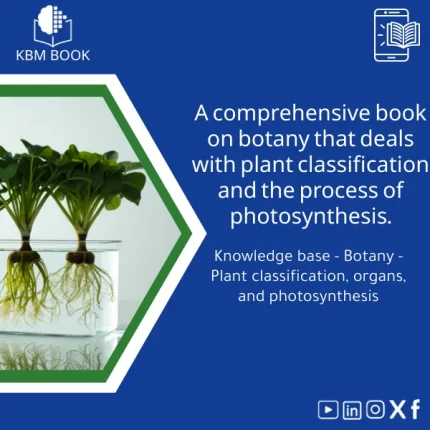
Comprehensive Botany Book on Plant Taxonomy and Photosynthesis
A structured, searchable botany book designed as a Knowledge Base Module (KBM) — an end-to-end reference on plant taxonomy, organ structure, and the biochemistry of photosynthesis. Built for students, researchers, and professionals who need reliable, hierarchical knowledge they can search, cite, and apply immediately.
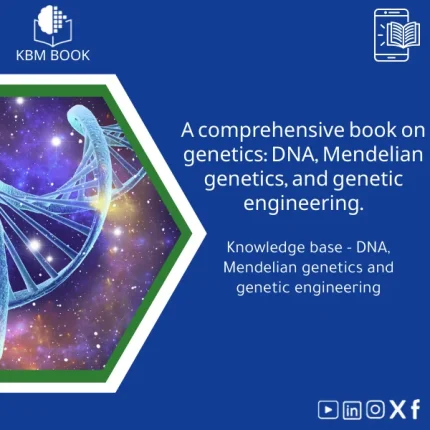
Comprehensive Genetics Book: DNA, Mendelian Genetics & Engineering
A structured, searchable knowledge base module (KBM) that turns genetics theory and practice into an immediately usable digital reference — from DNA structure to Mendelian genetics and contemporary genetic engineering techniques — optimized for students, researchers, and professionals who need reliable answers fast.

Materials Physics Guide: Understanding Solid-State Properties
Modern Physics Book: Quantum, Relativity, and Tech Applications Guide
A structured, searchable Knowledge Base Module (KBM) that turns modern physics — quantum mechanics, special & general relativity, and contemporary technological applications — into a hierarchical, practical reference for students, researchers, and professionals who need quick, reliable access to advanced concepts and formulas.

Reviews
Clear filtersThere are no reviews yet.