


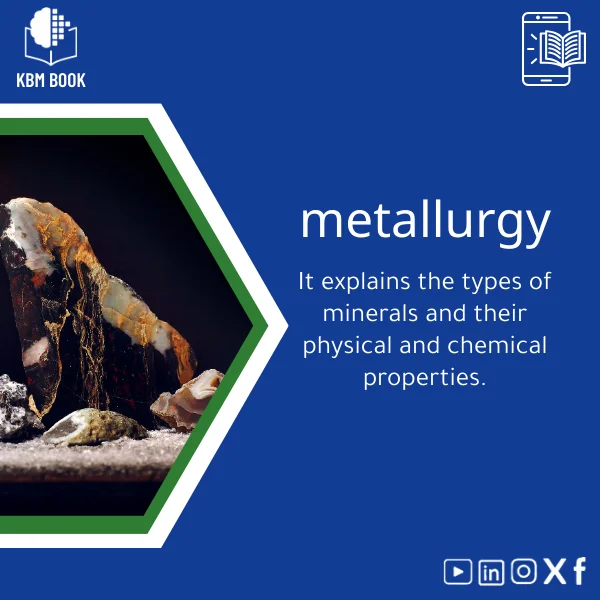
Mineralogy Book: Guide to Mineral Types and Properties
Original price was: 179.00 $.139.00 $Current price is: 139.00 $.
A structured, searchable knowledge base module (KBM) that maps mineral types, classification systems, and the physical & chemical properties you need—organized hierarchically so students, researchers, and professionals can find reliable mineralogy information fast.
Key benefits & value for the buyer
This Mineralogy book is built as a KBM—not a long narrative textbook—so information is modular, indexable, and immediately actionable. Each technical feature below is translated into a real benefit for your study or work.
Features → Benefits
- Hierarchical taxonomy — Quickly navigate from class to subgroup to species; saves time during revision and field work.
- Standardized property tables — Compare hardness, cleavage, luster, density, and chemistry side-by-side for accurate identification.
- Diagnostic test guides — Step-by-step simple lab and field tests (acid reaction, streak, magnetism) to confirm IDs reliably.
- Cross-referenced uses — Economic and industrial notes for professionals linking mineralogy to application and sourcing decisions.
- Downloadable & searchable — Use offline in labs or on field trips; integrate into lectures and research notes.
Use cases & real-life scenarios
Practical examples showing how the Mineralogy book becomes a working tool:
- Undergraduate student: Preparing for a mineralogy exam—use the taxonomy map to structure recall and practice identification with the property tables.
- Field geologist: Quick on-site checks—open the KBM on a tablet and follow the diagnostic test checklist to rule in/out candidate minerals within minutes.
- Researcher: Compiling literature—use cross-references and chemical formulas to ensure correct nomenclature and trace mineral phases in datasets.
- Lab manager or instructor: Create lab sheets from the KBM content for teaching practical identification exercises or quality control procedures.
Who is this product for?
The Mineralogy book is designed for anyone who needs a compact, reliable, and searchable reference on minerals:
- Geology and Earth Science students (undergrad and grad)
- Academic and industry researchers assembling mineral datasets
- Lab technicians, mineralogists, and field geologists
- Instructors building practical coursework or lab manuals
How to choose the right format
Because this product is a digital KBM, “size” is about format and license rather than pages. Choose according to how you will use the content:
- PDF book: Best for printing, annotation, and offline reading. Ideal for students and instructors.
- Structured database (CSV/JSON): Best for researchers who need to import tables into statistical or GIS software.
- Interactive KBM (searchable package): Best for professionals needing fast lookup and cross-references during fieldwork.
- License options: Single-user for individual study, multi-user for classrooms or lab teams—select based on the number of users who will access the KBM.
Quick comparison with typical alternatives
If you’re deciding between this Mineralogy book and other study or reference options, here is a short comparison focused on outcomes:
- Traditional textbooks: Rich narrative but slower to navigate and harder to extract quick property comparisons.
- Scientific articles: Excellent depth but narrow scope; not optimized for quick ID or teaching materials.
- Video tutorials: Good for demonstrations but not searchable for specific mineral properties or batch extraction.
- KBM approach (this product): Structured, searchable, and exportable—designed to replace scattered notes and save time in both study and applied work.
Best practices & tips to get maximum value
- Use the property tables as a checklist during identification: record at least three matching properties before accepting an ID.
- Import CSV/JSON into your lab database for consistent metadata and automated reports.
- Combine the KBM with a simple field notebook template—export the relevant entry and paste into your notes for each sample.
- Keep a copy of the interactive KBM on a rugged tablet for fieldwork—offline access prevents delays in remote locations.
Common mistakes when buying/using mineralogy resources and how to avoid them
- Mistake: Buying a long narrative textbook hoping to use it as a quick reference. Fix: Choose a KBM format with indexed, tabular data for rapid lookup.
- Mistake: Ignoring file compatibility with lab software. Fix: Verify CSV/JSON exports are available for integration.
- Mistake: Expecting exhaustive geochemical modeling data in a basic reference. Fix: Use this KBM as a practical properties and taxonomy reference, then link to specialist datasets for advanced geochemistry.
Product specifications
- Product name: Mineralogy Book: Guide to Mineral Types and Properties
- Formats available: PDF book, Interactive KBM package (searchable), CSV/JSON export
- Contents: Class-level taxonomy, genus/species entries, property tables, diagnostic tests, industrial uses, references
- Language: English (structured for clarity and integration)
- License options: Single-user, Classroom (multi-user), Institutional (site-license)
- Delivery: Instant download after purchase; includes installation/readme for interactive package
- Usage notes: Offline-ready; recommended for academic and professional use
Frequently asked questions
Is this a textbook or a database? Which should I choose?
The Mineralogy book is a KBM that combines structured database entries with readable textbook-style explanations. Choose the PDF if you prefer a book layout for study and printing. Choose the interactive KBM or CSV/JSON if you need searchability, integration, or repeated lookups in research and fieldwork.
Will the content include chemical formulas and crystallography details?
Yes. Each mineral entry includes chemical formula, common crystal systems, diagnostic properties, and references. The KBM prioritizes concise, verifiable data for identification and cross-reference.
Can I use this in my classroom or lab? What are the license terms?
Licensing options include single-user, classroom (multi-user), and institutional. Classroom licenses permit distribution to enrolled students; institutional licenses are available for departments. Select the appropriate license at checkout.
How often is the content updated?
KBMbook maintains periodic updates to taxonomy and property corrections. Updates depend on new consensus in mineral classification; purchasers receive update notifications and a simple patching process for interactive packages.
Ready to make mineral identification easier and faster?
The Mineralogy book delivers a practical, searchable knowledge base that replaces scattered notes and helps you make confident identifications, faster. Choose the format and license that fit your workflow and download instantly.
Related products
Astrophysics Book: Understanding Stars, Galaxies, and Dark Energy
A searchable, hierarchical Knowledge Base Module (KBM) that converts astrophysics and cosmology into a practical, exam-ready and research-ready reference. Designed for students, researchers, and professionals who need immediate access to reliable explanations, equations, and data models for stars, galaxies, and dark energy.
Biochemistry Book: Understanding Chemical Processes in Living Systems
Classical Mechanics Guide: Newton’s Laws and Dynamics
A searchable, hierarchical Knowledge Base Module (KBM) that turns classical mechanics into a practical, ready-to-use reference for fast problem solving, lecture preparation, and applied engineering. Designed for students, researchers, and professionals who need precise access to Newton’s laws, rotational motion, and applied dynamics without the noise of textbooks.
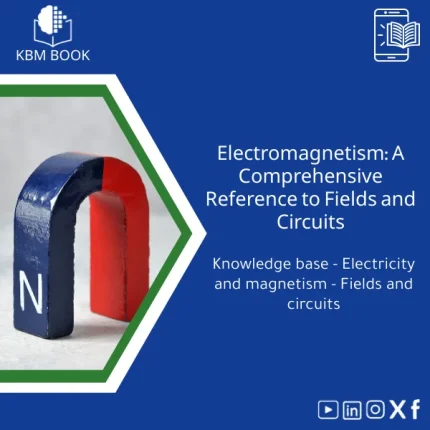
Electromagnetism Book: A Comprehensive Guide to Fields and Circuits
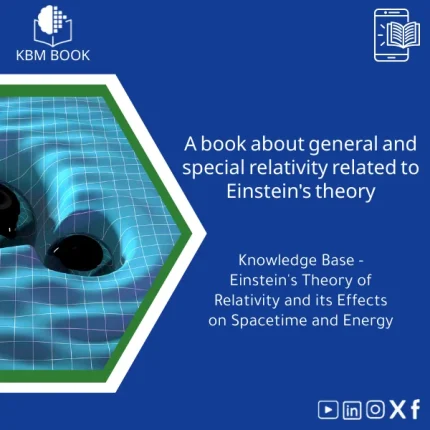
General and Special Relativity Book on Einstein’s Theory
A structured, searchable Knowledge Base Module (KBM) that converts Einstein's General and Special Relativity into a clear, hierarchical reference: formulas, derivations, worked examples, practical applications (GPS, astrophysics), and a compact research bibliography — ready to download and integrate into study, teaching, or research workflows.
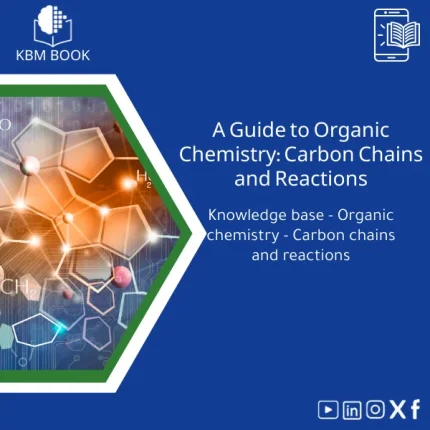
Organic Chemistry Guide: Carbon Chains and Reactions
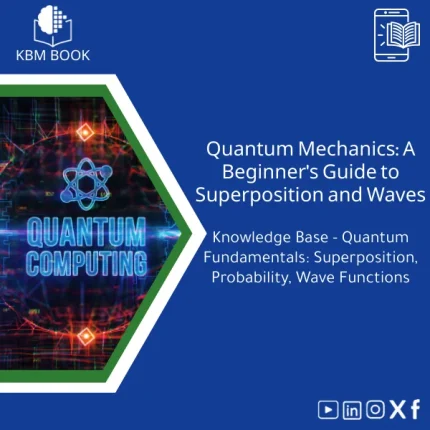
Quantum Mechanics: A Beginner’s Guide to Superposition and Waves
Thermal Physics Guide: Understanding Heat, Energy, and Entropy
A downloadable, hierarchically structured Knowledge Base Module (KBM) that converts university-level thermodynamics into a searchable, practical digital database. Ideal for students, researchers, and professionals who need fast, reliable access to fundamentals and advanced topics in thermal physics.
Reviews
Clear filtersThere are no reviews yet.