


Soil Microbiology Guide: Understanding Microbes in Fertility
Original price was: 179.00 $.139.00 $Current price is: 139.00 $.
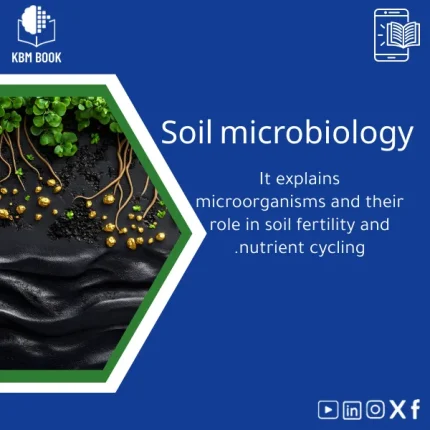
A structured, searchable Knowledge Base Module (KBM) that converts soil microbiology into a practical, hierarchical reference — ideal for students, researchers, and professionals who need fast, reliable access to how soil microorganisms drive fertility and nutrient cycling.
Key benefits & value for the buyer
This KBM translates soil microbiology into a compact, reliable reference you can use immediately. Instead of scattered articles or long textbooks, you get:
- Time savings: Rapidly find definitions, protocols, and nutrient cycling diagrams — ideal during lab work or field visits.
- Structured learning: A sequenced path from microbial taxonomy to applied fertility management suitable for course modules and independent study.
- Practical outputs: Ready-made outlines for lectures, lab worksheets, data interpretation checklists and reporting templates.
- Reliable citations: Curated references and suggested further reading to support academic assignments and research proposals.
- Portable & searchable: Downloadable files optimized for quick search and offline use — practical as a soil microbiology book pdf and as a soil microorganisms reference.
Use cases & real-life scenarios
For students
Map course outcomes to the KBM chapters, extract lecture slides, and use step-by-step lab protocols for exercises on microbial biomass, respiration, and nutrient assays.
For researchers
Quick access to microbial pathways, standard methods for DNA extraction and sequencing workflows, plus templates for documenting soil fertility and nutrients in experimental plots — saves time during grant writing and data analysis.
For agricultural professionals & extension agents
Field diagnostics checklists, fertilizer decision flowcharts, and simple explanations of microbial roles you can reuse in advisory reports or farmer training materials.
For course designers & trainers
Use the hierarchical modules to assemble syllabi: beginner modules for university soil science book chapters, advanced modules for specialized seminars on rhizosphere interactions.
Who is this product for?
The KBM is made for anyone who needs structured, dependable soil microbiology information without wading through unconnected papers:
- Undergraduate and graduate students seeking a concise soil microbiology book pdf for study and assignments.
- Researchers needing a practical soil microorganisms reference during experiments and writing.
- Agronomists and extension staff translating microbiology into fertilizer and nutrient management advice.
- Course instructors and curriculum developers assembling a university soil science book or module sequence.
How to choose the right format and modules
This is a digital KBM offered in modular files. Choose based on your workflow:
- Full KBM (recommended): Complete hierarchy — conceptual chapters, lab protocols, diagnostics, figures and bibliography — best for researchers and course designers.
- Student Pack: Condensed summaries, exam-style questions and quick lab guides — ideal as a soil microbiology book pdf for learning.
- Extension Pack: Practical field tools, farmer-friendly sheets, and decision trees focused on soil fertility and nutrients.
File formats: searchable PDF, structured HTML/JSON for import into knowledge systems, and printer-friendly handouts. Choose compatibility that fits your devices and LMS.
Quick comparison with typical alternatives
Common options include textbooks, journal review articles, and scattered online resources. Compared to these:
- Vs textbooks: More concise and searchable; designed for quick retrieval rather than continuous reading.
- Vs review articles: Broader coverage and practical tools (protocols, templates) rather than single-topic depth.
- Vs web articles: Curated, cited and organized — removes duplication and inconsistent terminology common online.
Best practices & tips to get maximum value
- Start with the “Core Concepts” module to align terminology before using advanced protocols.
- Use the search function in the PDF or import the JSON into your notes app for rapid lookup during fieldwork.
- Map KBM sections to your course syllabus or research protocol checklist to streamline preparation and reporting.
- Keep the extension sheets printed in the field kit for quick farmer advisory sessions on nutrient management.
Common mistakes when buying or using similar products — and how to avoid them
- Buying a single-format resource: Ensure you get searchable PDFs or importable files rather than image-only scans.
- Ignoring practical protocols: Choose resources that include methods and templates, not just theory.
- Assuming coverage equals depth: Look for hierarchical structure (basic → applied → advanced) to match your learning stage.
Product specifications
- Product type: Digital Knowledge Base Module (KBM)
- Core topics: Microbial taxonomy, community ecology, nutrient cycling (N, P, S), soil enzymes, rhizosphere interactions
- Included materials: Searchable PDF, structured HTML/JSON export, printable handouts, lab protocol templates
- Formats: PDF (A4), HTML package, JSON (for import to KB systems)
- Language: English (technical Arabic summaries available in separate module)
- Delivery: Instant download after purchase
- Updates: Periodic content updates and citation refresh included for 12 months
- Use license: Single-user academic/professional license with optional multi-user upgrade
FAQ
Is this a full textbook or a condensed reference?
The KBM is a structured reference designed for fast access and practical use. It combines concise conceptual chapters with protocols and templates — not a replacement for every textbook, but a targeted tool for application, teaching and research support.
Can I get the soil microbiology book pdf for offline use?
Yes. The purchase includes a searchable PDF optimized for offline reading and printing, plus HTML/JSON exports for integration into note-taking systems.
Does it cover soil fertility and nutrients in crop systems?
Yes. There are dedicated modules on nutrient cycling (N, P, S), microbial-mediated mineralization, and applied fertility management with decision-support flowcharts for crop advisors.
How current are the citations and methods?
The KBM includes curated, peer-reviewed references and standard lab methods. We provide 12 months of citation updates; extended update plans are available for research groups.
What if the format doesn’t fit my system?
Contact support for guidance — we can suggest the best download package (PDF, HTML, JSON) or offer conversion tips. Multi-user and LMS compatibility options are also available.
Ready to make soil microbiology actionable?
Purchase a searchable, hierarchical KBM designed for rapid application in classrooms, labs, and the field. Get immediate access to a practical soil microorganisms reference that saves hours when you need fast, reliable answers.
Instant download • Searchable PDF & importable formats • 12-month citation updates included
Related products
Analytical Chemistry Book: Qualitative and Quantitative Methods Guide
Biological Anthropology Study Guide on Human Evolution
Comprehensive Genetics Book: DNA, Mendelian Genetics & Engineering
A structured, searchable knowledge base module (KBM) that turns genetics theory and practice into an immediately usable digital reference — from DNA structure to Mendelian genetics and contemporary genetic engineering techniques — optimized for students, researchers, and professionals who need reliable answers fast.
Comprehensive Nuclear Physics Book on Structure and Radioactivity
Electromagnetism Book: A Comprehensive Guide to Fields and Circuits
Materials Physics Guide: Understanding Solid-State Properties
Organic Chemistry Guide: Carbon Chains and Reactions
Thermal Physics Guide: Understanding Heat, Energy, and Entropy
A downloadable, hierarchically structured Knowledge Base Module (KBM) that converts university-level thermodynamics into a searchable, practical digital database. Ideal for students, researchers, and professionals who need fast, reliable access to fundamentals and advanced topics in thermal physics.
Reviews
Clear filtersThere are no reviews yet.