


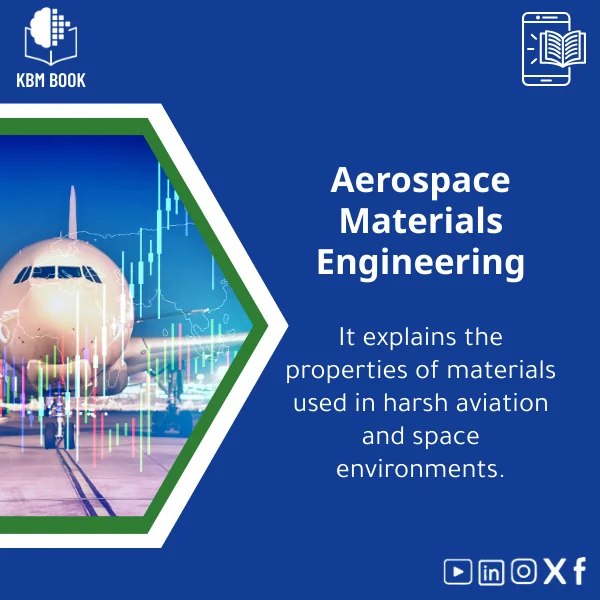
Space Materials Engineering Guide for Harsh Environments
Original price was: 199.00 $.159.00 $Current price is: 159.00 $.
A searchable, hierarchical knowledge base (KBM) that condenses Space Materials Engineering into a practical, usable database: materials selection criteria, environmental effects, testing protocols, failure modes and design checklists — optimized for students, researchers, and professionals who need fast, reliable answers for aerospace and space projects.
Key benefits & value for the buyer
Space Materials Engineering is a domain with dense, scattered information. This KBM is designed to convert that complexity into immediate practical value:
- Save research time: find validated material properties, environmental limits, and recommended uses in seconds instead of sifting through papers.
- Reduce design risk: integrated failure-mode summaries and test-condition checklists help prevent specification oversights.
- Improve reproducibility: each entry links to original standards and primary literature so engineers and students can verify sources.
- Scale learning: modular structure supports step-by-step training from introductory concepts to advanced selection workflows.
Use the KBM as a working reference during coursework, lab design reviews, or mission concept studies — not just as reading material.
Use cases & real-life scenarios
Student — coursework & lab reports
Quickly extract standardized material property tables and cite the correct test conditions for a thermal shielding assignment. The KBM’s modular pages let students move from concept to citation without hunting down multiple sources.
Researcher — modeling and experiments
Export radiation damage coefficients, thermal conductivity ranges, and creep data in CSV/JSON to feed into simulations. Cross-referenced failure cases save time when selecting specimens and test protocols.
Engineer — component selection & review
Use the decision matrices to narrow candidate materials by mission environment — deep space vacuum, LEO atomic oxygen, or lunar regolith dust — and generate a checklist to include in design reviews and supplier requests.
Who is this product for?
This KBM was built for those who need reliable, structured knowledge at hand:
- Undergraduate and graduate students in aerospace, materials science, and mechanical engineering.
- Academic researchers building models or compiling literature reviews.
- Design and systems engineers selecting materials for spacecraft, payloads, or launch vehicle components.
- Technical trainers and course authors who want a buildable, re-usable teaching module.
How to choose the right format & license
The KBM is offered in multiple delivery formats — choose based on how you will use it:
- Individual license, PDF + interactive index: best for students and instructors needing readable reference and printable checklists.
- Researcher pack, CSV/JSON exports + PDF: for simulation workflows and data imports (ideal for modelers).
- Team license, full import package: includes versioning and a license for internal sharing across a small team or lab.
If you’re unsure which license fits your needs, consult the purchase options on the product page or contact support for recommendation based on intended use.
Quick comparison with typical alternatives
Alternatives include textbooks, scattered journal articles, and commercial databases. Compared to those:
- Textbooks: broader narrative but slower to find specific test limits and practical checklists.
- Journal articles: deep but narrow and fragmented; our KBM consolidates and cites key results for immediate use.
- Commercial databases: may be comprehensive but costly and closed; KBM balances structured depth with portability and direct-source citations.
Best practices & tips to get maximum value
- Start with the environmental profile: define temperature ranges, radiation doses, and mechanical loads, then use the decision matrix to shortlist materials.
- Export the relevant CSV table into your simulation tool to avoid manual transcription errors.
- Use the KBM’s test-protocol checklist during specimen planning; align your tests to the summarized ASTM/NASA standards referenced in the KBM.
- Keep the KBM local and versioned for project traceability — use the team license when multiple engineers must access updates.
Common mistakes when choosing or using space materials information — and how to avoid them
- Relying on a single data point: always check the environmental constraints and original test conditions; the KBM highlights context for each value.
- Ignoring degradation mechanisms: use the failure-mode summaries to assess long-term performance rather than only initial properties.
- Assuming terrestrial tests apply unchanged: consult the KBM’s environment-specific notes (vacuum, cryogenic, radiation) before making decisions.
Product specifications
- Product type: Knowledge Base Module (KBM) — Space Materials Engineering
- Core content: material properties, environmental effects, failure modes, test summaries, decision matrices, checklists
- Formats included: PDF (printable), CSV & JSON exports, interactive indexed HTML
- Entries: ~450 indexed items across 12 hierarchical modules (thermal, radiation, mechanical, chemical, coatings, adhesives, composites, metals, ceramics, polymers, testing, standards)
- Language: English (technical Arabic summaries available on select pages)
- Delivery: instant download after purchase; team license packages include ZIP with import-ready files
- Updates: documented version history; paid update windows available per license
- Compatibility notes: CSV/JSON ready for Excel, MATLAB, Python, Notion, and most LIMS systems
FAQ
What file formats are provided and will they work with my tools?
The KBM includes PDF for reading and printing, CSV/JSON exports for import into Excel, MATLAB, Python, or other tools, and an indexed HTML file for interactive searching. These formats are standard and compatible with common engineering workflows.
How often is the KBM updated and do I get updates?
The KBM has a transparent version history. Minor updates (errata, reference links) are issued periodically; major content updates are released per version. Update access depends on license type — team and researcher licenses include update windows; individual licenses can purchase updates separately.
How reliable are the data and references?
Each data entry cites primary literature or standards (where available). The KBM is curated by subject-matter experts and includes references to ASTM, NASA, ESA standards and peer-reviewed studies. Users are encouraged to consult original sources for certification or procurement processes.
What if this KBM doesn’t meet my needs — is there a refund or sample?
We provide a sample module and a clear refund policy on the product page. If the KBM doesn’t match the described content within the stated refund window, contact support for assistance or refund according to our policy.
Get the Space Materials Engineering KBM and make faster, safer decisions
Ready to move from fragmented references to a single, structured source for materials in harsh aerospace environments? Purchase the KBM that integrates selection tools, verified references, and exportable data for engineering workflows.
Questions about the right license for your team? Visit the product page or contact KBMBook support for guidance before purchase.
Related products
Analytical Chemistry Book: Qualitative and Quantitative Methods Guide
Astrophysics Book: Understanding Stars, Galaxies, and Dark Energy
A searchable, hierarchical Knowledge Base Module (KBM) that converts astrophysics and cosmology into a practical, exam-ready and research-ready reference. Designed for students, researchers, and professionals who need immediate access to reliable explanations, equations, and data models for stars, galaxies, and dark energy.
Biochemistry Book: Understanding Chemical Processes in Living Systems
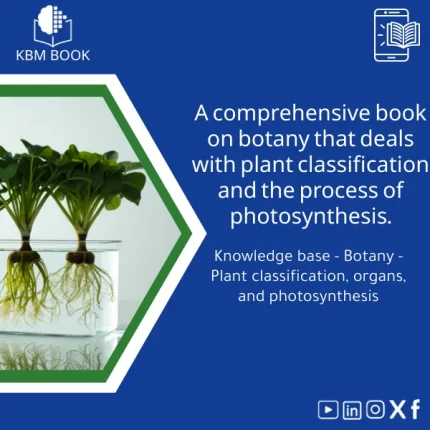
Comprehensive Botany Book on Plant Taxonomy and Photosynthesis
A structured, searchable botany book designed as a Knowledge Base Module (KBM) — an end-to-end reference on plant taxonomy, organ structure, and the biochemistry of photosynthesis. Built for students, researchers, and professionals who need reliable, hierarchical knowledge they can search, cite, and apply immediately.
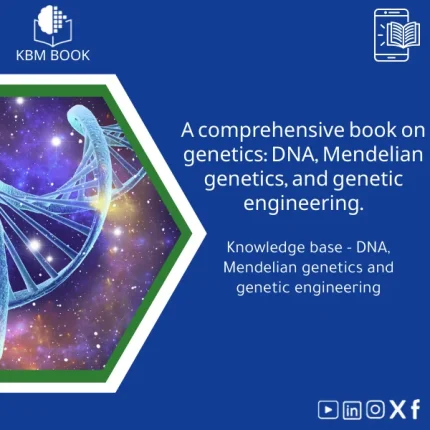
Comprehensive Genetics Book: DNA, Mendelian Genetics & Engineering
A structured, searchable knowledge base module (KBM) that turns genetics theory and practice into an immediately usable digital reference — from DNA structure to Mendelian genetics and contemporary genetic engineering techniques — optimized for students, researchers, and professionals who need reliable answers fast.
Materials Physics Guide: Understanding Solid-State Properties
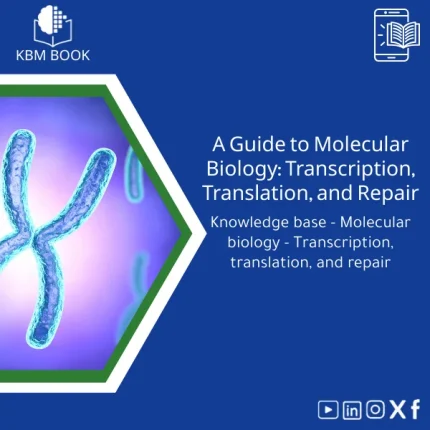
Molecular Biology Guide: Transcription, Translation & Repair
Thermal Physics Guide: Understanding Heat, Energy, and Entropy
A downloadable, hierarchically structured Knowledge Base Module (KBM) that converts university-level thermodynamics into a searchable, practical digital database. Ideal for students, researchers, and professionals who need fast, reliable access to fundamentals and advanced topics in thermal physics.
Reviews
Clear filtersThere are no reviews yet.