


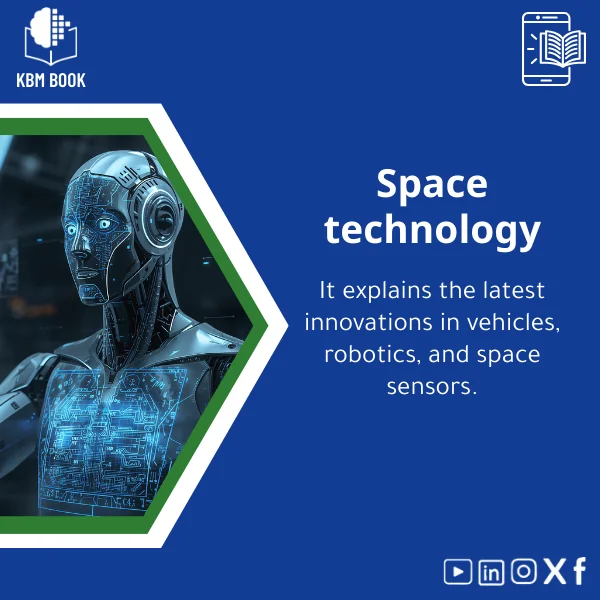
Space Technology Innovations Guide: Vehicles, Robotics, Sensors
Original price was: 179.00 $.139.00 $Current price is: 139.00 $.
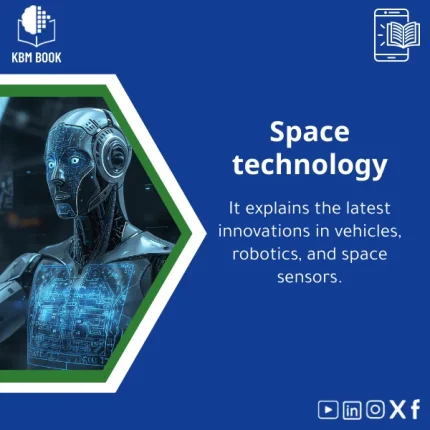
A professionally organized Knowledge Base Module (KBM) that converts modern space technology—vehicles, robotics, and sensors—into a searchable, step-by-step database. Designed for students, researchers, and professionals who need concise, reliable, and immediately usable technical knowledge for study, research, teaching, and operational planning.
Key benefits & value for the buyer
This KBM turns dispersed, technical content on space technology into a single, structured resource that saves time and reduces risk. Instead of searching papers and scattered guides, you get:
- Speed: Find propulsion principles, robotics interfaces, or sensor calibration steps in seconds via indexed sections and exported tables.
- Reliability: Concise, citation-backed technical definitions and procedural checklists—no fluff, no redundant theory.
- Practicality: Directly usable templates (test plans, BOMs, interface matrices) to accelerate lab work and projects.
- Learning path: A clear progression from an introduction to space technology to advanced subsystem design, ideal for curriculum planning.
Use the KBM as a textbook supplement, lab handbook, research quick-reference, or the backbone of a training module.
Use cases & real-life scenarios
University coursework & labs
Professors can extract chapter modules for weekly labs: propulsion fundamentals for one week, sensors and signal processing the next, robotics kinematics later. Each module contains learning objectives and practical assignments.
Research & design teams
Research engineers use the robotics and sensors modules for sensor selection matrices, error budgeting, and interface checklists during subsystem design reviews. Export tables into your project tracker to keep requirements consistent.
Startups and early-stage product development
Small teams building CubeSat subsystems or robotic prototypes can use the KBM’s “quick integration” templates to reduce rework and ensure proper test coverage before hardware integration.
Exam prep & self-study
Students preparing for exams or interviews use the structured progression—an introduction to space technology through the core engineering concepts—paired with quick review sheets and one-page summaries.
Who is this product for?
Designed specifically for: students of aerospace and engineering, graduate researchers, lab leads, systems engineers, and technical trainers who need an authoritative, organized, and portable knowledge source on space technology.
- Undergraduates: focused learning paths and practical examples.
- Graduate students: deeper modules on sensors, robotics algorithms, and vehicle subsystems.
- Professionals: reproducible checklists and exportable data for project use.
How to choose the right format & depth
This KBM is available as a bundled digital package. Choose based on workflow:
- PDF-first: If you need printable chapters and a familiar reading format (space technology book pdf).
- Data-first (CSV/JSON): If you import tables into lab tools, spreadsheets, or knowledge management systems.
- Full KBM package: Includes both PDFs and structured export files plus one-page cheat sheets—best for teaching and team sharing.
For coursework and exam prep, the PDF modules with summary sheets are usually sufficient. For project integration and lab usage, select the full package with JSON/CSV exports.
Quick comparison with typical alternatives
Alternatives are typically long textbooks, scattered PDFs, or forum threads. This KBM differs by being:
- Structured: Hierarchical and indexed for quick lookup vs. linear chapters in books.
- Exportable: Machine-readable tables and checklists vs. locked PDF text.
- Focused: Practical templates and decision matrices vs. theoretical breadth without actionable items.
Best practices & tips to get maximum value
- Start with the “Introduction to space technology” module for contextual mapping.
- Use exported CSVs for BOMs and interface tables to sync with your project tracker.
- Create a tailored reading list from KBM chapters for course week planning.
- Adopt the test-plan templates during hardware integration to catch subsystem issues early.
- Update your own team KB with selected KBM sections as canonical references.
Common mistakes when buying or using similar products — and how to avoid them
- Buying broad textbooks expecting templates: Avoid—ensure your resource includes practical checklists and exports. This KBM includes them.
- Assuming coverage equals currency: Verify update policy. KBMbook offers revision notes and versioned downloads for major updates.
- Ignoring data formats: If you need to import tables, confirm CSV/JSON availability; the full KBM provides these formats.
Product specifications
- Title: Space Technology Innovations Guide: Vehicles, Robotics, Sensors
- Formats included: PDF (print-optimized), CSV, JSON, and structured Markdown summaries
- Size: ~120 pages equivalent; exports sized for database import (small file footprint)
- Language: English
- Structure: Hierarchical modules — Fundamentals, Systems, Robotics, Sensors, Integration & Test, Templates
- Included assets: design checklists, interface matrices, failure mode tables, test-plan templates, one-page summaries
- Use notes: License for personal, classroom, or internal company use (see license file included)
- Compatibility: Open formats compatible with common KM systems and spreadsheets
Frequently asked questions
Is this a space technology book PDF or a database package?
Both. You receive PDF chapters for reading and printable use plus structured exports (CSV/JSON/Markdown) to integrate the KBM into your knowledge management systems or courseware.
Will the content cover the basics of space engineering?
Yes. The KBM begins with clear foundations—orbital mechanics overview, system engineering principles, and sensor fundamentals—then progresses to subsystem design and robotics. Modules are suitable for “introduction to space technology” and intermediate engineering study.
How often is the KBM updated?
KBMBook provides periodic updates and version notes for major additions (new modules, templates, or corrections). Purchases include access to the next minor update; major revisions may be offered at a discounted upgrade.
Is this suitable for professional project use?
Yes. The package includes test plans, interface matrices, and exportable data intended to be used directly in project workflows. Review license terms for distribution restrictions.
Ready to turn space technology knowledge into practical tools?
Download the KBM and get immediate access to curated modules on space vehicles, robotics, and sensors—structured for use in labs, courses, and projects. Save time, reduce integration risk, and standardize your team’s technical sources.
Related products
Astronomy Observational Techniques Guide for Celestial Motion
Classical Mechanics Guide: Newton’s Laws and Dynamics
A searchable, hierarchical Knowledge Base Module (KBM) that turns classical mechanics into a practical, ready-to-use reference for fast problem solving, lecture preparation, and applied engineering. Designed for students, researchers, and professionals who need precise access to Newton’s laws, rotational motion, and applied dynamics without the noise of textbooks.


Reviews
Clear filtersThere are no reviews yet.