


Stylistics Book: A Guide to Textual Aesthetics
Original price was: 199.00 $.159.00 $Current price is: 159.00 $.
A structured Knowledge Base Module (KBM) that converts stylistics theory into a searchable, hierarchical learning and reference database — ideal for linguistics and translation students, researchers, and professionals who need fast access to reliable analyses, examples, and practical templates.
Key benefits & value for the buyer
From abstract theory to repeatable practice
The Stylistics book KBM translates fragmented theoretical material into an organized, searchable database so you can locate the exact concept, example, or analytical tool you need in seconds. Instead of scanning multiple chapters or articles, use indexed entries and cross-references to apply concepts directly to texts or translation tasks.
Save time — improve outcomes
For coursework, research, or client work, speed matters. This KBM reduces preparation time with ready-made annotation schemes, grading rubrics, and example-driven explanations that students and professionals can adapt for essays, corpus studies, or translation reviews.
Reliable, curated content
Content is organized hierarchically: foundational concepts, methodological tools, genre-specific strategies, and advanced stylistic devices — with references and recommended readings to validate each entry. This makes it a dependable reference compared with scattered web sources.
Use cases & real-life scenarios
Classroom & assignments
Example: A lecturer preparing a lecture on deixis can pull the KBM module on deixis to produce a slide set, a short reading list, a practical annotation exercise, and an answer key — all in 30 minutes.
Student coursework and exam prep
Example: A linguistics student uses the KBM to find concise definitions, comparative charts (stylistic devices vs. pragmatic effects), and annotated examples to include in term papers and oral exams.
Translation & editing practice
Example: A translator reviews the module on register and tone before localizing an ad copy; the KBM provides checklist items to preserve rhetorical nuances across languages and suggested translation strategies.
Research & corpus analysis
Example: A researcher designing a corpus study extracts the KBM’s annotation schema (JSON/CSV) to tag a dataset consistently, reducing inter-annotator variability and accelerating quantitative analysis.
Who is this product for?
- Undergraduate and graduate linguistics students seeking an applied stylistics textbook alternative.
- Translation students needing concise comparative frameworks (stylistics for translation students).
- Researchers and MA/PhD candidates who require reproducible annotation schemes and research-ready exports.
- Professionals (editors, translators, content strategists) who want a compact, practical reference for textual aesthetics.
If you are asking “Do I need a stylistics textbook or this KBM?” — the KBM is built for immediate application and integration into digital workflows, while retaining the depth needed for academic rigor.
Quick comparison with typical alternatives
Traditional textbooks: deep narrative explanation, but linear and slower to search. The Stylistics book KBM provides the same depth broken into indexed, reusable units.
Journal articles: focused research but narrow scope. The KBM aggregates curated findings, method templates, and examples across subfields so you don’t need to compile them yourself.
Lecture notes / slides: practical but often incomplete. The KBM offers complete modules that combine theory, practice, and evaluation tools ready for reuse.
Best practices & tips to get maximum value
- Start with the “Methodology” module to align your analysis approach before applying device-specific modules.
- Use exported JSON/CSV to integrate the KBM into annotation tools (e.g., ELAN, taggers) and maintain consistency across projects.
- Adapt the classroom templates and exercises rather than copying them verbatim — personalize examples for your students or corpus.
- Cross-reference the “Translation Strategies” module when moving from analysis to translation; it closes the gap between description and action.
Common mistakes when buying/using similar products and how to avoid them
Mistake: Buying static PDFs expecting dynamic utility
Solution: Choose a KBM (like this product) with exportable formats and templates so your resource is reusable and machine-readable.
Mistake: Overlooking annotation consistency
Solution: Use the provided annotation schema and inter-annotator guidelines to ensure reproducible results.
Mistake: Expecting a one-size-fits-all textbook
Solution: Treat the KBM as a modular toolkit — select modules relevant to your course, research question, or client brief.
Product specifications
- Product type: Digital Knowledge Base Module (KBM) — Stylistics
- Structure: 20 hierarchical modules (foundations, devices, methods, genres, pedagogy, translation)
- Content volume: ~450 indexed entries, 120+ annotated examples, 30 templates and exercise sets
- Formats included: PDF (readable summary), JSON and CSV (research/export-ready), PPTX slide notes (teaching)
- Compatibility: Integrates with common annotation tools and spreadsheet apps; easily imported into research workflows
- Usage notes: Single-user download with clear citation and redistribution terms outlined in the package
- Language: English (content oriented to global linguistics and translation contexts)
Frequently asked questions
Is this KBM a replacement for a traditional stylistics textbook?
Not exactly — it is an alternative format focused on applied use. It covers theoretical foundations but organizes them into modular, searchable units designed for application, teaching, and research rather than linear reading.
What formats are included and can I use the data in my research?
The package includes PDF summaries, JSON and CSV exports for annotation and quantitative work, and PPTX notes for classroom use. The exports are designed for direct use in corpus tools and statistical workflows.
How does this help translation students specifically?
The KBM includes modules on register, tone, equivalence strategies, and annotated examples showing source-target choices. It provides checklists and heuristics tailored to translation decision-making.
What if I find the KBM lacks a specific topic I need?
Modules include references and a prioritized reading list so you can extend your study. The KBM is designed to be portable: you can extract schemas and integrate external datasets or articles into your workflow.
Ready to make stylistic analysis faster and more reliable?
Purchase the Stylistics Book KBM today and get an immediately usable, research-grade database that converts stylistics theory into practical tools. Ideal for students, instructors, translators, and researchers who prioritize structured, reusable knowledge.
Related products
Analytical Chemistry Book: Qualitative and Quantitative Methods Guide
Classical Mechanics Guide: Newton’s Laws and Dynamics
A searchable, hierarchical Knowledge Base Module (KBM) that turns classical mechanics into a practical, ready-to-use reference for fast problem solving, lecture preparation, and applied engineering. Designed for students, researchers, and professionals who need precise access to Newton’s laws, rotational motion, and applied dynamics without the noise of textbooks.
Comprehensive Microbiology Book on Bacteria, Viruses, and Fungi
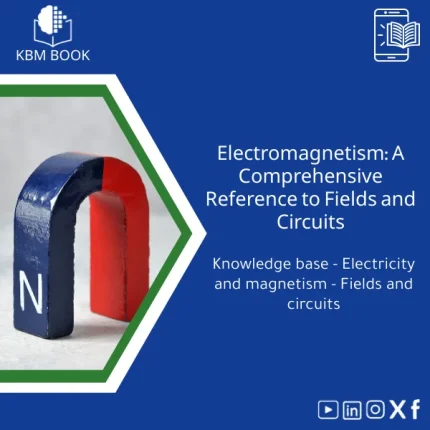
Electromagnetism Book: A Comprehensive Guide to Fields and Circuits
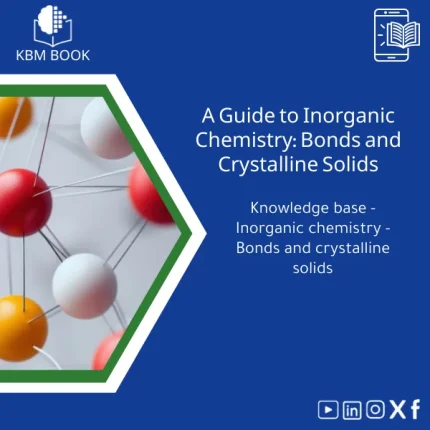
Inorganic Chemistry Guide: Bonding and Crystal Solids
A structured, searchable Knowledge Base Module (KBM) that converts inorganic chemistry fundamentals and advanced topics—bonding models, lattice structures, defects, and solid-state properties—into a practical digital reference for students, researchers, and professionals who need fast, reliable answers without wading through textbooks.
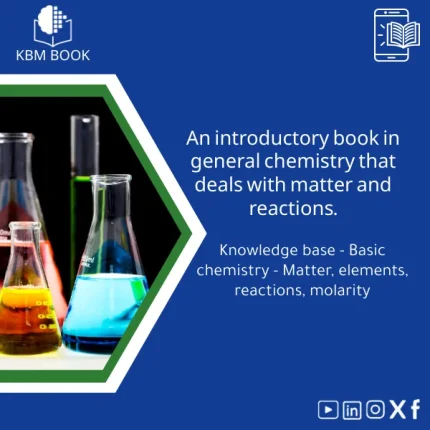
Introductory General Chemistry Book on Matter and Reactions
A structured, searchable Knowledge Base Module (KBM) that converts core general chemistry concepts — matter, elements, reactions, stoichiometry and molarity — into a hierarchical reference you can query, teach from, or integrate into study workflows. Ideal as a concise General Chemistry book alternative for students, researchers, and professionals who need accurate, practical chemistry knowledge fast.
Reviews
Clear filtersThere are no reviews yet.