


Theoretical Computer Science Course: Algorithms and Complexity
Original price was: 229.00 $.179.00 $Current price is: 179.00 $.
A complete, hierarchical Knowledge Base Module (KBM) that turns algorithm theory, computational complexity, and automata into a searchable, step-by-step reference — built for students, researchers, and professionals who need fast, reliable theoretical computer science knowledge for study, research, or applied work.
Key benefits & value for the buyer
This Theoretical Computer Science KBM is not a textbook replacement; it is a structured reference that accelerates understanding and decision-making. Each feature below is translated into practical value you can use immediately.
From features to outcomes
- Hierarchical modules: Learn or review in logical steps. Benefit: reduces cognitive load and helps you master concepts systematically.
- Concise theorem entries: Each theorem includes statement, proof sketch, examples, and common corollaries. Benefit: save hours searching scattered sources.
- Algorithm templates and analyses: Standard algorithms with annotated pseudocode and complexity proofs. Benefit: faster homework completion and reproducible research methods.
- Cross-linked topics: Trace how automata implications feed into complexity arguments. Benefit: contextual clarity when working on cross-disciplinary problems.
- Exportable data: Integrate into reference managers and study apps. Benefit: build personalized collections for courses and projects.
Use cases & real-life scenarios
Student — course revision & exam prep
Use the KBM as a compact revision guide: open the “NP-completeness” node for an exam-day checklist with classic reductions and sample problems. The interlinked proofs let you rehearse the logical steps needed for full-credit answers.
Researcher — literature-ready reference
When writing proofs or checking complexity bounds, pull exact lemma statements and minimal proof sketches from the KBM instead of filtering long papers. Export examples directly into your notes for reproducibility.
Professional — algorithm selection & justification
Engineers selecting algorithms for production can compare algorithmic trade-offs using the KBM’s complexity summaries and worst-case guarantees to justify choices during design reviews.
Who is this product for?
Targeted at:
- Undergraduate and graduate CS students needing a focused theoretical computer science resource.
- Researchers who require a reliable algorithm theory reference and computational complexity textbook alternative for quick lookup.
- Professionals and data scientists who must justify algorithm choices with formal complexity reasoning.
- Instructors and tutors who want ready-made outlines, problem sets, and solution templates.
How to choose the right KBM format
KBM formats are designed for different workflows. Choose by how you plan to use the content.
- PDF (printable): Best for offline study and annotating during lectures or exams.
- JSON/CSV (data): Best for researchers who will import nodes into knowledge management tools or programmatic analysis.
- Interactive HTML bundle: Best for fast searching and cross-references in a web environment.
- License options: Personal vs. institutional — select institutional if multiple students or a lab will use the KBM.
Quick comparison with typical alternatives
How this KBM differs from traditional resources:
- Textbooks: Dense chapters vs. KBM’s atomized entries — KBM wins for quick lookup and modular study.
- Lecture notes & articles: Useful but fragmented — KBM provides curated, non-redundant structure.
- MOOCs: Good for guided learning, but slower for targeted references — KBM supports fast retrieval and citation.
Best practices & tips to get maximum value
- Start with the learning path: follow modules in order to build intuition before diving into edge-case proofs.
- Use exported templates in assignments but adapt examples to your problem — the KBM is a starting point, not canned submissions.
- Link KBM entries to your citation manager for research to speed up literature reviews.
- Schedule short daily review sessions using the KBM’s “concept checklist” nodes to retain core theorems and reductions.
Common mistakes when buying or using similar products — and how to avoid them
- Mistake: Buying broad collections with little structure. Fix: Choose modular KBMs with clear hierarchies — like this one.
- Mistake: Assuming KBM replaces deep textbooks. Fix: Use KBM for precision and speed; consult textbooks for extended background where needed.
- Mistake: Ignoring license terms for team use. Fix: Select the appropriate license before distributing within a group.
Product specifications
- Title: Theoretical Computer Science Course: Algorithms and Complexity
- Format: Interactive HTML bundle, Printable PDF, Exportable JSON/CSV
- Coverage: Discrete math foundations, Automata & formal languages, Computability, Algorithm design, Complexity classes (P, NP, co-NP, PSPACE, etc.), Reductions, Randomized algorithms, Approximation algorithms
- Size: ~420 indexed nodes (theorems, algorithms, examples), ~1,200 cross-references
- Compatibility: Standard web browsers, reference managers, and knowledge apps that accept JSON/CSV import
- License: Personal and institutional options available
- Usage notes: Non-editable master copy with export-friendly nodes for personal annotation
FAQ
Is this KBM a replacement for a theoretical computer science textbook?
No. The KBM is a structured, searchable reference and practical toolbox. It complements textbooks by providing concise theorem entries, templates, and direct links between topics—ideal for revision, reference, and applied work.
What formats are included and can I integrate them into my tools?
The KBM includes an interactive HTML bundle, printable PDFs, and exportable JSON/CSV files. JSON/CSV are designed for import into note-taking apps and reference managers; the HTML bundle supports fast in-browser search.
How accurate and up-to-date is the content?
Content is curated by domain experts and updated periodically. Purchase includes metadata showing the last revision date. Institutional buyers can request update notifications.
What if I need the KBM for multiple students or a lab?
Select the institutional license option during checkout for multi-user permissions. Contact support for bulk licensing and campus distribution terms.
Ready to streamline theoretical work and study?
Secure a structured, research-ready Theoretical Computer Science KBM that saves time, reduces search friction, and supports reproducible reasoning in algorithms and complexity.
Need an institutional quote or sample node? Contact KBMBook support for previews and licensing inquiries.
Related products
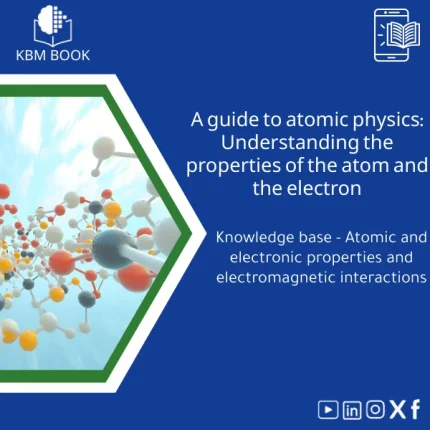
Atomic Physics Guide: Understanding Atomic and Electron Properties
Knowledge Base — Atomic/Electron Properties & Electromagnetic Interactions. A structured, searchable KBM for students, researchers, and professionals who need an authoritative atomic physics reference that organizes concepts, formulas, experiments, and practical applications from basics of atomic physics to advanced electron properties.
Biochemistry Book: Understanding Chemical Processes in Living Systems
Cell Biology Guide: Structure, Division, and Transport Insights
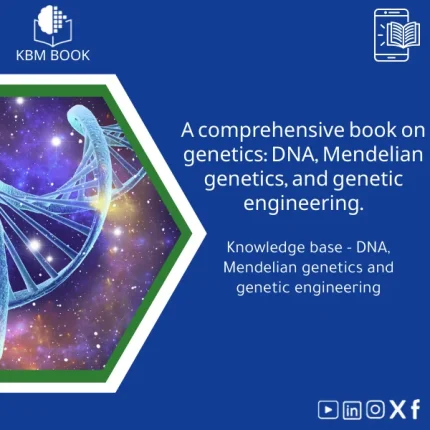
Comprehensive Genetics Book: DNA, Mendelian Genetics & Engineering
A structured, searchable knowledge base module (KBM) that turns genetics theory and practice into an immediately usable digital reference — from DNA structure to Mendelian genetics and contemporary genetic engineering techniques — optimized for students, researchers, and professionals who need reliable answers fast.
Comprehensive Microbiology Book on Bacteria, Viruses, and Fungi
Cosmology Book: Guide to Big Bang and Galaxy Evolution
Modern Physics Book: Quantum, Relativity, and Tech Applications Guide
A structured, searchable Knowledge Base Module (KBM) that turns modern physics — quantum mechanics, special & general relativity, and contemporary technological applications — into a hierarchical, practical reference for students, researchers, and professionals who need quick, reliable access to advanced concepts and formulas.
Thermal Physics Guide: Understanding Heat, Energy, and Entropy
A downloadable, hierarchically structured Knowledge Base Module (KBM) that converts university-level thermodynamics into a searchable, practical digital database. Ideal for students, researchers, and professionals who need fast, reliable access to fundamentals and advanced topics in thermal physics.
Reviews
Clear filtersThere are no reviews yet.