


Transportation Vehicle Engineering Course: Design and Systems Guide
Original price was: 179.00 $.139.00 $Current price is: 139.00 $.
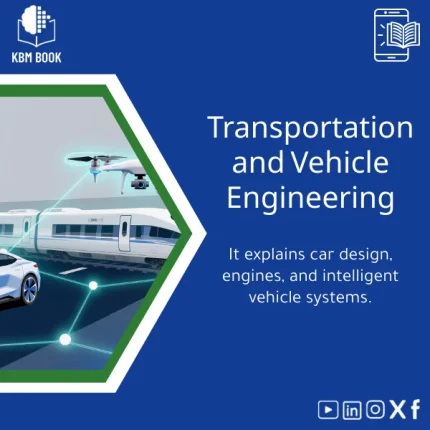
A structured, searchable Knowledge Base Module (KBM) that converts transportation vehicle engineering into a hierarchical, practical reference — from vehicle design fundamentals and engine systems to smart vehicle integration — for students, researchers, and professionals who need fast access to reliable technical knowledge.
Key benefits & value for the buyer
This Transportation vehicle engineering KBM is not a traditional textbook — it is a structured, modular knowledge database designed to save time and improve decision-making. Each feature below maps directly to a practical benefit:
- Hierarchical organization: Quickly jump from top-level concepts (vehicle dynamics, propulsion, systems architecture) to micro-topics (tire slip angle equations, ECU communication buses) without redundant reading.
- Actionable templates & checklists: Use ready-made calculation sheets and design checklists to accelerate lab work, project reports, or prototype development.
- Up-to-date system maps: Clear diagrams of modern vehicle networks (CAN, LIN, Ethernet) and ADAS components reduce integration errors during design or research.
- Cross-referenced citations: Find standards, recommended readings, and implementation notes linked to each module for reliable follow-up research.
- Portable and searchable: Download indexed PDFs and database exports for offline use, classroom distribution, or integration into technical repositories.
Use cases & real-life scenarios
For students
Use the KBM to prepare lab reports, revise for exams with concise topic nodes, and access worked examples for vehicle dynamics and engine thermodynamics.
For researchers
Leverage the cross-referenced modules to find measurement procedures, simulation setup steps, and literature links for comparative studies in propulsion or autonomous systems.
For professionals
Integrate KBM content into design reviews — access checklist-driven verification for subsystems, reuse ECU communication templates, and apply standard-compliant interfaces during system integration.
Project example
A small EV startup used the KBM to standardize battery pack thermal checks, integrate motor control parameters, and draft safety validation plans — cutting prototype rework by an estimated 30% compared to fragmented resources.
Who is this product for?
Designed expressly for:
- Undergraduate and graduate students studying transportation vehicle engineering or related courses.
- Researchers conducting experiments in vehicle dynamics, ICE/EV powertrains, or smart vehicle systems.
- Automotive and mobility professionals who need reliable, quick references during design or testing phases.
- Instructors and trainers who prefer modular teaching units and reusable, assignment-ready materials.
How to choose the right KBM scope
Our KBM is available in tiered scopes. Choose the one that matches your workflow:
- Compact (Essentials): Core principles, key formulas, and quick-reference diagrams — best for coursework and exam prep.
- Standard (Applied): All essentials plus sample projects, system diagrams, and templates for lab work — recommended for researchers and engineers.
- Comprehensive (Professional): Full database with extended references, industry standards, editable templates, and exportable modules for teams — ideal for consulting and R&D groups.
If you are unsure, select Standard — it balances depth and usability for most academic and professional needs.
Quick comparison with typical alternatives
Common alternatives include traditional textbooks, scattered web articles, and full online courses. Compared to those:
- Vs. textbooks: KBM removes redundancy and offers searchability and templates not found in static books.
- Vs. web articles: KBM provides curated, cross-referenced, and citation-backed nodes to reduce misinformation and save time.
- Vs. courses: KBM focuses on compact, reusable knowledge artifacts for immediate application rather than time-bound lecture sequences.
Best practices & tips to get maximum value
- Start with the top-level roadmap module to align learning goals with KBM scope.
- Use checklists before design reviews or tests to avoid common integration mistakes.
- Import module templates into your CAD or simulation environment to save setup time.
- Regularly sync updates from KBMBook to stay current on standards and interfaces.
Common mistakes when buying/using similar products and how to avoid them
- Buying too broad a resource: Avoid oversized packages that add noise. Choose based on immediate use-case (study vs. integration).
- Relying on unsourced content: Prefer KBMs with cross-references; this KBM links to standards and primary literature to validate facts.
- Not planning integration: If you need templates for tools or teams, pick the Comprehensive scope to ensure exportable formats and modular assets.
Product specifications
- Product: Transportation Vehicle Engineering Knowledge Base Module (KBM)
- Coverage: Vehicle design, powertrains (ICE, hybrid, EV), chassis & dynamics, control systems, ADAS & V2X basics
- Formats included: Searchable PDF, indexed EPUB, modular XML/JSON export for integration
- Assets: design checklists, sample calculations, signal diagrams, wiring topologies, test procedures
- Language: English (technical terms standardized)
- Delivery: Immediate digital download after purchase
- Updates: Periodic content updates with change log
FAQ
Is this KBM the same as a textbook or a replacement for courses?
It complements textbooks and courses. The KBM is a modular, searchable database designed for quick lookup, templates, and practical procedures — ideal for applying concepts in labs, projects, or professional workflows.
What file formats are provided and can I use them in my tools?
You receive searchable PDF and EPUB plus exportable XML/JSON modules. Templates and calculations are provided in editable formats so you can import them into CAD, simulation, or document systems.
How often is the content updated, and are updates free?
KBMBook issues periodic updates to reflect standards and major changes in vehicle systems. Minor updates are included; update policy details are provided at download.
Will this KBM cover electric vehicle (EV) powertrains and smart vehicle systems?
Yes. Modules include ICE, hybrid, and EV powertrain fundamentals, battery & thermal management checks, and smart systems such as ADAS architectures and network protocols.
Ready to speed up engineering decisions?
Get the Transportation vehicle engineering KBM and convert scattered knowledge into a structured, usable reference that fits your workflow. Immediate download, searchable format, and templates ready for use.
Not sure which scope fits you? Choose Standard for balanced depth; upgrades available after purchase.
Related products
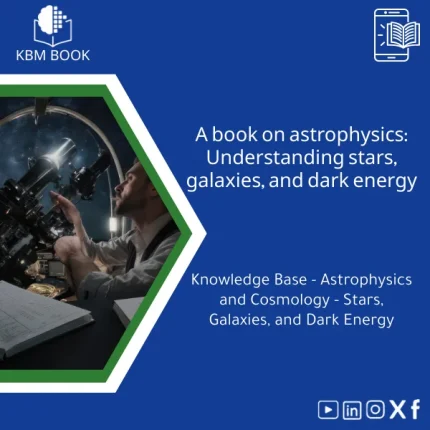
Astrophysics Book: Understanding Stars, Galaxies, and Dark Energy
A searchable, hierarchical Knowledge Base Module (KBM) that converts astrophysics and cosmology into a practical, exam-ready and research-ready reference. Designed for students, researchers, and professionals who need immediate access to reliable explanations, equations, and data models for stars, galaxies, and dark energy.
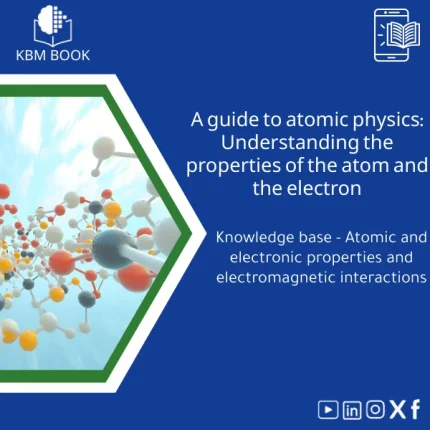
Atomic Physics Guide: Understanding Atomic and Electron Properties
Knowledge Base — Atomic/Electron Properties & Electromagnetic Interactions. A structured, searchable KBM for students, researchers, and professionals who need an authoritative atomic physics reference that organizes concepts, formulas, experiments, and practical applications from basics of atomic physics to advanced electron properties.
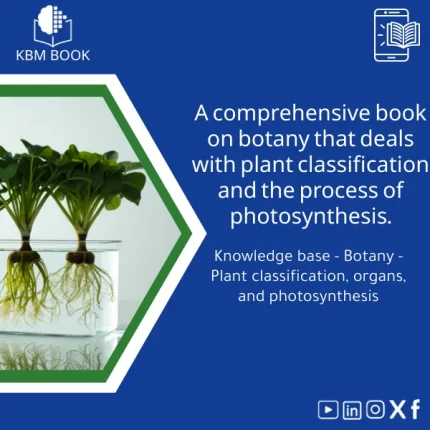
Comprehensive Botany Book on Plant Taxonomy and Photosynthesis
A structured, searchable botany book designed as a Knowledge Base Module (KBM) — an end-to-end reference on plant taxonomy, organ structure, and the biochemistry of photosynthesis. Built for students, researchers, and professionals who need reliable, hierarchical knowledge they can search, cite, and apply immediately.

Comprehensive Evolutionary Biology Book on Natural Selection
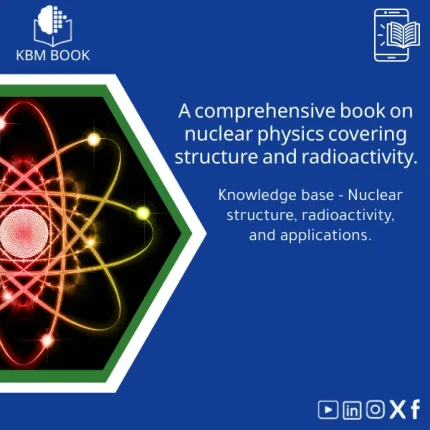
Comprehensive Nuclear Physics Book on Structure and Radioactivity

Inorganic Chemistry Guide: Bonding and Crystal Solids
A structured, searchable Knowledge Base Module (KBM) that converts inorganic chemistry fundamentals and advanced topics—bonding models, lattice structures, defects, and solid-state properties—into a practical digital reference for students, researchers, and professionals who need fast, reliable answers without wading through textbooks.
Reviews
Clear filtersThere are no reviews yet.