


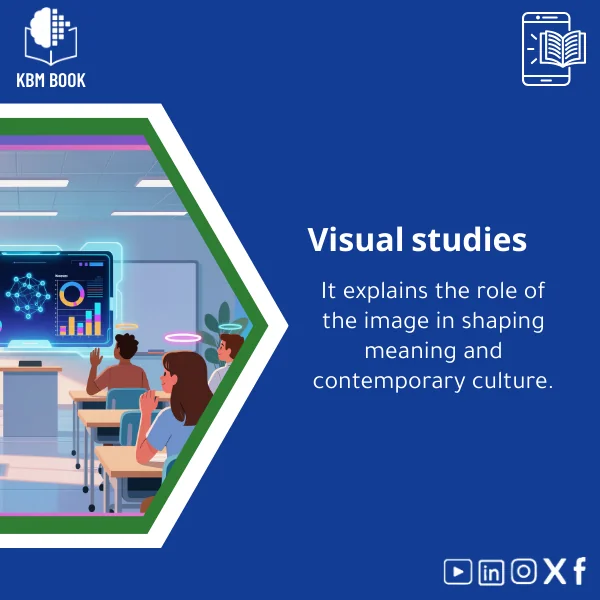
Visual Studies Guide: Understanding Images in Culture
Original price was: 199.00 $.159.00 $Current price is: 159.00 $.
A structured, searchable Knowledge Base Module (KBM) that turns Visual Studies into a practical reference: trace how images produce meaning, locate primary theories and methods quickly, and apply insights to research, teaching, or professional practice.
Key benefits & value for buyers
This Visual Studies KBM translates theory into usable knowledge. Rather than a long narrative, it presents the discipline as a layered, interlinked database:
- Speed: find definitions, methods, and examples in seconds via the built-in index and CSV tags — ideal for last-minute lecture prep or literature reviews.
- Clarity: hierarchical organization prevents overlap and repetition; each entry has a clear scope (concept, method, case study, citation).
- Applicability: includes practical templates (image analysis checklist, coding scheme, slide-ready diagrams) to move from reading to doing.
- Reliability: curated by subject specialists and cross-checked against primary sources so you can cite confidently.
Use cases & real-life scenarios
For students
Use the KBM to structure essays and exams: pull a definition, link to an annotated case study, and export a bibliography. Example: writing a 2,000-word essay on “image and contemporary culture” — access the semiotics node, follow the related cases on Instagram campaigns, and use the “compare theories” table to build your argument.
For researchers
Rapidly assemble literature reviews: filter entries by methodology (content analysis, discourse analysis), export citations, and tag promising sources for follow-up. Example: a researcher mapping visual rhetoric across political campaigns can extract coding schemes directly from the KBM and apply them to their dataset.
For professionals
Practitioners in museums, marketing, or UX can adapt the image analysis checklist and case templates to audits and client reports. Example: a museum educator uses the annotated iconography examples to design an exhibition text that foregrounds visual meaning-making.
Who is this product for?
- Undergraduate and postgraduate students studying Visual Studies, Media, Cultural Studies, or Art History.
- Researchers needing a compact, searchable reference for image theories and methodologies.
- Professionals (curators, brand strategists, UX researchers) who analyze images as part of their workflow.
- Trainers and lecturers seeking modular content for lesson plans and assessments.
How to choose the right format and module level
The KBM is offered in formats optimized for different workflows:
- Student Pack (PDF): readable, printable chapters and in-line citations — best for coursework and quick reading.
- Research Pack (PDF + CSV): full-text plus a CSV index of concepts, methods, and cases for import into reference managers.
- Integration Pack (SQLite export): the full KBM structured for programmatic search and use in note-taking or analysis tools — ideal for long-term projects and teams.
Choose based on whether you need offline reading, systematic extraction, or integration into digital workflows.
Quick comparison with typical alternatives
How this KBM differs from other options:
- Traditional textbooks: linear, heavy on exposition. KBM: modular, searchable, and focused on reuse.
- Academic articles: deep but narrow. KBM: curated breadth with links to in-depth sources.
- Online summaries or blog posts: variable quality and scattered. KBM: vetted, consistently structured, citation-ready.
Best practices & tips to get maximum value
- Start with the “Methods” node to choose a coding scheme that matches your research question.
- Use the CSV index to tag and import concepts into your reference manager or digital notes app.
- Copy the image analysis checklist into your project templates to ensure consistent coding across cases.
- When teaching, assign specific KBM sections as pre-reading and use the case studies for in-class exercises.
- Keep a local copy of the bibliography for offline verification and citation formatting.
Common mistakes when buying or using similar products — and how to avoid them
- Mistake: Buying a single-format text and expecting it to integrate with research tools. Fix: Choose the Research or Integration pack with CSV/SQLite exports.
- Mistake: Relying on unstructured notes that duplicate content. Fix: Use the KBM’s hierarchy to keep concepts distinct and linked.
- Mistake: Assuming the KBM replaces primary sources. Fix: Use it as an organized gateway to primary texts — citations are included for every entry.
Product specifications
- Title: Visual Studies Guide: Understanding Images in Culture
- Format options: PDF (Student Pack), PDF + CSV (Research Pack), SQLite export (Integration Pack)
- Size: ~120 structured entries; 30+ case studies; 200+ bibliographic records
- Languages: English (primary). Arabic index notes where relevant.
- Delivery: Instant download after purchase — ZIP containing selected formats.
- Usage notes: Single-user license included; options for institutional licensing available on request.
FAQ
Can I download a sample before purchasing?
Yes. A free sample chapter and the table-of-contents CSV are available for preview so you can confirm structure and coverage before buying.
Is the content peer-reviewed and citable in academic work?
The KBM is curated by subject specialists and includes full citations to peer-reviewed sources and canonical texts. Use the bibliography entries directly in your references, and follow your institution’s citation rules.
Which format should I choose for long-term research projects?
The Integration Pack (SQLite) is recommended for long-term projects and team use because it enables fast programmatic queries, tagging, and integration with analysis tools. The Research Pack is a good middle ground if you primarily use reference managers.
How often is the KBM updated?
KBMs are periodically updated to reflect new literature and case studies. Purchase includes one year of free updates; extended update plans are available.
Get the Visual Studies KBM and start working faster
Transform how you access and apply knowledge about images and culture. Whether you need a reliable Visual Studies book replacement, a downloadable Visual Studies PDF for offline study, or an integration-ready dataset for large projects — this KBM was built to be used.
Immediate download. Secure payment. Single-user license included; institutional options on request.
Related products
Astrophysics Book: Understanding Stars, Galaxies, and Dark Energy
A searchable, hierarchical Knowledge Base Module (KBM) that converts astrophysics and cosmology into a practical, exam-ready and research-ready reference. Designed for students, researchers, and professionals who need immediate access to reliable explanations, equations, and data models for stars, galaxies, and dark energy.
Atomic Physics Guide: Understanding Atomic and Electron Properties
Knowledge Base — Atomic/Electron Properties & Electromagnetic Interactions. A structured, searchable KBM for students, researchers, and professionals who need an authoritative atomic physics reference that organizes concepts, formulas, experiments, and practical applications from basics of atomic physics to advanced electron properties.
Cell Biology Guide: Structure, Division, and Transport Insights

Comprehensive Microbiology Book on Bacteria, Viruses, and Fungi

General Biology Book: A Guide to Cells, Genetics & Taxonomy
Introductory General Chemistry Book on Matter and Reactions
A structured, searchable Knowledge Base Module (KBM) that converts core general chemistry concepts — matter, elements, reactions, stoichiometry and molarity — into a hierarchical reference you can query, teach from, or integrate into study workflows. Ideal as a concise General Chemistry book alternative for students, researchers, and professionals who need accurate, practical chemistry knowledge fast.
Modern Physics Book: Quantum, Relativity, and Tech Applications Guide
A structured, searchable Knowledge Base Module (KBM) that turns modern physics — quantum mechanics, special & general relativity, and contemporary technological applications — into a hierarchical, practical reference for students, researchers, and professionals who need quick, reliable access to advanced concepts and formulas.
Reviews
Clear filtersThere are no reviews yet.